Physical Address
304 North Cardinal St.
Dorchester Center, MA 02124
Physical Address
304 North Cardinal St.
Dorchester Center, MA 02124

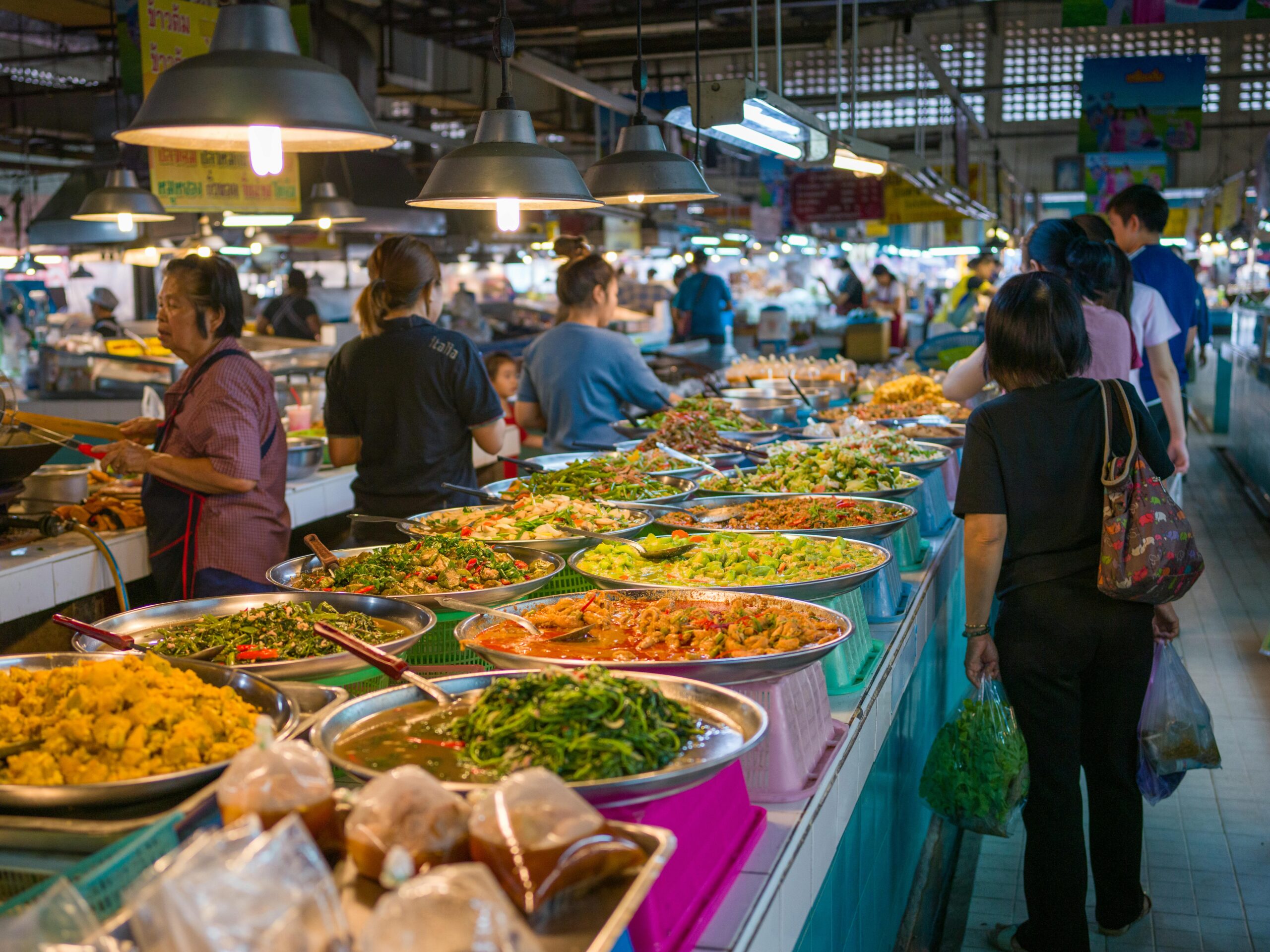
Bangkok does not need another list of ten things to eat. It does not need another paragraph that begins with the word “vibrant” or another article that treats Pad Thai as the beginning and end of Thai culinary conversation. What Bangkok’s food scene needs, and what most guides catastrophically fail to deliver, is strategy, context, and honesty.
The food here is extraordinary. It is also completely overwhelming, frequently misleading, and deeply unequal in quality depending on where you are, when you show up, and how informed you are before you arrive. The city has produced one of Asia’s most respected Michelin dining scenes and still somehow manages to serve some of the best meals on the planet for under 60 baht on a plastic stool outside a shophouse. That range is the point. That range is also the problem.
Most Bangkok food guides tell you where to go. The best ones tell you how Bangkok food actually works, and why ignoring the mechanics means spending two weeks eating mediocre tourist versions of dishes that, five streets over, would change how you think about cooking.
This Bangkok food guide is the second kind.
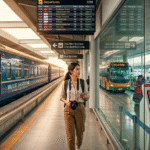
Bangkok is enormous. It sprawls across roughly 1,568 square kilometers, and the traffic can make crossing town a genuine commitment. A restaurant that takes 12 minutes to reach from Ekkamai can take 55 minutes from Silom at 6:30 PM on a Tuesday. This is not an exaggeration. The BTS Skytrain and MRT subway are the lifelines of a sane Bangkok eating strategy, and anything more than a 15-minute walk from a station deserves serious thought before committing.
The food changes dramatically by area too. Sukhumvit’s food is shaped by the expat population and international tourism that defines the corridor. Ari is where Bangkok’s young urban professionals eat, and the quality-to-price ratio there consistently outperforms tourist zones. Chinatown is its own world entirely, dense with Thai-Chinese history and seafood smoke. The Old Town around Rattanakosin has a working-class lunch culture that most visitors completely miss because they only arrive for the temples. Understanding which area matches what is being sought, whether budget, cuisine type, vibe, or time of day, is the single most valuable piece of preparation before arriving.
Find out best areas to stay in Bangkok with RoamRiot!
Bangkok eating hours follow a logic that rewards early risers and late-night wanderers, while punishing the standard tourist schedule of 7 PM dinner. The best Bangkok street food stalls operate in morning windows that vanish by 10 AM. The lunch-hour shophouse economy, which is where Bangkok’s office workers eat genuinely excellent food at genuinely reasonable prices, closes down by 2 PM. The night market economy starts properly after 7 PM and runs until midnight or later.
The hours between 6 and 8 PM are when Bangkok’s traffic is worst and its restaurant queues are longest. Eating at 5 PM or 9 PM is a significantly better experience than eating at 7 PM, logistically and often financially.
Late-night eating is not a bonus in Bangkok. It is a whole category. The city has excellent late-night food infrastructure, including grilled pork stalls that only get going after 11 PM and 7-Eleven and FamilyMart locations that sell surprisingly competent hot food around the clock.
Foreign visitors tend to associate shopping malls with fast food and air conditioning, and they are right on both counts. What they consistently underestimate is that Bangkok’s top-tier malls house food courts, supermarkets, and mid-range restaurant floors that offer genuine quality in a clean, cool environment at prices that are often more competitive than nearby street restaurants marketed to tourists.
MBK, Terminal 21, CentralWorld, ICONSIAM, and EmQuartier all have food floors worth serious attention. Terminal 21’s Pier 21 food court consistently ranks among the cheapest and most reliable places to eat near the BTS in Bangkok, with most dishes priced between 35 and 60 baht. ICONSIAM’s food hall by the Chao Phraya features a strong selection of regional Thai dishes from across the country.
These are not consolation-prize options. On a hot afternoon, eating well for 50 baht in air conditioning is simply smart.
If you’re visiting malls for your food itinerary, then shopping in bangkok with RoamRiot is a must-read!
Google Maps ratings in Bangkok are profoundly unreliable for several reasons. Tourist-facing restaurants near Khao San Road and the Sukhumvit tourist strip attract visitors who are reviewing based on convenience and familiarity rather than authenticity or value.
Local spots frequented by Bangkok residents often have minimal English-language reviews, poor photos, and lower ratings despite consistently superior food.
TikTok and Instagram virality have made this worse. Several Bangkok restaurants and Bangkok street food stalls that went viral in recent years are now so overwhelmed by demand that quality has dropped, queues have tripled, and the experience bears little resemblance to what made them interesting in the first place.
The better approach is to use Wongnai alongside Google Maps. Wongnai remains Thailand’s dominant local restaurant review platform and provides a much clearer picture of how Thai diners actually evaluate a place.
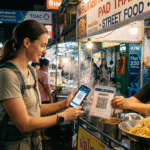
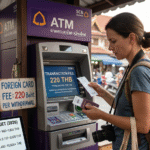
Bangkok is more cashless than most visitors expect, but payment acceptance is wildly inconsistent. High-end restaurants, mall food courts, and established mid-range spots accept cards and QR payments reliably. Bangkok street food stalls and market vendors are still overwhelmingly cash-only.
Carry a mix of 20, 50, and 100-baht notes. Larger bills at busy stalls slow everything down.
GrabFood, Foodpanda, and LINE MAN are all genuinely functional and often offer restaurant options with significantly lower prices than eating in.
Local payments setup must read: Setting up PromptPay and PAY&TOUR without a Thai ID
Thai food at its most authentic is significantly spicier than the softened versions served to tourists. Ordering “mai phet” (not spicy) will get close to mild. “Phet nit noi” (a little spicy) is usually the safest middle ground.
The hygiene panic many first-time visitors bring to Bangkok street food is largely unwarranted at established stalls with high turnover. Watch for active cooking, simmering broth, and ingredients being prepared fresh.
Halal food is more available than many visitors realize. Areas around Bang Rak, Nana, and parts of Sukhumvit have strong halal food options, including excellent khao mok gai, roti mataba, and Thai-Muslim curries.
Yaowarat Road remains Bangkok’s most famous Bangkok street food area and one of its most visually overwhelming.
The combination of neon signs, charcoal smoke, seafood tanks, and dense crowds after 7 PM creates one of the city’s defining eating experiences.
The better eating is usually slightly off the main road. Side streets toward Talad Noi and smaller sois contain shophouse restaurants that are cheaper, less chaotic, and often better tuned toward locals than tourists.
Chinatown is strongest for:
Some tourist-heavy seafood restaurants still aggressively inflate prices. Always confirm seafood pricing before ordering.
Ari remains one of Bangkok’s best neighborhoods for modern Thai food, cafe-hopping, and relaxed daytime eating.
The area around Ari BTS has developed into one of the city’s strongest concentrations of independent coffee shops, modern Thai lunch spots, bakeries, and neighborhood restaurants.
This is not a destination for one iconic dish. It is a destination for eating like someone who actually lives in Bangkok.
Sukhumvit contains some of the best restaurants in Bangkok and some of the worst tourist traps.
The corridor from Nana through Phrom Phong includes:
Thonglor and Ekkamai remain the strongest sections for serious dining.
Silom has one of Bangkok’s strongest lunchtime food cultures. The streets between the BTS and the river fill with office workers eating from small shophouses and sidewalk stalls.
At night, the area transitions into one of Bangkok’s strongest fine dining districts, including Bangkok Michelin restaurants like Le Du.
This corridor has become Bangkok’s most concentrated zone for upscale casual dining and chef-driven restaurants.
The clientele skews heavily Thai rather than tourist-heavy, which often translates into stronger quality standards.
Prices are not low, but the quality ceiling here is extremely high.
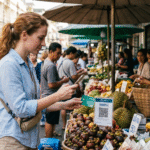
Or Tor Kor remains one of Bangkok’s best food markets.
The produce quality is exceptional, the prepared food stalls are consistently strong, and the market remains cleaner and more organized than most Bangkok markets.
The mango sticky rice here is still among the city’s benchmarks.
Victory Monument remains Bangkok’s boat noodle capital.
The lanes around the BTS station contain some of the city’s best-value eating, including:
Boat noodles here usually cost around 15-20 baht per bowl, and ordering multiple bowls is standard.
Pad Thai is not a simple dish.
Good Bangkok pad thai should have:
Tourist versions are often sugary and flat.
Thip Samai on Mahachai Road remains one of Bangkok’s most famous pad thai restaurants. Prices generally range between 100-250 baht depending on protein and portion.
Pad kra pao is arguably Bangkok’s most important everyday dish.
The best versions use actual holy basil rather than Thai basil substitutes and arrive with intense wok aroma and a properly crispy fried egg.
Local shophouse versions near universities and office districts frequently outperform expensive restaurant versions.
Boat noodles remain one of Bangkok’s most culturally specific dishes.
The broth is dark, concentrated, and deeply savory, traditionally built using herbs, spices, and blood-enriched stock.
Victory Monument remains the city’s most famous area for them.
A properly made tom yum should taste layered rather than aggressively one-note.
The best versions balance:
Tourist versions often rely too heavily on paste.
Khao soi is Northern Thai rather than Bangkok-native, but Bangkok now has several genuinely excellent versions.
The best bowls balance:
Som tam remains one of Bangkok’s defining everyday dishes.
Good versions develop complexity through pounding rather than simply mixing ingredients together.
Som Tam Jay So near Chulalongkorn University remains one of the city’s most respected versions.
Moo ping is Bangkok breakfast culture at its most efficient.
The best skewers show visible caramelization and charcoal blistering at the edges.
Two or three skewers with sticky rice remain one of the city’s best-value breakfasts.
Peak mango season from March through May still produces the best versions.
The rice should remain glossy and structured rather than mushy.
Or Tor Kor Market continues to be one of Bangkok’s strongest references for mango sticky rice.
Jay Fai’s crab omelette remains one of Bangkok’s most famous dishes.
The technique matters. The crab quality matters. The charcoal heat matters.
Prices now commonly exceed 1,000 baht.
The food is genuinely excellent. The queue can still be brutal.
Yaowarat after 7 PM remains one of Bangkok’s defining Bangkok street food experiences.
The smarter approach is to arrive with targets rather than wandering blindly into tourist-heavy seafood restaurants.
The lanes behind the main road often provide significantly better value.
The lanes behind Victory Monument remain one of Bangkok’s best-value local food zones.
Most boat noodle shops here have operated for decades.
Or Tor Kor rewards morning visits.
The prepared food section provides a useful benchmark for ingredient quality across Bangkok.
Banthat Thong Road has evolved into one of Bangkok’s busiest modern food streets.
The area is packed with:
Crowds become intense after 8 PM.
Chatuchak Weekend Market remains strongest before noon.
The strategic move is to eat there early, then move across toward Or Tor Kor before the afternoon heat becomes oppressive.
Sorn remains one of Bangkok’s most important restaurants and currently holds three Michelin stars.
The restaurant focuses entirely on Southern Thai cuisine and is widely considered one of Asia’s best dining experiences.
Reservations remain extremely difficult.
Gaggan remains one of Bangkok’s most internationally recognized restaurants.
The experience is theatrical, experimental, and intentionally unconventional.
Reservations are difficult and often handled through limited release systems.
Sühring remains one of Bangkok’s most respected fine dining restaurants and currently holds two Michelin stars.
The restaurant focuses on modern German cuisine with heavy use of fermentation, curing, and traditional techniques.
Le Du helped push modern Thai fine dining into the international spotlight.
Chef Ton’s seafood-focused tasting menus remain among Bangkok’s most approachable Michelin-level experiences.
Nusara remains one of Bangkok’s most intimate fine dining experiences.
The Old Town location near Wat Pho adds significantly to the atmosphere.
Potong remains one of Bangkok’s most visually memorable fine dining restaurants.
The Chinatown heritage-building setting genuinely enhances the experience rather than functioning as gimmick.
Jay Fai remains one of Bangkok’s most famous Michelin-starred street food restaurants.
The food quality is real.
The queue reality is also real.
Reservations remain strongly recommended.
| Category | Budget Range (THB) |
|---|---|
| Bangkok street food | 40-100 |
| Bangkok food courts | 50-120 |
| Mid-range Bangkok restaurants | 200-600 |
| Specialty coffee | 90-180 |
| 7-Eleven food | 25-65 |
| Beer | 80-150 |
| Michelin Bib Gourmand meals | 200-400 |
| Bangkok fine dining tasting menus | 3,500-8,000+ |
A full day of eating well in Bangkok under 500 baht remains very realistic.
The key is avoiding tourist-heavy zones and focusing on:
This is Bangkok’s sweet spot.
At 500-1,500 baht daily, Bangkok becomes extremely rewarding.
Bangkok remains one of the world’s best luxury food value cities relative to cities like Tokyo, London, Singapore, or New York.
Morning: Moo ping breakfast near BTS.
Late Morning: Pad Thai at Thip Samai.
Afternoon: Or Tor Kor Market fruit and desserts.
Dinner: Silom or Sathorn.
Late Night: Yaowarat Bangkok street food crawl.
Start after 7 PM near Wat Mangkon MRT and move gradually into the side streets rather than staying entirely on Yaowarat Road itself.
Always confirm:
before ordering.
Khao San Road remains one of Bangkok’s weakest food areas relative to price and quality.
Not every viral Bangkok food spot is worth two hours in line.
Tourist-facing restaurants near major hotels often charge dramatically more for lower-quality food.
Isaan and Southern Thai food can become genuinely overwhelming without spice adjustment.
Bangkok rewards strategic timing more than most food cities.
Avoiding Bangkok street food entirely is one of the fastest ways to miss the city’s actual food culture.
Bangkok rewards attention.
The city rewards people who understand how neighborhoods function, how traffic shapes eating patterns, how timing changes quality, and how much better Bangkok becomes once the obvious tourist circuit stops dictating every meal.
The grandmother making kway chap in Chinatown and the chef at Sorn exist within the same culinary ecosystem. Both rely on technique, ingredient knowledge, repetition, and consistency.
That continuity is what makes Bangkok special.
The city’s best meals are not always expensive, famous, or viral. Sometimes they arrive in plastic bowls under fluorescent lights beside exhausted office workers eating dinner before catching the BTS home.
That is usually when Bangkok feels most honest.
Related reading:
Official external resources: