Physical Address
304 North Cardinal St.
Dorchester Center, MA 02124
Physical Address
304 North Cardinal St.
Dorchester Center, MA 02124

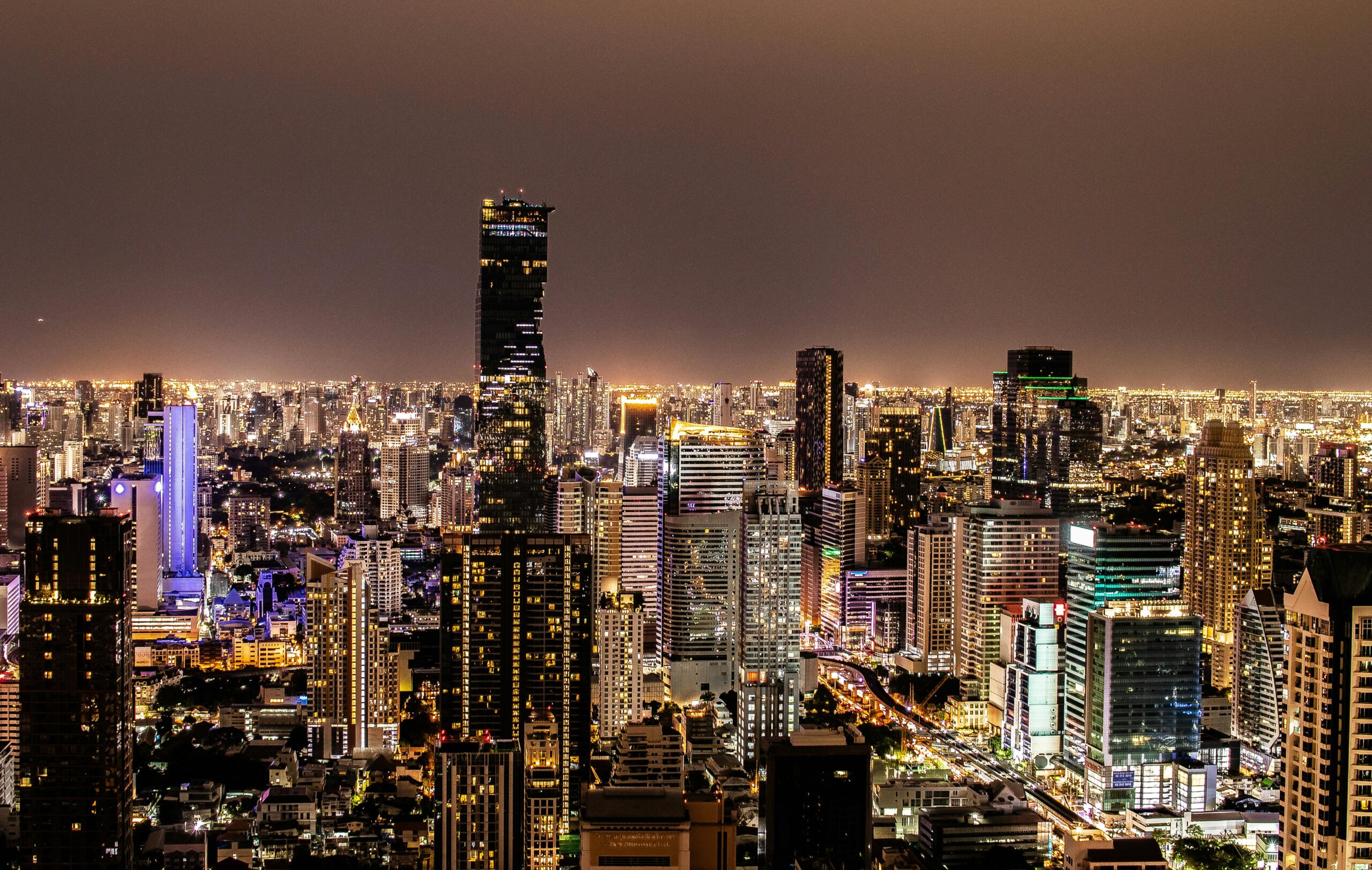
The most complete Bangkok activities guide for 2026. Rooftops, Muay Thai, night markets, Safari World, Sea Life, dinner cruises, hidden bars, cooking classes and 60+ experiences with approximate prices, transport directions and scam warnings.
Bangkok is not a city you understand the first time.
You arrive. The heat hits. You eat something extraordinary on a side street for 60 baht. You get mildly lost. Somewhere between the chaos and the temples and a rooftop view at dusk, it clicks. This guide covers all of it: the icons, the underrated, the weird, the family options, the budget picks, and the experiences that actually earn a return trip.
All prices are approximate and subject to change. Opening hours and entry fees should be verified directly with venues before visiting.
This is a long guide because Bangkok is a large, layered city. Use the section headings to navigate to what matters for your trip. If this is a first visit, start with the orientation section. If you’ve been before, jump to the hidden gems, nightlife districts, or specific activity categories.
Also Read: Bangkok Transport Guide | Bangkok Scams to Avoid
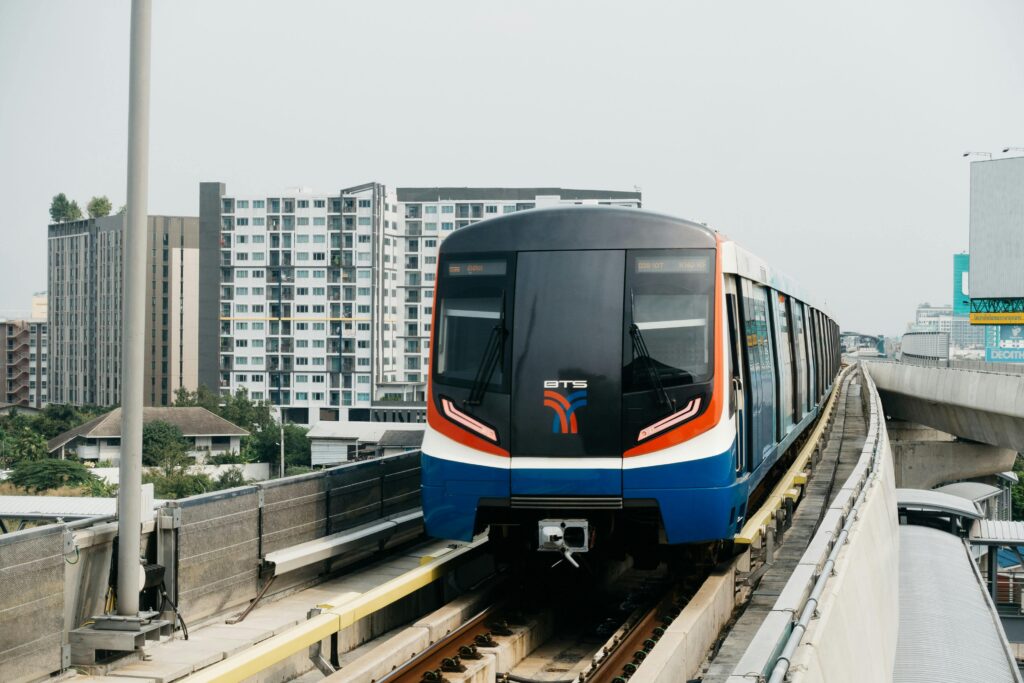
Bangkok covers roughly 1,568 square kilometres. If you don’t understand its geography before planning, you’ll spend half your trip in traffic between experiences that should never have shared a day.
The BTS Skytrain and MRT subway are the backbone of tourist transport. Get a Rabbit card for the BTS. These two systems connect the main shopping, hotel, and entertainment zones efficiently. Beyond them, for the old city temples, Chinatown, and the river, you’ll use the Chao Phraya Express Boat, tuk-tuks, or Grab.
Grab is Bangkok’s dominant ride-hailing app, similar to Uber. It’s cheaper than negotiated taxis, eliminates the price conversation entirely, and is significantly safer late at night. Download it before you land.
Also Read: Bangkok Transport Guide
With metered taxis, insist on the meter from the moment you get in. If the driver refuses, get out. There are always more taxis.
| District | Known For | Best Time to Visit |
|---|---|---|
| Old City / Rattanakosin | Grand Palace, Wat Pho, Wat Arun, longtail canals | Early morning only |
| Chinatown / Yaowarat | Street food, Soi Nana bars, gold shops, flower market | Dusk to midnight |
| Silom / Sathorn | Sky Bar, rooftop bars, Mahanakhon SkyWalk, Patpong | Sunset and evening |
| Sukhumvit (Asok to Nana) | Malls, international nightlife, cooking classes | Evening to late night |
| Thonglor / Ekkamai | Bangkok’s best bars, creative dining scene | Evening to midnight |
| Siam / Pratunam | CentralWorld, Siam Paragon, MBK, BACC gallery | Daytime |
| Riverside / ICONSIAM | Luxury mall, water light show, dinner cruise departures | Afternoon to night |
| Chatuchak / Mo Chit | Weekend market, Lumpini Park adjacent | Saturday to Sunday morning |
Orientation note: The Grand Palace area and Chinatown are not served by the BTS or MRT. You’ll need the Chao Phraya Express Boat or a Grab. Budget 25 to 40 minutes from Sukhumvit even with reasonable traffic. Keep temple days early and mall days flexible.
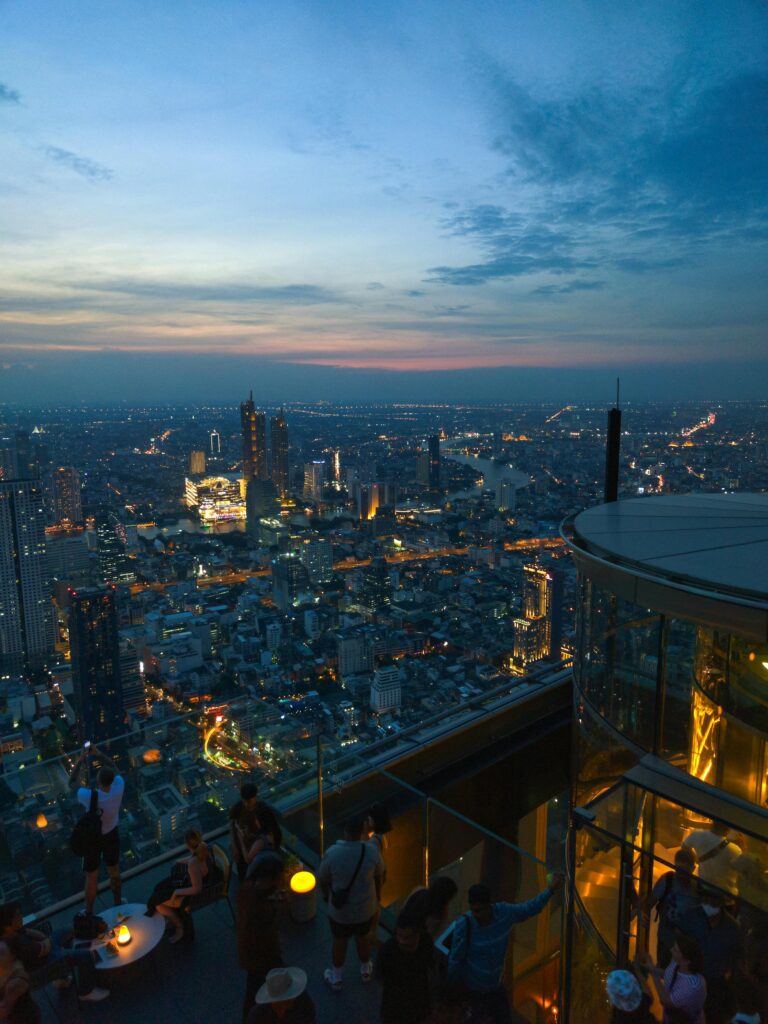
Bangkok’s rooftop bar scene is among the best in Asia, full stop The city’s skyline is dense, dramatic, and best understood from above. Several rooftops have built reputations worth the cocktail prices. Several others coast on old fame.
The most dramatic rooftop in Bangkok. The crescent-shaped open-air terrace sits at the 63rd floor looking south toward the Chao Phraya and the city sprawl beyond. Known internationally from The Hangover Part II, which means the tourist volume is high. The view is still extraordinary. Drinks are expensive. The experience is singular. Go once, order one cocktail, stay for the sunset, leave before the evening rush thickens.
Tactical note: Arrive 20 minutes before sunset to position yourself on the outer terrace. The dress code is checked at the elevator, not the lobby entrance. The Hangover-themed cocktail is gimmicky but popular.
Who should skip it: Anyone on a tight budget or with a low tolerance for tourist crowds.
The Moon Bar at the 61st floor is completely open-air with no glass barriers above you. Just wind and Bangkok far below. Rawer than Sky Bar. If heights affect you even slightly, this one will remind you. The Vertigo restaurant one floor below is excellent for a full evening. Cocktails are expensive, which is fairly typical at this altitude. The 360-degree view is the product.
Sukhumvit rooftop drawing expats, young Thais, and visitors who’ve done their research. Views face Benjasiri Park rather than the river, so less visually dramatic than the Silom bars. The atmosphere is more relaxed and less tourist-heavy. The Peruvian-Japanese food is genuinely good, making it a solid dinner option rather than just a drinks stop.
59 floors above CentralWorld, champagne-focused, and frequented by Bangkok’s well-heeled local crowd. Different angle on the city than the Silom bars. More elegant atmosphere, higher price point, less tourist-heavy. Worth considering for a special occasion or if you want a different perspective on the skyline.
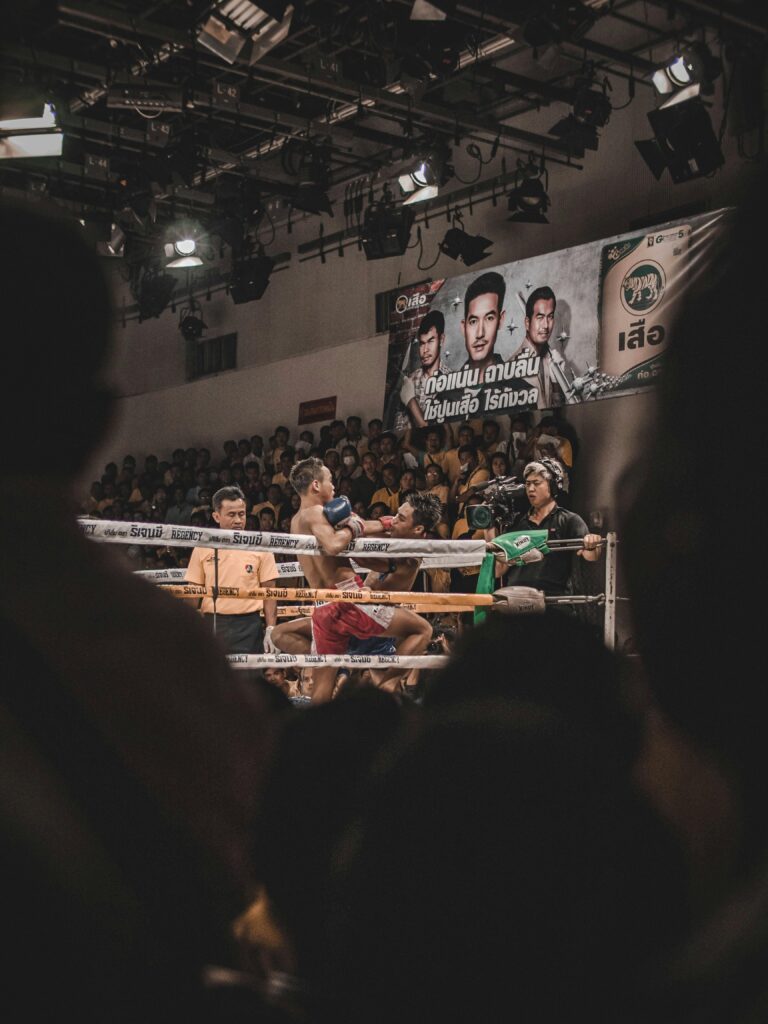
Muay Thai is not just sport in Thailand. It’s a cultural institution. A live fight at one of the proper stadiums is one of the most charged experiences Bangkok offers. The fighters are young. The gamblers in the stands bet openly and vocally. The crowd is loud in a way that transcends language. Prior knowledge of scoring or technique is not required to be completely absorbed. Book your tickets here!
Bangkok’s oldest Muay Thai stadium, open since 1945. The most traditional venue and the one purists point to. Fights run on Monday, Wednesday, Thursday, and Sunday evenings.
The Ram Muay pre-fight ritual and the live Sarama musical accompaniment are worth understanding before you go. Each fighter performs a slow, highly deliberate ceremonial dance before the bout, honouring their trainer and their lineage. Then the bell rings and everything changes. Ringside seats deliver the full sensory experience: the sound of the crowd, the corner coaches shouting in Thai, the physicality of the bouts at close range.
Scam warning: Touts near the stadium entrance sell tickets described as “better seats” at inflated prices. Some are unofficial access or genuinely worse positions. Buy only through the official website or a licensed agent.
The newer, larger stadium, relocated to its current Rangsit location. Better facilities, more international visitors, slightly more polished overall. Lumpinee hosts some of the highest-calibre fights and is the better choice if your schedule aligns with its Tuesday, Friday, Saturday fight nights and you’re staying on the northern end of the city. Book your tickets here!
Dozens of gyms offer tourist sessions: one to two hours, no experience required. You’ll hit pads, learn basic combinations, and leave with a genuine appreciation for what professional fighters endure in training. Budget approximately 500 to 1,500 THB for a single session. Arrive in sports clothing. Bring water. Book classes here!
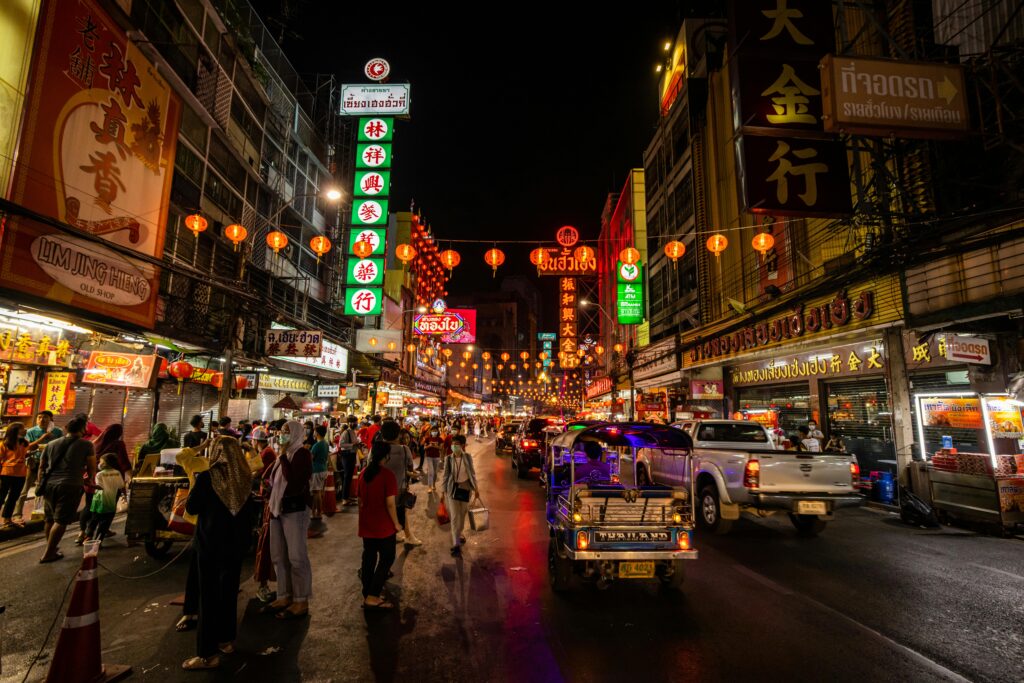
Bangkok nightlife spans a genuinely enormous range. From raucous backpacker streets to craft cocktail bars that belong in any global ranking, the city has multiple distinct scenes that barely overlap. Understanding which district matches your mood saves a lot of transport time.
The coolest neighbourhood in Bangkok right now. Young, creative, predominantly Thai crowd. Expensive relative to other Bangkok areas but still dramatically cheaper than equivalent experiences in Singapore, Tokyo, or Hong Kong. Rooftop bars, izakayas, cocktail bars in converted shophouses, gallery spaces, record bars.
A full evening out including dinner, drinks, and a bar or two costs roughly 1,500 to 3,000 THB per person. BTS Thong Lo is your anchor point. Exit the station, walk east or west depending on which venue you’re targeting.
This is not Nana Plaza on Sukhumvit. Completely different place, completely different atmosphere.
Chinatown Soi Nana is a narrow lane in the Yaowarat district that quietly became one of Bangkok’s most interesting bar strips over the past several years. Small venues, creative cocktails, no neon signs, no hard sell. Teens of Thailand is the standout: a tiny bar with no printed menu where you describe what you want and the bartender builds something specific to your preferences. Tropic City serves Southeast Asian-inspired cocktails. Warehouse 30 nearby is a converted WWII-era warehouse complex hosting art exhibitions, pop-up bars, and weekend markets.
Take the MRT to Wat Mangkon and walk five minutes. Arrive after 8 PM.
Also Read: Bangkok Nightlife Guide
The international bar street. Above Eleven rooftop at one end, dive bars and club nights in between, Thai street food vendors who set up at midnight for the late crowd. More mixed than Thonglor, messier, never fully quiet. BTS Nana is immediately adjacent.
Where you go to dance until 3 or 4 AM. Route 66, Onyx, Spaceplus are the main venues. Entry typically 500 to 1,000 THB on weekend nights, occasionally includes one drink. Crowd is young Thai and Korean predominantly. Peak time is midnight to 2 AM.
The infamous backpacker street. Cheap bucket cocktails. Neon lights. Gap year energy. Fire dancers. Street food. People from everywhere doing roughly the same thing since 1990. It is not refined in any sense. It has an anarchic, democratic energy that’s its own kind of experience. Visit once. Eat something fried. Leave when you’re ready.
Scam warning: Patpong Night Market, adjacent to Silom, has touts offering “ping pong shows” in upstairs venues. These almost always result in aggressively inflated bills in intimidating environments. Do not follow strangers upstairs anywhere on Patpong.
Touristy by nature. Also genuinely one of the better things to do after 9 PM. Negotiate with a tuk-tuk driver for an hour around the old city. At night, traffic eases. The Grand Palace is lit. Wat Arun reflects in the river. An open vehicle moves differently through the city than a closed one. Budget approximately 300 to 500 THB for the hour. Agree the price clearly before getting in. But if you’re looking for the famous full Tuk Tuk Night ride with food and alcohol stops, you want to book this tour for one of the most amazing nightlife experience of Bangkok.
Scam warning: If you haven’t booked a Tuk-Tuk tour and you’re riding the classic tuk-tuk, and the move involves agreeing to a city tour then stopping at suit shops, gem stores, or travel agencies where the driver earns a referral commission. State your specific route, agree the price, and decline any suggested “special stops.” Full breakdown in Bangkok Scams to Avoid.
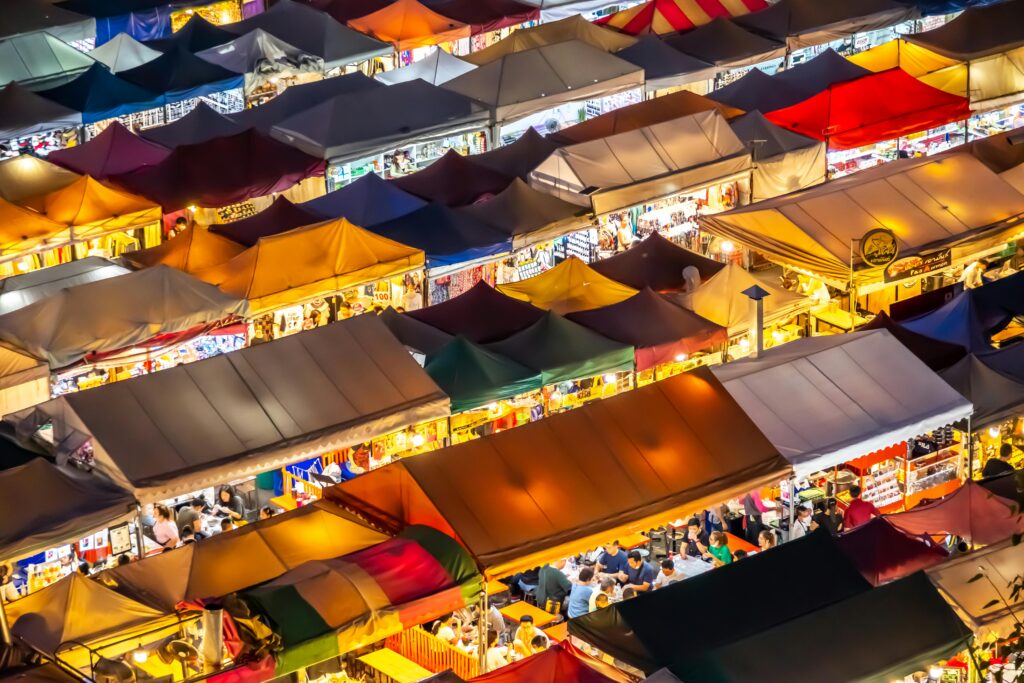
Bangkok night markets range from the world’s largest weekend market to polished riverside complexes to raw local food spots that most tourists never find. Each has a different personality and a different purpose.
The world’s largest weekend market by most measures. Over 15,000 stalls across 35 acres selling vintage clothing, home decor, Thai handicrafts, antiques, plants, live animals, street food, and almost everything else. You will not see all of it. Plan the sections you want before arriving.
Internal section logic: sections 5 to 6 for vintage clothing, sections 8 to 26 for home decor and furniture, section 25 for Thai handicrafts, section 2 to 4 for food. Bargaining is expected. Starting at 60% of the quoted price is generally reasonable.
Tactical note: Download a Chatuchak map before arriving or pick one up at the entrance. The layout is logical by section once you understand it; without that context it’s a maze.
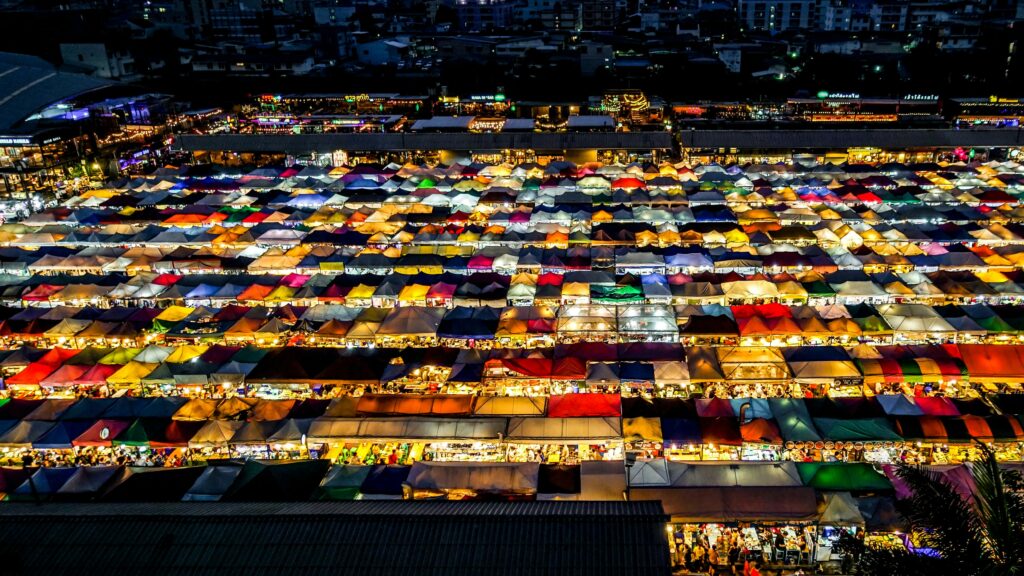
Open-air, organised, and photogenic without being tourist-oriented. The retro car and vintage theme gives it character. The food stalls here are legitimately excellent: this is one of the more reliable spots in Bangkok for an evening street food dinner without tourist pricing pressure. Young local crowd. Craft beer bars along the perimeter. Atmosphere peaks around 8 to 9 PM on weekends.
Built into restored early 20th-century East Asiatic Company warehouses along the Chao Phraya. Organised and polished, which is either a plus or minus depending on what you’re looking for. The riverside setting saves it: the 60-metre Ferris wheel lit against the dark river, open-air restaurants facing the water, and the Calypso Cabaret show inside all add up to a complete evening. Families, couples, first-timers: this works reliably.
Scattered across a few locations (Ratchada is most accessible), the train market has a distinctly different feel from Chatuchak. Vintage cars, vinyl records, second-hand clothing, craft beer bars, retro furniture. The crowd is primarily young, local, and creative. Less chaotic than Chatuchak, more atmospheric than Asiatique.
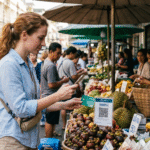
Operates 24 hours but peaks between midnight and 6 AM when wholesale supply runs at full volume. Mountains of jasmine, marigold garlands, orchids, and chrysanthemums. The smell and colour at 5 AM are difficult to describe adequately. Most tourists sleep through it entirely. Pak Khlong Talat at dawn, followed by breakfast in Chinatown and an early opening at Wat Pho, makes one of Bangkok’s best mornings.
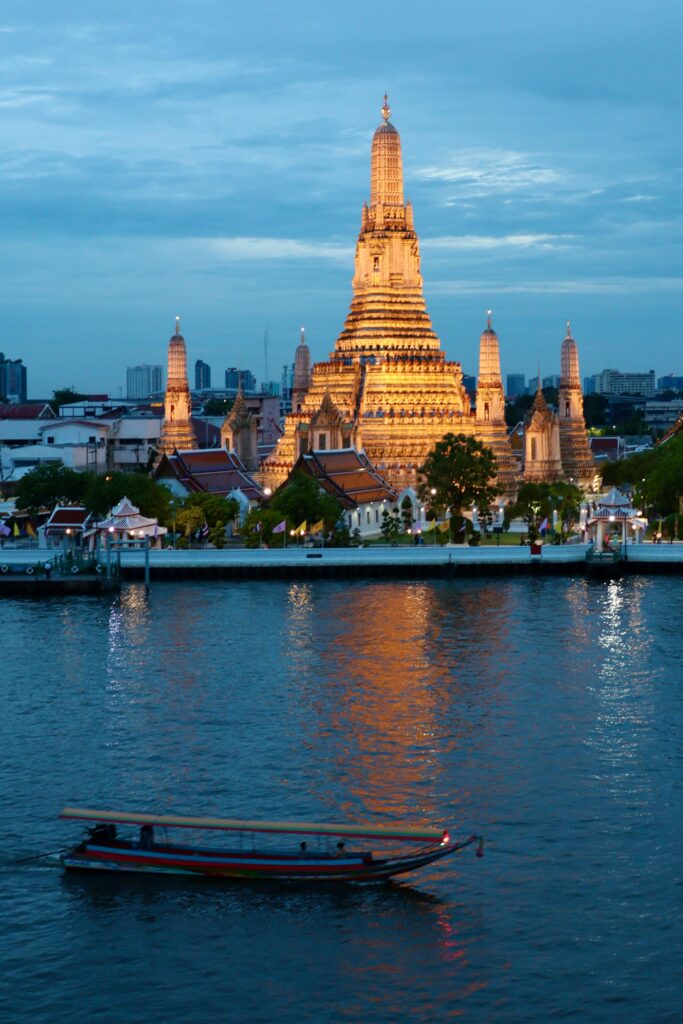
The Chao Phraya River is Bangkok’s original highway. The city was built around it, and every major historic site sits along its banks. Using the river as transport rather than just scenery fundamentally changes how you experience Bangkok.
15 THB per journey. The orange-flag express runs north to south, connecting Grand Palace piers, Chinatown, ICONSIAM, and Asiatique. Standing on the deck while temples pass on both banks is one of the more quietly memorable transport experiences in Southeast Asia. Buy the tourist day pass (approximately 150 THB) if doing the full temple circuit in one day.
At night, the temples along the river are lit. Wat Arun reflects white against the dark water. The Grand Palace complex glows from the opposite bank. A dinner cruise moves through all of this for two hours while the city narrows to a luminous ribbon on both sides. Genuinely beautiful.
Operator quality varies significantly. Cheap options below 900 THB tend to be overcrowded with poor food. Mid-tier is workable. Premium operators like the Manohra Cruise (approximately 3,800 THB per person) represent the quality end of the market if you’re committing to the experience.
Scam warning: Touts at major piers sell “discounted” cruise tickets for boats that are not what they describe. Book directly with named operators to guarantee you board the boat you paid for.
The Bangkok most visitors never see. Wooden shophouses on stilts over dark canal water. Monks’ laundry on riverside lines. Local children swimming. Cats asleep on collapsed boat roofs. The khlongs (canals) of Thonburi, on the west bank of the Chao Phraya, show a residential city that exists entirely outside the tourist circuit.
Hire a longtail boat privately from Tha Chang or Tha Maharaj pier. An hour-long private hire costs approximately 1,500 THB. The driver takes you through narrow passages and open canal stretches. Crouch under low bridges when directed. Keep bags dry and away from the spray.
Tactical note: Private hire lets you control the route and pace. Budget below 1,000 THB tends to result in rushed routes or limited canal access. Check out one of those Bangkok Canal tours here.
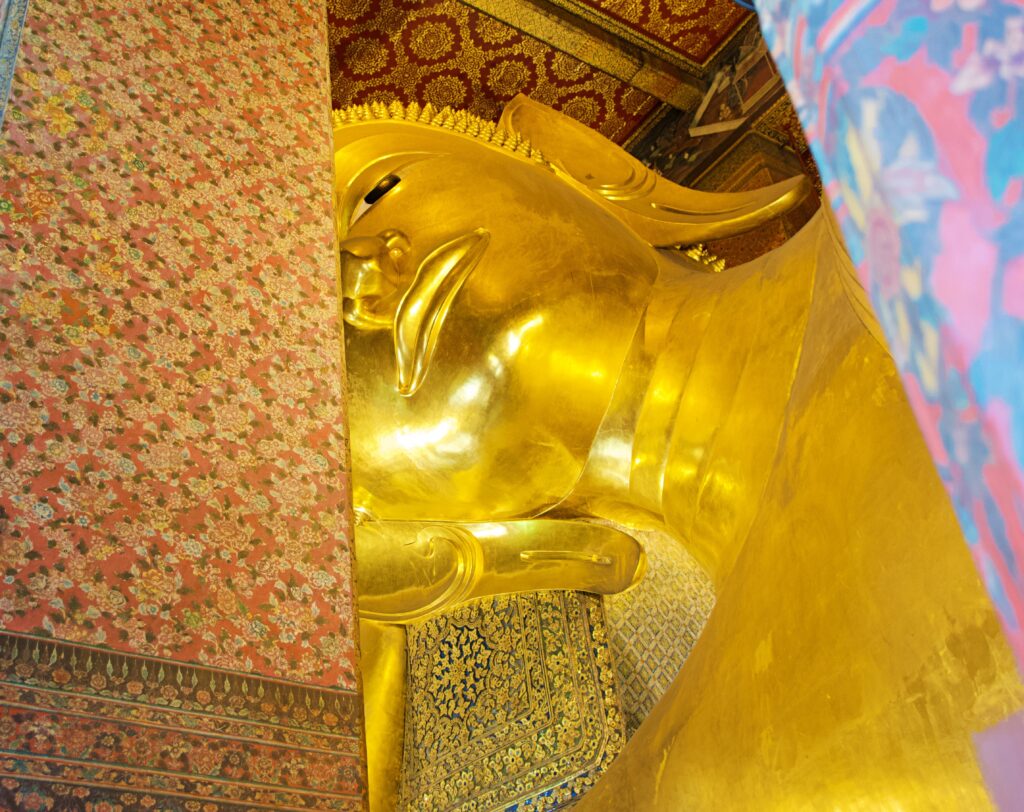
Bangkok has hundreds of temples. The majority don’t need to be on your list. A few are genuinely extraordinary. Here is the honest short list.
The 46-metre reclining Buddha is remarkable at any level of prior familiarity. Gold from floor to ceiling, and the sheer scale of the figure inside a building that barely contains it. It stops most visitors. Wat Pho is also the traditional birthplace of Thai massage, and the wider temple complex is beautiful to walk through in the early morning light.
Best seen from across the river before crossing. The spires covered in Chinese porcelain fragments catch the morning light in a way that photographs don’t fully replicate. The central prang (tower) can be climbed: the stairs are steep and the views from the top are good. The five-baht cross-river ferry from Tha Tien pier takes two minutes. Combine with Wat Pho on the same morning.
If you’re interested in a guided walking tour of both Wat Pho and Wat Arun, you can book one here.
The Emerald Buddha, Thailand’s most sacred image. The Grand Palace complex is 218,400 square metres of gilded, mosaic-covered, mythologically dense architecture. Overwhelming. Also the most crowded tourist site in Bangkok. Go in the morning, budget 3 to 4 hours, dress conservatively (they provide loaner clothing), and hire an official guide. The iconography is dense enough that walking through without context wastes most of the experience.
You can directly book the Grand Palace & Wat Phra Kaew Guided Walking Tour here.
Scam warning: A well-dressed person near the entrance who tells you the palace is “closed today for a ceremony” is running a taxi commission scam. This is the most common Bangkok tourist scam. The palace is rarely actually closed. Walk past them and in.
One block from Democracy Monument and almost entirely un-touristed. Wat Suthat contains some of the finest interior murals in Bangkok: large-scale Buddhist cosmological paintings covering walls that most visitors never see. The Giant Swing (Sao Ching-Cha) in front was used for Brahmin ceremonies until the early 20th century. The area is calm, photogenic, and accessible. No entrance queue.
Bangkok is a more practical family destination than its nightlife reputation suggests. Several of its best attractions are specifically good with children.
Here’s the link to two parks in one combined ticket: Safari Park and Marine Park.
Safari Park is an 8-kilometre drive-through open zoo where animals roam at a distance from your vehicle (or the provided bus). Giraffes, zebras, ostriches, white rhinos, and bears at closer range than most conventional zoos allow. The drive-through takes approximately 90 minutes to complete at normal speed.
Marine Park is a conventional zoological park with scheduled shows: dolphin shows, bird shows, sea lion performances, and the Spy War Show (a live-action stunt performance). Timing your day around the show schedule is the most efficient approach.
The Manatee Tank is a highlight: a large glass wall where West Indian manatees drift slowly through the water, more calming than dramatic. Egg World is a climate-controlled hatching exhibit showing baby birds and reptiles emerging from eggs, and serves as a practical refuge when the Bangkok humidity peaks mid-afternoon.
Tactical note: Check the Marine Park show schedule at the entrance on arrival and plan your walking route around the final show of the day. The stadiums are spread across significant ground.
Located inside Siam Paragon mall, Sea Life Bangkok is one of the largest aquariums in Southeast Asia. Shark tanks, an underwater tunnel, touch pools, penguin exhibits, and an otter habitat. Fully climate-controlled, which makes it an excellent choice on a hot afternoon or a rainy day.
Bangkok’s main theme park, about 40 kilometres north of the city centre. Roller coasters, a snow town (indoor snow experience), fantasy gardens, and a ghost mansion ride among the attractions. Popular with Thai families, particularly on weekends. Not on the same scale as international theme parks but enjoyable for children and worth knowing about if you have a day to fill outside the city. Click here to book.
One of Asia’s larger water parks, also in the Rangsit area north of Bangkok. Wave pools, water slides, and an artificial beach. Primarily a Thai local destination. Significantly cheaper than international resort water parks. Good for families in the hot season (March to May) when water is particularly welcome.
The most polished cabaret show in Bangkok. Located inside Asiatique, which makes it easy to combine with the riverfront market and a meal beforehand. The show runs approximately 70 minutes: Thai classical dance, international pop numbers, and production design involving sequins in quantities that seem physically improbable. The performers are trained entertainers who clearly enjoy their work. The audience, a mix of tourists and Thai families, responds accordingly.
Suitable for all ages. Nothing in the show is explicit or crude. Get your tickets here!
A larger-scale Thai cultural spectacular with approximately 150 performers on a stage depicting Thai history, mythology, and Buddhist cosmology across three acts. More educational than Calypso, more theatrical than a museum visit. Production scale is genuinely impressive. The reconstructed traditional village outside the theatre is open before showtime and worth an hour of exploration.
One of Bangkok’s best hands-on cultural activities, and consistently underrated by visitors who treat it as filler. A good class visits a local morning market with an instructor, identifies herbs, aromatics, and produce in context, then spends three to four hours preparing four to five dishes.
The market portion is what separates a useful cooking class from a recipe demonstration. Understanding what goes into pad thai or green curry at the ingredient level changes how you eat it for the rest of your time in Thailand.
Here are a couple of recommendations to choose from:
Tactical note: Specifically choose a class that includes the market visit. Several cheaper classes skip it and go straight to the kitchen.
Covered in the Muay Thai section above. Worth repeating here: a single beginner training session at a reputable gym is one of the more memorable Bangkok activities for anyone physically able to do it. No prior experience needed. Book a session here!
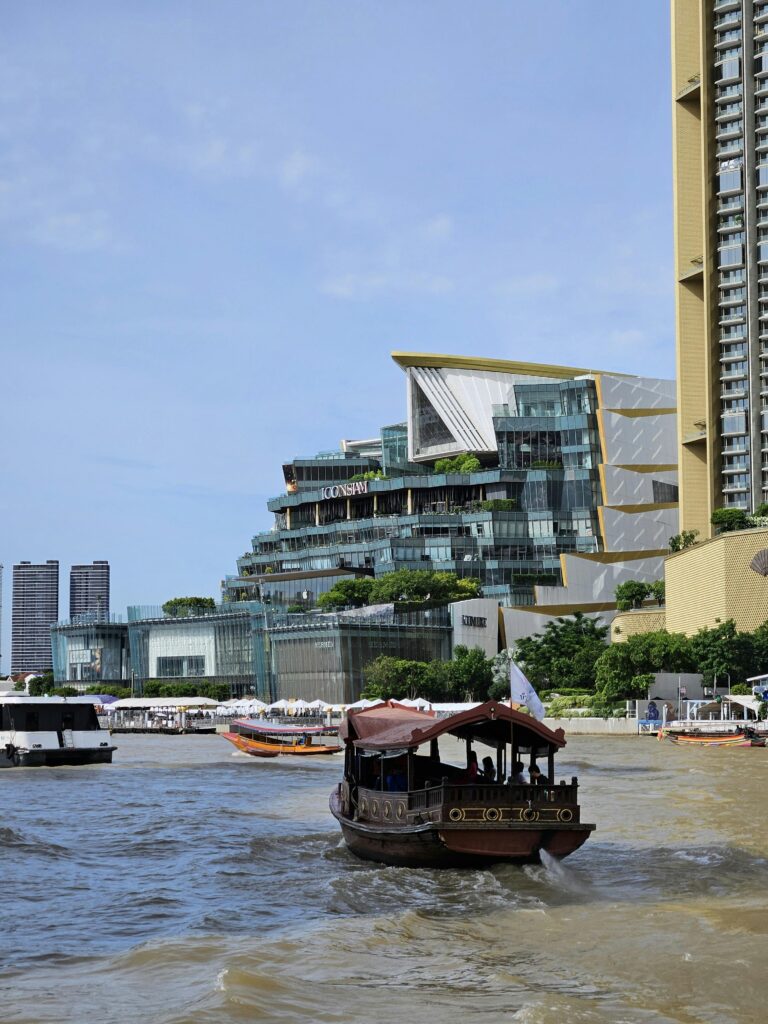
ICONSIAM is Bangkok’s most architecturally significant modern mall. It sits along the Chao Phraya riverfront in Thonburi and contains Thailand’s most prestigious retail brands, a rotating art gallery, and SookSiam: a climate-controlled recreation of a floating market on the ground floor. SookSiam is genuinely clever. Regional dishes from every Thai province, prepared by vendors from those regions, in a setting that references traditional water market aesthetics without the outdoor heat.
The free riverside water and light show at 7 PM and 8 PM is worth stopping for even if shopping is irrelevant to you. Approximately 300 metres of water jets, laser projections, and 2D/3D mapping along the riverfront.
Bangkok’s tallest building as of 2026. The SkyWalk at the 78th floor features a glass floor section on the open-air terrace: step out onto transparent panels with approximately 314 metres below your feet. This is a real physical experience. It affects visitors who genuinely thought they were comfortable with heights. The indoor floors below have well-designed exhibits on Bangkok’s development. The outdoor terrace is why you book. Get your tickets here now!
Tactical note: Weekday morning slots have the least crowding. The glass terrace has limited capacity and queues build quickly on weekends and holidays.
Covered in full in the Night Markets section above. Deserves mention here as a standalone major Bangkok attraction: 15,000 stalls, 35 acres, free entry, Saturday and Sunday only.
About 30 kilometres southeast of Bangkok in Samut Prakan, Ancient City is an open-air museum recreating scaled models of Thailand’s most significant historical structures across an enormous landscaped site. Replicas of Angkor Wat, the Grand Palace, Sukhothai ruins, and regional temples from across the country, spread across 80 hectares. Most visitors can explore by bicycle (available for rent on-site) or electric cart. Book a full day guided tour with transfers and more things to see here!
This is one of the most unusual cultural experiences available anywhere near Bangkok and almost entirely off most tourist itineraries.
A large peninsula in the Chao Phraya, directly across from the industrial eastern edge of Bangkok, that has remained largely undeveloped and serves as a nature reserve and cycling destination. Taking a short ferry from Klong Toei pier and cycling through the interior reveals a genuinely rural environment within city limits: mangrove forests, orchid farms, vegetable gardens, small temples, and almost no tourist infrastructure.
Rent bicycles on the Bang Krachao side for approximately 50 to 80 THB per day. A cycling loop of the main interior paths takes two to three hours.
A 29-metre three-headed white elephant standing in Samut Prakan just south of Bangkok. Inside the elephant: a spiral staircase winding through the body to a domed ceiling covered in stained glass. The grounds combine European garden design with Thai mythological sculpture. Genuinely bizarre. Genuinely impressive. Consistently undervisited. Check out things to do near the Erawan here if you’re planning to spend more time there.
Expanded significantly in recent years, Benjakitti is now one of Bangkok’s most pleasant parks. A large artificial lake, elevated walking and cycling bridges through tree canopy, and significantly less crowded than Lumpini. Best in the morning or early evening. Free entry.
Bangkok’s original large public park. Where the city genuinely breathes: joggers at dawn, tai chi groups under trees, and paddle boats on the lake. Free to enter.
Jim Thompson was an American businessman who revived Thailand’s silk industry after World War II and disappeared in the Cameron Highlands of Malaysia in 1967. His Bangkok home, six traditional Thai houses joined over a canal in the Siam area, is now a museum containing his significant collection of Asian art and antiques alongside the architecture itself.
Official guided tours run regularly and are necessary for context. The canal garden is photogenic. The story behind the house, including Thompson’s unexplained disappearance, gives it a dimension most museums lack.
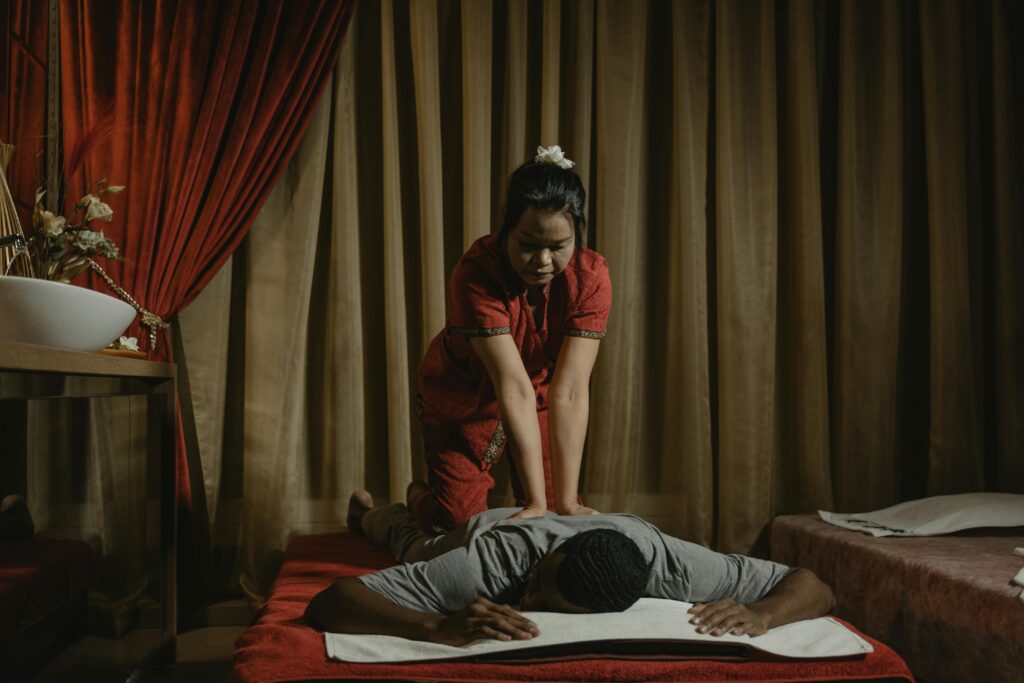
Traditional Thai massage (nuad phaen thai) is not the gentle relaxation experience some visitors expect. It is closer to being systematically stretched and adjusted by a practitioner who applies significant pressure through elbows, thumbs, knees, and body weight. It works. It addresses tension in ways that Swedish-style massage does not. Try it at least once.
Wat Pho Massage School is the most straightforward recommendation for a first session. Trained directly in the temple’s traditional lineage. Approximately 420 THB for 30 minutes, 680 THB for one hour. Book on arrival at the temple; queues are common but usually manageable outside peak hours.
Side-street massage shops (visible on virtually every tourist street) charge approximately 150 to 300 THB per hour. Quality varies meaningfully. Look for shops with visible practitioners, clean premises, and some customer activity. Avoid completely empty shops on quiet sois.
Luxury spas including Divana Nurture Spa and Divana Scentuara Spa offer full spa experiences with private rooms, herbal steam, and extended treatment options. Budget approximately 1,500 to 5,000+ THB for a multi-treatment session. Worth considering for a dedicated wellness day.
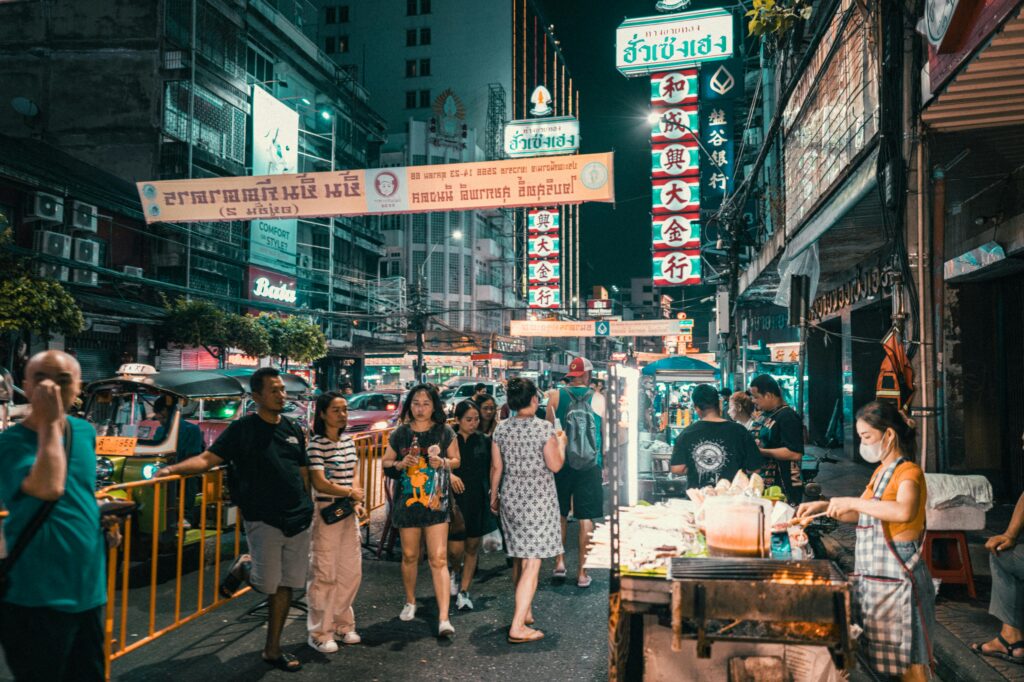
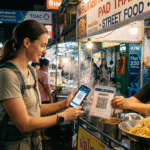
Yaowarat Road at night is among the great street food experiences in Asia without exaggeration. Woks fire at full heat. Red lanterns mark the overhead space. Vendors do the same thing they’ve been doing in the same spot for years. Crab omelette. Mango sticky rice. Char siu pork buns. Khao man gai from a plastic stool at 11 PM. Budget 200 to 500 THB for a full dinner that will be better than most restaurant meals at three times the price.
No structured plan required. Walk, follow the smell and the crowd, point at what looks good.
Chinatown Food Tour option: several operators run guided food tours through Chinatown starting at approximately 1,200 to 2,000 THB including tastings. Worth considering for a first visit to understand what you’re eating and why.
Covered in the Night Markets section above. The pre-dawn flower market followed by dim sum in Chinatown is one of the most atmospheric early mornings available in Bangkok.
| Mall | Best For | BTS/MRT | Budget-Friendly |
|---|---|---|---|
| ICONSIAM | Luxury brands, SookSiam indoor market, river views | Free boat from Saphan Taksin BTS | No |
| Siam Paragon | Designer brands, Sea Life Aquarium, luxury food hall | Siam BTS | No |
| MBK Center | Cheap electronics, knockoffs, affordable food court on level 6 | National Stadium BTS | Yes |
| Terminal 21 | Airport-themed floors, affordable food court, mid-range shopping | Asok BTS / Sukhumvit MRT | Moderate |
| CentralWorld | 600+ stores, CRU rooftop bar, good food hall | Chit Lom BTS | Moderate |
| Emsphere | Restaurants open until 3 AM, newest mall, young crowd | Phrom Phong BTS | Moderate |
| Platinum Fashion Mall | Cheap wholesale clothing, bulk buying, fashion | Chit Lom BTS / Pratunam | Yes |
| Budget Level | Experience | Approximate Cost |
|---|---|---|
| Free | Chao Phraya Express Boat ride | 15 THB |
| Free | ICONSIAM water light show (nightly at 7 PM and 8 PM) | Free |
| Free | Lumpini Park morning walk | Free |
| Free | Benjakitti Forest Park | Free |
| Budget | Chinatown Yaowarat street food dinner | 200 to 500 THB |
| Budget | Wat Pho (Reclining Buddha) | 200 THB |
| Budget | Wat Arun (Temple of Dawn) | 100 THB |
| Budget | Street-level Thai massage (1 hour) | 150 to 300 THB |
| Moderate | Calypso Cabaret show | 900 to 1,200 THB |
| Moderate | Muay Thai fight (upper tier seats) | 1,000 to 1,500 THB |
| Moderate | Mahanakhon SkyWalk observation deck | ~850 THB |
| Moderate | Sea Life Bangkok Ocean World | 990 to 1,090 THB |
| Moderate | Thai cooking class with market visit | 1,500 to 2,500 THB |
| Moderate | Dinner cruise (mid-tier operator) | 1,500 to 2,500 THB |
| Splurge | Muay Thai ringside seats | 2,500 to 3,500 THB |
| Splurge | Sky Bar / Vertigo cocktails for two | 1,500 to 3,000 THB |
| Splurge | Manohra Dinner Cruise | ~3,800 THB per person |
| Splurge | Divana Scentuara Spa full day | 3,000 to 6,000+ THB |
| Traveller Type | Top Picks |
|---|---|
| First-Timers | Grand Palace, Wat Pho, Calypso Cabaret, Sky Bar sunset, Chinatown Yaowarat dinner, Chao Phraya Express Boat |
| Couples | Manohra Dinner Cruise, Muay Thai ringside, Vertigo Moon Bar, longtail canal hire, Divana Spa day |
| Families | Safari World, Sea Life Bangkok, Asiatique Ferris wheel + Calypso, ICONSIAM SookSiam, Dream World |
| Solo Travellers | Muay Thai fight night, Chinatown Soi Nana bar crawl, Thai cooking class, Chatuchak Market, Jodd Fairs |
| Rainy Days | Sea Life Aquarium, any mega-mall, gold-class cinema, Thai massage, Jim Thompson House |
| Luxury Seekers | Manohra Cruise, Muay Thai ringside, Divana Scentuara Spa, Michelin-starred dinner (Sorn, Nahm, Bo.lan) |
| Culture-Focused | Ancient City (Muang Boran), Siam Niramit, Jim Thompson House, Wat Suthat, Chinatown food tour |
| Adventure / Adrenaline | Mahanakhon SkyWalk glass floor, Muay Thai training class, longtail canal hire, Bang Krachao cycling |
Temples before the heat. Pak Khlong Talat flower market. Lumpini Park or Benjakitti Forest Park. Chinatown dim sum. The Chao Phraya before tourist boat traffic builds. Bangkok at 6 AM has a completely different register: monks, market vendors, and the city before its official noise level begins.
Chatuchak Weekend Market (Saturday and Sunday only). Thai cooking class with market visit. Grand Palace (arrive at opening; leave before noon). Longtail canal tour through Thonburi. Jim Thompson House. Safari World or Sea Life if starting early.
Air conditioning is not weakness; it is Bangkok knowledge. ICONSIAM, Siam Paragon, MBK. Gold-class cinema. Thai massage. BACC contemporary art gallery. The city will still be there when the temperature drops to something manageable.
Rooftop bars. Chao Phraya Express Boat as temples catch late afternoon gold. Asiatique as it opens along the river. ICONSIAM water show. A walk along the riverside in the brief cooler window before evening heat settles.
Dinner cruise. Muay Thai fight. Calypso Cabaret. Chinatown Yaowarat street food. Jodd Fairs Night Market. Rooftop cocktails. Bangkok’s prime operating hours.
Thonglor and Ekkamai cocktail bars. Chinatown Soi Nana. RCA clubs. The midnight street food vendors who materialise specifically for the late crowd. Bangkok changes its performers but doesn’t stop.
How many days do you need in Bangkok? Minimum 4 days to cover the major sights without exhaustion. Six to seven days allows for day trips to floating markets, Ancient City, or Bang Krachao in addition to the city itself. Bangkok rewards slowing down. What you find on day 5 is almost always more interesting than what was on your original list.
Is Bangkok safe for tourists? Generally yes, particularly in areas served by the BTS and MRT and in established tourist districts. The most common risks are petty theft, transport-related scams, and situations that arise from excessive alcohol consumption. Violent crime targeting tourists is rare. Use Grab rather than negotiating with random taxis after midnight. Keep your wallet in a front pocket in crowded markets. See also: Bangkok Scams to Avoid.
What is the best time of year to visit Bangkok? November to February (cool season) offers the most comfortable temperatures, approximately 27 to 31 degrees Celsius, lower humidity, and generally clear skies. This is also peak tourist season with corresponding prices and crowds. March to May is the hottest period. June to October is monsoon season: significant afternoon rain but often clear mornings, and noticeably lower prices and crowds.
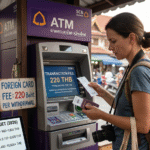
What is the approximate cost of visiting Bangkok in 2026? As of early 2026, approximately 35 THB equals 1 USD, 44 THB equals 1 GBP, and 38 THB equals 1 EUR. Exchange rates fluctuate; verify before travel. Bangkok ATMs typically charge 220 to 250 THB per international withdrawal. Currency exchange at Superrich Thailand branches generally offers better rates than airport or hotel counters. See also: Thailand Cost of Travel Guide.
What needs to be booked in advance? Muay Thai ringside seats, dinner cruises, Calypso Cabaret, and popular rooftop bar tables all benefit from booking 24 to 48 hours ahead, and more on weekends. Safari World, Sea Life, and major attractions can be booked online often at a discount. Chatuchak, temples, street food, and most daytime attractions require no advance booking.
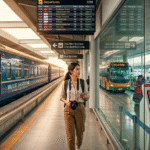
How do you get from Suvarnabhumi Airport to the city? The Airport Rail Link connects Suvarnabhumi to Phaya Thai BTS station in approximately 28 minutes. Costs approximately 45 to 150 THB depending on which service you take. Metered taxis from the official taxi queue work but traffic makes arrival times unpredictable. Grab can be used from Suvarnabhumi using the designated pickup area. Do not take unmetered taxis from inside the terminal.
What is the temple dress code in Bangkok? Shoulders and knees must be covered for the Grand Palace, Wat Pho, Wat Arun, and most major temple sites. A lightweight scarf or sarong handles it. Wrap skirts are sold outside the Grand Palace entrance for a small fee. Most temples provide loaner clothing if needed.
What is the biggest planning mistake tourists make? Over-scheduling. Bangkok’s heat, traffic, and distances mean that three experiences per day constitutes a genuinely full day. Attempting five is how you spend your third day in Bangkok too tired to enjoy anything. Budget transition time. Leave unplanned space. The city fills it better than any itinerary.
Is Bangkok good for solo travellers? Very. Bangkok has extensive infrastructure for solo tourism: abundant hostels and guesthouses, well-organised public transport, easy Grab access, a strong backpacker culture in certain areas, and activities like cooking classes and Muay Thai fights that create natural social situations. The city is genuinely welcoming to solo visitors.
What are the best Bangkok experiences for couples? Dinner cruise on the Chao Phraya at night, Muay Thai ringside (the shared energy is unusual and memorable), rooftop sunset cocktails at Vertigo or Sky Bar, private longtail canal hire through Thonburi, a spa day at Divana, and the Mahanakhon SkyWalk glass floor, which tends to create an involuntary shared experience.
Pak Khlong Talat flower market at 5 AM if you can manage it. Breakfast in Chinatown. Chao Phraya Express Boat to Tha Chang pier. Grand Palace and Wat Phra Kaew (hire a guide at the entrance). Lunch near the river out of the midday heat. Wat Pho in the afternoon light. Five-baht cross-river ferry to Wat Arun. Back north by longtail through a Thonburi canal. Chinatown Yaowarat for dinner. Teens of Thailand or Tropic City on Soi Nana for a drink.
Morning: Chatuchak Weekend Market (Saturday or Sunday only) or Lumpini Park and Jim Thompson House. Afternoon: SookSiam indoor market at ICONSIAM or Siam Paragon for air-conditioned recovery. Sunset: Rooftop cocktails at Sky Bar or Vertigo. Evening: Muay Thai fight at Rajadamnern. Late night: Thonglor or Ekkamai bar crawl.
Morning: Thai cooking class with market visit. Afternoon: Thai massage at Wat Pho school or Divana. Sunset: Mahanakhon SkyWalk glass floor. Evening: Calypso Cabaret at Asiatique plus riverside dinner. Night: ICONSIAM water show from the terrace (free, 8 PM).
Want more? Check out 30 best things to do in Bangkok.
Bangkok will frustrate you. It will overheat you and overstimulate you and send you down streets that were definitely not on the map. That’s not failure. That’s the city working. The best moments here are rarely the planned ones. Book the non-negotiables. Protect your mornings. Leave the rest open.
All prices are approximate and subject to change. Opening hours and entry fees and all other costs should be verified directly with official booking venues before visiting.
Some links may be affiliate links which may help me earn a small commission at no extra cost to you.
© 2026 RoamRiot | Tactical Travel for Real Explorers