Physical Address
304 North Cardinal St.
Dorchester Center, MA 02124
Physical Address
304 North Cardinal St.
Dorchester Center, MA 02124

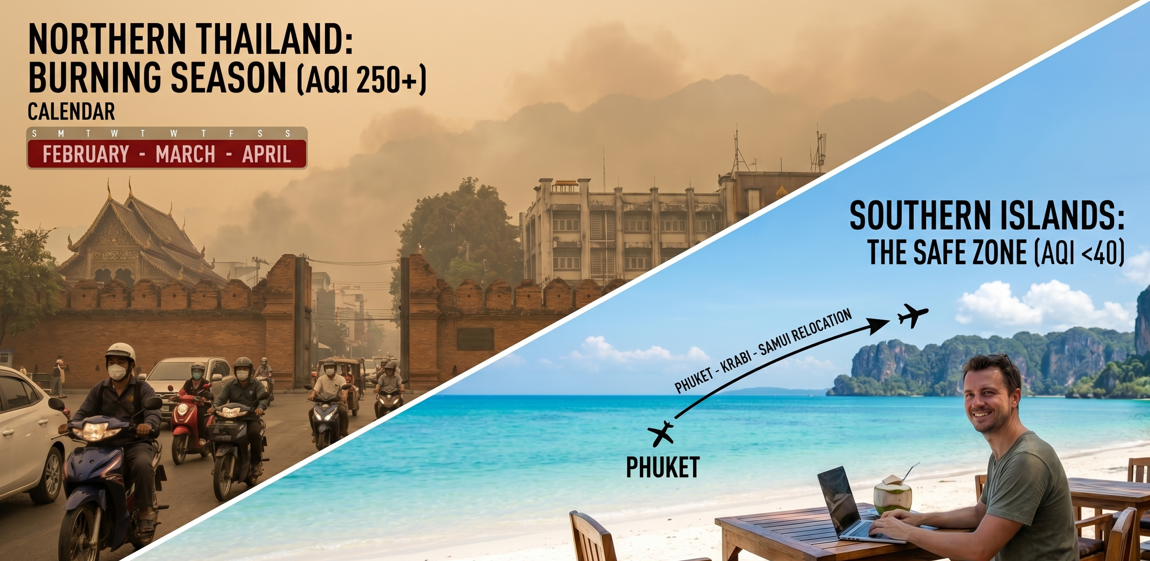
From February to April, Northern Thailand (Chiang Mai, Chiang Rai, Mae Hong Son) suffers from extreme PM2.5 air pollution caused by agricultural burning. During this “Burning Season,” air quality often reaches hazardous levels (AQI 200+), making outdoor activity dangerous. The tactical solution is a Southern Relocation to the Andaman or Gulf islands, where maritime winds keep the AQI in the “Good” range (below 50).
| Region | Expected AQI | Status | Tactical Action |
| Chiang Mai | 180–350+ | Hazardous | Relocate by Jan 31. |
| Bangkok | 100–150 | Unhealthy | Use N95 masks; limit outdoor time. |
| Phuket / Krabi | 20–45 | Safe | Ideal for outdoor/wellness. |
| Koh Phangan / Samui | 15–40 | Safe | Best for digital nomads. |
Many nomads try to “tough it out” in Chiang Mai using air purifiers. In 2026, the density of PM2.5 is so high that even indoor air quality can be compromised. Furthermore, if you are on a Destination Thailand Visa (DTV), a health crisis during this period could complicate your 180-day stay requirements if you are hospitalized.
Move South by February. The cost of a domestic flight is cheaper than the medical cost of respiratory inflammation. Check Intercity Logistics for the best relocation routes.
Also read: Bangkok Transit 2026: Navigating the 8-Line Urban Rail and SAT-1 Terminal