Physical Address
304 North Cardinal St.
Dorchester Center, MA 02124
Physical Address
304 North Cardinal St.
Dorchester Center, MA 02124

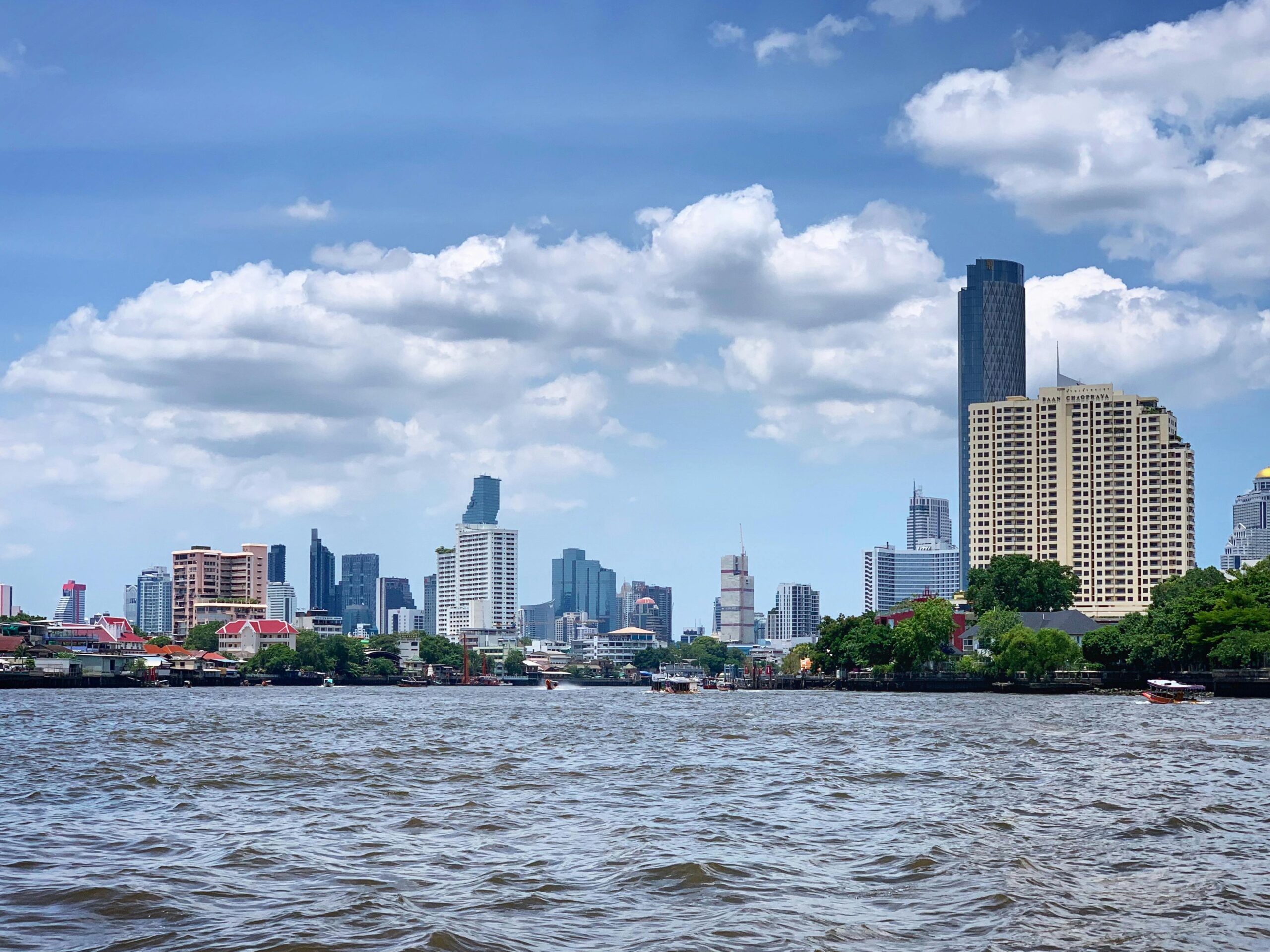
The ultimate Bangkok travel guide for 2026 covering temples, rooftop bars, food, nightlife, markets, neighborhoods, transport, scams, mistakes to avoid, and smart planning strategies.
Bangkok has a way of overwhelming people, not because it’s dangerous, but because it’s relentless.
The traffic alone can consume hours if geography hasn’t been thought through properly. The heat flattens anyone attempting three temples back-to-back at noon. The sheer volume of choices, rooftop bars, malls, markets, cocktail lounges, Michelin-starred restaurants, floating markets, temples, and nightlife districts creates a kind of decision paralysis that leaves many visitors seeing only a fraction of what the city actually offers.
That’s the core problem with Bangkok: it rewards preparation more than almost any other city in Southeast Asia.
The travelers who leave obsessed with Bangkok are rarely the ones who completely winged it. They’re the ones who understood that Bangkok is not one city. It’s several cities layered together, each operating with its own rhythm, geography, pricing, and purpose.
This guide is designed to help travelers move through Bangkok intelligently. Not a rigid itinerary. Not a shallow “top 10 attractions” list. A framework for making smart decisions based on time, energy, budget, and interests, while honestly explaining what’s worth prioritizing, what’s overrated, and what most travel content quietly ignores.
Before arriving, read RoamRiot’s Thailand eSIM Guide, and Best Areas To Stay In Bangkok because where you stay in Bangkok completely changes how much you enjoy the city.
Bangkok is enormous.
Many first-time visitors mentally compress Bangkok into a small tourist core. In reality, the temple district, shopping districts, nightlife areas, riverside neighborhoods, and local food zones are often 30 to 60 minutes apart depending on traffic.
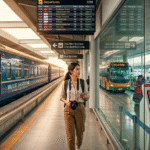
The Chao Phraya River divides the historic west side from the modern commercial east. The BTS Skytrain cuts through Sukhumvit, Siam, Silom, and Sathorn. The MRT Blue Line loops through Chinatown, central Bangkok, and several major interchange zones.
Understanding the BTS and MRT systems is one of the most important logistical decisions a traveler can make in Bangkok. Visitors relying entirely on taxis lose massive amounts of time unnecessarily.
For transport optimization, scams, airport strategy, and transit cards, RoamRiot’s Bangkok Transit Guide and Thailand Scams Guide should honestly be mandatory reading before landing.
| Neighborhood | Best For |
|---|---|
| Sukhumvit | Hotels, nightlife, restaurants, BTS access |
| Thonglor / Ekkamai | Cocktail bars, cafes, upscale dining |
| Silom / Sathorn | Rooftops, business district energy |
| Siam | Shopping malls and central transport |
| Riverside | Luxury hotels and river views |
| Chinatown | Street food and chaos |
| Ari | Cafes and slower local vibe |
| Khao San | Backpacker nightlife |
The biggest planning mistake in Bangkok is unnecessary zone-hopping.
Grouping temples together, pairing Chinatown with riverside exploration, and combining Sukhumvit with nightlife saves massive amounts of time and energy.
Bangkok heat is not background discomfort.
Between March and June, temperatures regularly hit 35 to 38°C with heavy humidity. Midday temple visits become exhausting very quickly.
The optimal strategy is simple:
Bangkok becomes dramatically more enjoyable once this rhythm is understood.
If visiting during burning season months or extreme heat periods, RoamRiot’s Thailand Burning Season Guide helps enormously.
The Grand Palace is Bangkok’s most visited attraction for a reason.
Built in 1782, the complex remains one of the most visually overwhelming architectural sites in Southeast Asia. Golden spires, mirrored chedis, hand-painted temple walls, and the Emerald Buddha combine into a genuinely impressive experience rather than a tourist trap.
The practical reality is simple:
Wat Pho and Wat Arun should always be grouped into the same morning because of proximity.
Most tourists fail Bangkok by trying to do temples slowly throughout multiple afternoons instead of one optimized early-morning temple circuit.
Wat Pho is arguably more interesting architecturally than the Grand Palace itself.
The Reclining Buddha stretches 46 meters long and remains one of Bangkok’s most memorable religious sites. The complex also contains one of Thailand’s most respected massage schools.
The atmosphere here feels calmer and more immersive than the Grand Palace once the main crowds disperse.
If planning a deeper Thailand route afterward, RoamRiot’s Thailand Temple & Culture Route pairs extremely well with Bangkok’s historic district.
Wat Arun is one of Bangkok’s defining visuals.
The porcelain-covered central prang rising above the Chao Phraya River becomes especially beautiful around sunset when the light reflects off the river.
The climb is steep, the steps are narrow, and the view is absolutely worth it.
The best version of Wat Arun is actually seeing it twice:
That second view is the one most people remember.
Bangkok’s Chinatown operates on entirely different energy from the rest of the city.
Yaowarat Road after sunset is loud, smoky, chaotic, neon-lit, crowded, and incredible.
This is where Bangkok starts feeling cinematic.
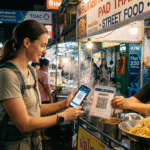
Seafood grills spill smoke into traffic. Gold shops glow under neon signs. Tiny alleyways hide noodle stalls that have existed for decades. Street vendors work at impossible speed while tourists stand frozen trying to decide what to eat next.
For food lovers, this is non-negotiable.
RoamRiot’s upcoming Bangkok Food Guide should honestly be paired with this section because Chinatown alone deserves an entire article.
Must-try foods here include:
The best time to arrive is around 6:30pm onward.
Chatuchak is not a market you casually “stop by.”
It is one of the largest markets on Earth.
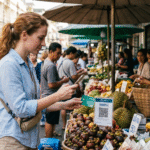
Vintage clothing, antiques, ceramics, furniture, local art, street food, pets, handmade crafts, sneakers, old cameras, Thai souvenirs, records, and random things nobody planned to buy all collide together under brutal Bangkok heat.
The market becomes exhausting by afternoon, so early arrival matters enormously.
The best strategy:
Trying to freestyle Chatuchak for six hours straight is how people end up miserable.
Many travelers try avoiding malls in Bangkok.
That’s a mistake.
Bangkok malls are not normal malls.
ICONSIAM especially feels more like a luxury entertainment complex mixed with a cultural showcase. The riverside setting alone makes it worth seeing.
The basement SookSiam area recreates floating-market-style food culture from across Thailand and is genuinely one of the best indoor food experiences in the city.
Even travelers who hate shopping usually enjoy ICONSIAM.
Bangkok’s rooftop scene genuinely competes globally now.
The skyline has evolved massively over the last decade, especially around Sukhumvit and Sathorn.
| Rooftop | Best For |
|---|---|
| Lebua Sky Bar | Iconic skyline views |
| Vertigo & Moon Bar | Sophisticated atmosphere |
| Octave Rooftop | Best balance of value and views |
| Above Eleven | Cocktails and nightlife |
| Tichuca | Trendy jungle aesthetic |
The skyline during clear-season evenings is genuinely spectacular.
Lebua is expensive but worth doing once.
Octave remains the best overall balance between atmosphere, crowd quality, pricing, and skyline experience.
For nightlife strategy, cocktails, and where to stay nearby, RoamRiot’s Best Areas To Stay In Bangkok pair perfectly here.
Bangkok is one of the world’s best food cities because exceptional meals exist at every budget level.
Some of the city’s best dishes cost under 100 THB.
The mistake tourists make is eating exclusively near major tourist attractions.
The best food in Bangkok often looks unimpressive from the outside.
Bangkok malls contain some genuinely excellent food courts.
Pier 21 at Terminal 21 remains one of the best-value eating spots in the city.
ICONSIAM’s SookSiam is excellent for regional Thai specialties.
MBK remains reliable for budget meals.
RoamRiot’s Bangkok Food Guide goes far deeper into exact restaurants, stalls, Michelin recommendations, eating routes, and optimized food itineraries.
Bangkok nightlife is enormous in scale and wildly different depending on area.
Thonglor and Ekkamai feel upscale and polished.
Khao San feels chaotic and backpacker-heavy.
RCA focuses on clubs.
Silom mixes rooftops, bars, night markets, and adult nightlife together.
The key is understanding what kind of night you actually want before heading out.
Trying to improvise nightlife in Bangkok usually leads to tourist traps.
One of Bangkok’s biggest strengths is that excellent experiences exist at every budget level.
A luxury Bangkok trip can feel world-class.
A budget Bangkok trip can still feel incredible.
That flexibility is part of why people become obsessed with the city.
Bangkok rewards smart spending more than aggressive spending.
Location matters far more than hotel luxury level in most cases.
The city punishes inefficient planning brutally.
But once Bangkok clicks, it becomes one of the easiest major cities in Asia to enjoy.
November through February remains the sweet spot:
March and April become extremely hot but coincide with Songkran Festival, which completely transforms the city into a giant water fight.
Monsoon season from roughly May to October brings lower prices, fewer crowds, and dramatic afternoon storms.
RoamRiot’s article on Where to Shop In Bangkok may have a strong influence on your timing. 😉
Simple. Efficient. Geographically optimized.
That matters more in Bangkok than most travelers realize.
Absolutely. Bangkok is one of Asia’s great cities for food, nightlife, shopping, urban energy, and value.
Three full days is the minimum for a first trip. Five days is significantly better.
Generally yes. Violent crime against tourists is relatively uncommon. Scams and transportation risks are the bigger concern.
For first-timers, Sukhumvit near BTS stations like Asok, Phrom Phong, or Thong Lo is usually the safest choice.
Bangkok can be extremely cheap or extremely luxurious depending on travel style.
Only partially. Neighborhoods themselves may be walkable, but distances between major zones are not.
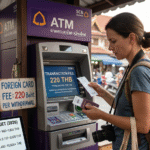
Before landing in Thailand, RoamRiot’s Thailand eSIM Guide, Thailand ATM Fee Saving Hacks, Thailand Cost Guide, and Thailand Digital Arrival Card Guide will save real money and real stress.
Official external resources: