Physical Address
304 North Cardinal St.
Dorchester Center, MA 02124
Physical Address
304 North Cardinal St.
Dorchester Center, MA 02124

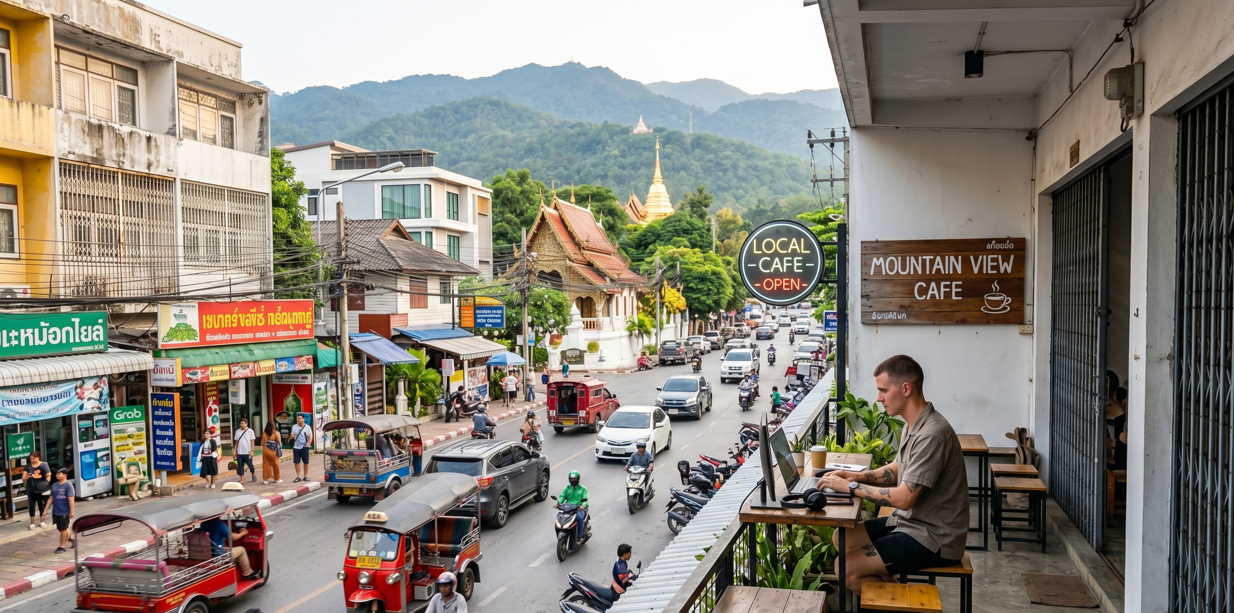
So, you’re thinking about packing your life into a backpack and heading to Thailand? Smart move. Travelers have been doing it for over a decade now, and while the “dream” hasn’t changed, the tactical reality of living there in 2026 certainly has. It’s no longer just about finding a beach with Wi-Fi; it’s about mastering a new digital bureaucracy that can either be your best friend or your worst nightmare.
If you want to survive and thrive as a digital nomad in the Land of Smiles, you need more than a laptop and a dream. You need a plan. Here is the ground truth on setting up your life in the world’s favorite nomad playground.
Before we talk about coffee shops and coworking spaces, we have to talk about your “permission to stay.” In the old days, we all did “visa runs” and lived in a legal grey area. In 2026, that’s a dangerous game.
The Destination Thailand Visa (DTV) is the game-changer you’ve been waiting for. It’s a 5-year, multiple-entry visa that finally makes remote work legal.
| Feature | Requirement / Benefit |
| Stay Duration | 180 days per entry |
| Extension | One 180-day extension per entry (1,900 THB) |
| The “Big” Rule | 500,000 THB liquid funds maintained for 3-6 months |
| Work Rule | Your clients/employer must be outside of Thailand |
Expert Tip: Don’t try to “park” the 500k THB ($14,500 approx.) a week before you apply. Embassies are now doing deep dives into your bank history to make sure that money is actually yours and not a temporary loan from a friend. For the full official breakdown, check the Siam Legal DTV Guide.
Thailand isn’t just one vibe. Your “home base” will dictate your productivity and your social life.
Chiang Mai is still the king. It has matured from a budget backpacker town into a polished, tech-heavy “Digital Nomad Wonderland”.
For more expert information check out one of my favorite pieces on the “Chiang Mai Nomad Hotspot” by Isabel Leong. It’s super helpful!
If you need high-speed energy and world-class networking, the capital is where you belong.
Don’t be the person standing in a 30-minute line at the airport for a “Tourist SIM” that costs three times what it should.
In 2026, eSIMs are the gold standard for your first 30 days. You can install a profile like Airalo or Holafly before you even leave your house.
| Provider | Best For | Speed Tip |
| AIS | Best rural and island coverage | Highest 5G speeds (85-120 Mbps) |
| TrueMove H | Fast 5G in Bangkok and Chiang Mai | Great student/nomad bundles |
| DTAC | The budget-friendly choice | Solid in major cities |
The Setup: Use an eSIM for your arrival. Once you get settled and have a long-term lease, get a physical SIM or a local contract. You’ll need a local number to use Thai banking apps or local e-wallets like TrueMoney. Find out more about the eSIM options here.
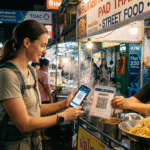
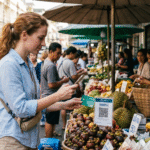
Thailand is a “Cash is King” country that is rapidly moving toward QR codes, but you will still need physical Baht for street food and markets.
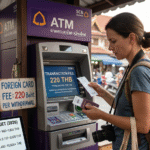
The Scam: Almost every Thai ATM charges a flat 220 THB (~$6 USD) fee per withdrawal, regardless of how much you take out.
Check out the the PromptPay option and how to setup KBank PAY&TOUR without a Thai ID to completely do away with the ATM withdrawal fee.
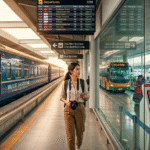
Bangkok’s traffic is legendary, and not in a good way. Mastering transport is the difference between a productive day and three hours of staring at a taxi’s bumper.
Thailand is very safe, but it has its quirks.
Thailand in 2026 is a study in calculated dualism. It’s still the beautiful, smiling paradise it has always been, but now it’s wrapped in a digital layer that requires you to be prepared. Master the systems, get your DTV, and you’ll have the best “office” in the world.
Find out how safe Thailand is and what scams you must be aware of before heading out there here.
Stay tactical, stay rebellious. Welcome to the Riot.