Physical Address
304 North Cardinal St.
Dorchester Center, MA 02124
Physical Address
304 North Cardinal St.
Dorchester Center, MA 02124

Planning 2 weeks in Thailand in 2026? This is the most tactical, honest, and comprehensive Thailand itinerary on the internet. Multiple routes, real transport timings, realistic budgets, seasonal warnings, and zero fluff.
Two weeks in Thailand sounds like plenty of time. It isn’t. Here’s how to stop burning it on bad routing, unnecessary transit, and unrealistic planning.
Most Thailand itinerary articles are written by people who visited once, took some nice photos, and decided that qualifies them to tell you how to spend 14 days. The result is usually the same: a list of places to visit, a vague mention of “the temples are amazing,” and a suggestion to “leave room for spontaneity.”
That’s not an itinerary. That’s a postcard.
What you actually need to understand is that Thailand is enormous, transit takes longer than most people expect, the north and south operate very differently, and the difference between a smart 2-week route and a terrible one is often the difference between coming home energized or coming home needing another holiday.
This guide is built differently.
Multiple routes for different traveler types. Real transport timings. Honest seasonal warnings. The combinations that work, the ones that exhaust people, and the itinerary structures social media keeps romanticizing despite making very little logistical sense.
As of 2026, many nationalities including the US, UK, EU countries, Australia, Canada, and New Zealand receive a 60-day visa exemption for Thailand. Your passport should have at least 6 months validity remaining, and immigration officers may ask for:
Thailand’s Digital Arrival Card (TDAC) system is also mandatory. Complete it online before arrival through the official Thai government portal. Do not pay third-party “processing agents” claiming to offer expedited approval – the TDAC itself is free.
Save screenshots or PDFs of your confirmation QR code before boarding. Airport WiFi and roaming issues are not the time to discover you cannot access your email.
For full breakdowns and scam warnings, read RoamRiot’s Thailand Digital Arrival Card 2026 guide.
This is one of the most important things first-time Thailand travelers underestimate.
From roughly February through April, northern Thailand experiences agricultural burning season smoke. Chiang Mai and Chiang Rai can experience severe air pollution during this period, particularly in March.
Some days are manageable. Some days are genuinely unhealthy.
| Month | North Thailand (Chiang Mai / Chiang Rai) | South Thailand (Phuket / Krabi / Samui) | Bangkok |
|---|---|---|---|
| November – January | Cool, dry, clear skies. Best overall season. | Excellent on most routes. Gulf side may still see some rain Oct–Dec. | Excellent weather. |
| February | Mostly good. Early smoke risk begins. | Excellent. | Good. |
| March – April | Burning season. Heavy smoke and hazardous AQI possible. | Best beach conditions in many southern destinations. Hot and dry. | Extremely hot with occasional haze. |
| May – October | Green season with monsoon rains but clearer air. | Andaman side (Phuket/Krabi) gets heavy rain. Gulf islands (Samui/Phangan/Tao) usually better. | Rainy season with heavy bursts. |
If you’re traveling in March or April, a south-heavy route is usually smarter.
The burning season is not just “a little haze.” AQI levels can become genuinely unhealthy, especially for travelers with asthma or respiratory sensitivity. Check real-time air quality before committing to long outdoor activities in northern Thailand.
Read the full RoamRiot Burning Season 2026 guide before locking in Chiang Mai plans during this period.
Thailand stretches roughly 1,800 kilometers from top to bottom.
The common rookie mistake is bouncing north-south-north trying to “see everything.” Every unnecessary backtrack costs you:
Choose a direction and move logically through the country.
There is no single correct Thailand itinerary.
But there are smart structures and terrible ones.
These are the five main frameworks that consistently work well depending on traveler type, season, and pacing preference.
Best for:
First-time visitors, couples, culture-and-beach travelers, and people traveling between November and February.
This is the most balanced 14-day Thailand route for most people.
You arrive into Thailand’s biggest city, get your bearings, then move north before heading south in one clean sweep.
The key optimization many people miss:
That removes unnecessary Bangkok reconnections.
| Leg | Transport | Duration | Budget Cost | Mid-Range Cost |
|---|---|---|---|---|
| Bangkok → Chiang Rai | Domestic flight | ~1.5 hours | 500–900 THB | ~1,500 THB |
| Chiang Rai → Chiang Mai | Bus / minivan | ~3–4 hours | 150–250 THB | ~400 THB private |
| Chiang Mai → Krabi | Domestic flight | ~2 hours | 700–1,400 THB | ~2,000 THB |
| Krabi → Koh Lanta | Ferry | ~2 hours | 350–450 THB | Similar |
| Krabi → Phuket | Bus or flight | ~2.5 hours by bus | ~200 THB | ~800 THB flight |
Flying Chiang Mai → Bangkok → Phuket when direct Chiang Mai → Krabi or Phuket flights exist.
That one unnecessary reconnection quietly burns most of a day.
Best for:
Beach lovers, divers, backpackers, island-hoppers, and travelers visiting between May and September.
The Gulf islands (Koh Samui, Koh Phangan, Koh Tao) operate differently from Thailand’s Andaman side. During periods when Phuket and Krabi experience rougher monsoon conditions, the Gulf side can remain comparatively favorable.
Koh Tao remains one of the world’s most popular budget dive certification destinations. Koh Phangan now offers far more than just Full Moon Parties, while Koh Samui acts as the infrastructure hub with the easiest airport access.
Moving:
also aligns naturally with ferry routes.
This is the part Instagram rarely shows.
Island transfers involve:
Three islands in two weeks is usually the sweet spot before logistics start eating too heavily into relaxation time.
Dragging oversized luggage across ferry piers in tropical humidity becomes a fast lesson in why overpacking is a mistake.
Pack lighter than you think you need.
Best for:
Couples, slow travelers, photographers, nature-focused trips, and luxury travelers.
The Andaman coast delivers some of Thailand’s most cinematic scenery.
This route works because it does not constantly rush.
You’re moving south in one logical sweep instead of bouncing between disconnected destinations.
Khao Sok is one of Thailand’s most underrated destinations:
Most rushed itineraries skip it entirely.
That’s usually a mistake.
Phuket is not automatically bad.
But different parts of Phuket feel completely different.
Patong is:
Meanwhile:
feel calmer, cleaner, and more resort-oriented.
A surprising number of “I hated Phuket” stories are really:
“I accidentally booked Patong.”
Best for:
Digital nomads, remote workers, slow travelers, and people mixing work with travel.
This structure minimizes constant movement.
Outside burning season, Chiang Mai remains one of Southeast Asia’s strongest digital nomad bases because it combines:
Nimman remains the main hub for remote workers.
Inside burning season, however, the equation changes significantly.
See RoamRiot’s Digital Nomad Setup in Thailand guide for detailed setup advice.
The BTS corridor around:
offers some of the best urban infrastructure in Southeast Asia for remote workers.
Get your eSIM sorted before arrival whenever possible. Airport SIM counters remain significantly more expensive than online eSIM setups in many cases.
Best for:
History lovers, temple-focused travelers, photographers, and slower cultural trips.
Thailand has far more historical depth than many visitors realize.
The Bangkok → Chiang Mai sleeper train genuinely lives up to its reputation if booked correctly.
Book:
Avoid regular seated overnight tickets.
The journey takes roughly 12–13 hours and saves:
Book well ahead during peak season.
Some itinerary structures sound comprehensive but perform terribly in practice.
This creates unnecessary airport repetition and destroys pacing.
This sounds efficient until you realize Phi Phi sits on the opposite coast from the Gulf islands.
That “quick island hop” becomes an entire transit day.
Pai is beautiful for the right traveler.
But adding Pai into an already compressed 14-day route often damages pacing badly. The road involves hundreds of mountain curves and the roundtrip alone consumes significant time and energy.
Worth it for slower travel.
Usually not worth forcing into already packed first-time itineraries.
Bangkok is not just somewhere you fly through.
It is one of Asia’s greatest cities.
The mistake is spending:
without ever experiencing modern Bangkok properly.
| Area | Best For |
|---|---|
| Sukhumvit | Food, nightlife, BTS access |
| Silom / Sathorn | Business district + local energy |
| Riverside | Temples and historical Bangkok |
| Ari | Cafes and slower local atmosphere |
| Chinatown (Yaowarat) | Street food and chaos |
March through May heat can become extremely draining.
Walking long distances between temples at midday sounds reasonable online and feels terrible in real life.
Smart travelers:
By day three, 7-Eleven starts feeling less like a convenience store and more like climate survival infrastructure.
Avoid:
Ethical elephant experiences focus on:
not performances.
| Destination | Best For | Avoid If | Best Season | Vibe |
|---|---|---|---|---|
| Phuket (Patong) | Nightlife, resorts, easy access | You hate crowds and commercial tourism | Nov–Apr | Loud, busy, tourist-heavy |
| Phuket (Surin / Nai Harn / Kamala) | Luxury stays, quieter beaches | Strict budget travelers | Nov–Apr | Upscale and calmer |
| Krabi / Ao Nang | Couples, island hopping, climbers | Travelers seeking isolation | Nov–Apr | Active and photogenic |
| Railay Beach | Honeymoons, kayaking, photography | Heavy luggage travelers | Nov–Apr | Stunning and relaxed |
| Koh Lanta | Slow travel, couples, digital nomads | Hardcore nightlife seekers | Nov–Apr | Quiet and underrated |
| Koh Tao | Diving, backpackers | Luxury-only travelers | May–Sep | Dive culture island |
| Koh Phangan | Full Moon Party, yoga retreats | People wanting consistency | May–Sep | Party + wellness mix |
| Koh Samui | Resort comfort, easier logistics | Budget backpackers | May–Sep | Developed and convenient |
| Khao Sok | Nature, jungle stays, adventure | Beach-only travelers | Nov–May | Wild and unique |
Thailand can still be affordable.
But it is no longer the ultra-cheap fantasy many old blogs still describe.
Tourist-heavy areas like:
have become noticeably more expensive in recent years.
| Category | Budget Backpacker | Mid-Range Traveler | Comfort / Luxury |
|---|---|---|---|
| Accommodation | 300–500 THB hostel dorm | 800–1,800 THB hotel/private room | 3,000–8,000+ THB resort |
| Food | 200–400 THB street food/local spots | 500–1,200 THB mixed dining | 1,500–3,000+ THB premium dining |
| Daily Transport | 150–400 THB | 400–1,000 THB | 1,000–3,000 THB |
| Activities | 200–500 THB | 500–1,500 THB | 2,000–10,000+ THB |
| Estimated Total Per Day | ~850–1,800 THB ($25–55) | ~2,200–5,500 THB ($65–165) | ~7,500–22,000+ THB ($225–660+) |
These add up faster than people expect:
Thailand rewards efficient planning more than people realize.
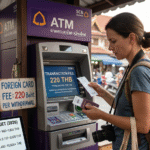
Thai ATMs usually charge around:
regardless of withdrawal amount.
Frequent small withdrawals quietly destroy budgets.
Withdraw larger amounts less frequently whenever possible.
Thailand has become increasingly cashless in cities and tourist areas, but cash is still essential in:
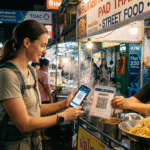
PromptPay QR systems dominate locally, but tourist usability still depends heavily on your bank setup and payment provider compatibility.
Always carry backup cash.
| Route | Best Option | Budget Option | Approx Time | Notes |
|---|---|---|---|---|
| Bangkok → Chiang Mai | Domestic flight | Overnight sleeper train | 1.5 hrs flight / 12–13 hrs train | Train saves hotel cost |
| Bangkok → Phuket / Krabi | Domestic flight | VIP overnight bus | ~1.5 hrs flight | Bus is cheaper but exhausting |
| Bangkok → Koh Samui | Bangkok Airways flight | Train + ferry combo | ~1 hr flight / 8–10 hrs combo | Samui flights expensive |
| Chiang Mai → Krabi / Phuket | Direct domestic flight | Connecting flight via Bangkok | ~2 hrs direct | Seasonal route availability |
| Krabi → Koh Lanta | Ferry / van combo | Same | 1.5–2 hrs | Ferry schedules vary by season |
| Koh Samui → Koh Phangan | Ferry | Same | ~1 hour | Frequent departures |
| Koh Phangan → Koh Tao | Speedboat ferry | Slow ferry | 1–2.5 hrs | Lomprayah commonly used |
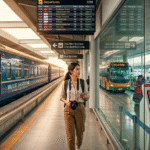
| Bangkok city travel | BTS + MRT + Grab | City buses | Variable | Avoid non-metered taxis |
Grab
Bolt
At Bangkok airports:
Avoid random “special taxi” offers inside terminals.
Bad luggage choices create unnecessary problems in Thailand.
Thailand involves:
Large hard-shell suitcases become increasingly frustrating the further south you go.
For most travelers:
Laundry is cheap almost everywhere.
Pack lighter than you think.
Yes, if structured intelligently.
It is enough to experience Thailand properly.
It is not enough to see every region without exhausting yourself.
November through February is generally the safest all-around window for mixed north + south travel.
Usually yes between major regions.
Ground transport works best for shorter hops.
Yes, if you choose the right area for your travel style.
Generally very safe for tourists, though scams still exist.
The golden rule:
If someone approaches you unsolicited with a “special deal,” it usually is not one.
| Anchor Text | Target Article |
|---|---|
| Thailand Digital Arrival Card | Thailand Digital Arrival Card |
| Burning Season | Burning Season |
| Best Areas to Stay in Bangkok | Best Areas to Stay in Bangkok |
| Bangkok Transit Guide | Bangkok Transit |
| Thailand ATM Fee Hacks | Thailand ATM Fee Hacks |
| Thailand Cashless Systems | Thailand’s Cashless Kingdom |
| Thailand eSIM Setup | eSIM Dominance in Thailand |
| Thailand Safety Guide | Thailand Travel Safe |
| Thailand Cost Breakdown | Thailand Cost Audit: Real World Pricing |
| Resource | Purpose |
|---|---|
| Tourism Authority of Thailand | Official tourism information |
| State Railway of Thailand | Train booking official site |
| BTS Bangkok | Metro routes and fares |
| IQAir Thailand | Live AQI monitoring |
| 12Go Asia | Ferry/train/bus bookings |
Transport schedules, ferry operations, visa rules, airline baggage policies, and exchange rates can change frequently. Always verify operational details before travel, especially during monsoon periods or peak holiday seasons.