Physical Address
304 North Cardinal St.
Dorchester Center, MA 02124
Physical Address
304 North Cardinal St.
Dorchester Center, MA 02124

Plan the ultimate Bangkok day trips with our complete guide. Compare easy day trips from Bangkok, including Ayutthaya, Kanchanaburi, Pattaya and more with transit logistics.
Bangkok is a city built for staying, not leaving. The traffic is heavy, the transport network is centered on the city itself. Yet “Bangkok Day Trips” is the most searched term by travelers who have already seen Bangkok and are now looking to the beyond and every guidebook wants to sell an “easy day trip” that quietly eats ten hours of a person’s life. Some of those day trips genuinely are easy. Others are marketed as day trips because a tour company can sell a seat on a van, not because the math actually works for a single day away from Bangkok.
This guide breaks down the real day trips from Bangkok: how far they actually are, what it actually costs to get there, which transport option is genuinely fastest versus genuinely cheapest, and which destinations should honestly be crossed off a day-trip list and saved for an overnight instead. Transport routes, schedules, attraction information, and prices have been checked against current official or operator information wherever available. Because schedules, fares, and operating conditions can change, confirm time-sensitive details before departure; a number printed in an article six months ago is not a number a State Railway of Thailand ticket counter will honor today.
This is written as a practical planning tool, not a top-ten list padded out to hit a word count. Anyone searching for the best day trips from Bangkok, the cheapest day trips from Bangkok, or specific questions like how to get to Ayutthaya from Bangkok or whether a Bangkok floating market day trip is worth the early alarm should find a direct, checkable answer somewhere in the sections below, organized by destination and cross-referenced by transport mode, budget, and travel style. Where a popular “day trip” destination genuinely does not work as a single day away from Bangkok, that gets said plainly rather than glossed over for the sake of a longer list.
Mobility conditions vary considerably by site, and the notes below describe general terrain and practical movement around each destination rather than guaranteeing wheelchair accessibility; they do not account for entrances, accessible toilets, ramps, wheelchair rental, or accessible transport between sites, which should be confirmed directly with each attraction. Ayutthaya’s historical park is mostly flat and paved or packed dirt, which tends to make it easier to move around than the floating markets, though individual temple interiors sometimes involve steps. The floating markets are the most difficult of the group: narrow, uneven wooden walkways, crowded canal-side paths, and boats that require stepping down into a low, moving vessel make Damnoen Saduak and Maeklong hard going for travelers with mobility limitations, and Amphawa’s similarly narrow layout offers only marginal improvement. Ancient City and Safari World are both large grounds with golf-cart, tram, or vehicle-based options that reduce the amount of walking required, though this is not the same as verified accessibility infrastructure. Kanchanaburi’s main sites, including the bridge itself, are paved and generally manageable, though the Death Railway walk along the cliffside trestle at Tham Krasae involves uneven surfaces and no real railing in places. Travelers requiring specific accessibility facilities should confirm directly with each attraction before visiting.
Must Read: How To Avoid Bangkok Tourist Scams
Before getting into individual destinations, it helps to understand the shape of the problem. Bangkok day trips fall into three rough bands:
Genuinely easy (under 2 hours each way, realistic to do without a tour): Ayutthaya, Ancient City (Muang Boran), Damnoen Saduak, Maeklong Railway Market, Amphawa.
Possible but demanding (2.5–4 hours each way, needs an early start and a tight plan): Kanchanaburi, Pattaya.
Marginal as true day trips (long enough that most of the day disappears into transit): Hua Hin, Erawan Falls as a Bangkok-based trip (it works far better from Kanchanaburi, or as an overnight).
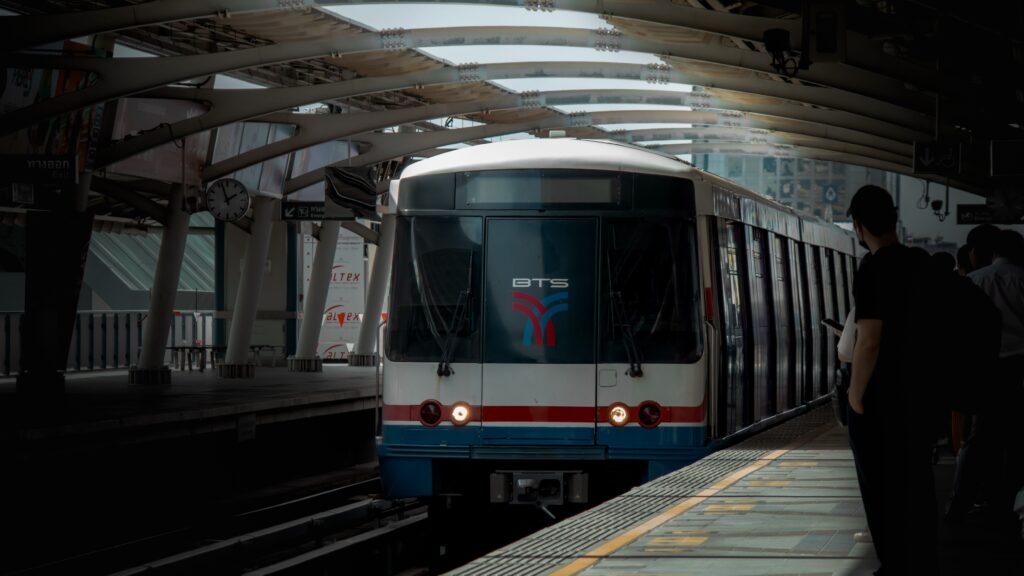
The other thing worth knowing before booking anything: Bangkok does not have one central train or bus station. Depending on where a person is headed, they might leave from Krung Thep Aphiwat Central Terminal (the modern main station near Chatuchak, connected to the MRT Blue Line), the old Hua Lamphong station (only a handful of trains still terminate here), Thonburi/Bangkok Noi station (a small station on the west bank of the river, not connected to the BTS or MRT), Mo Chit / Chatuchak’s Northern Bus Terminal, the Southern Bus Terminal at Sai Tai Mai (also in Thonburi, a separate location from Thonburi train station), or Ekkamai’s Eastern Bus Terminal (directly connected to BTS Ekkamai). Picking the wrong terminal because “the bus station” sounded like one place is one of the most common ways people lose an hour before they have even left the city. Confirm the departure point for the specific date and operator before heading out.
Thailand’s central region, where every destination on this list sits, runs on three broad seasons: cool and dry (roughly November through February), hot (March through May), and rainy (June through October). This matters more for day trips than for a Bangkok-only stay, because several of the best day trips involve significant time outdoors with little shade.
November to February is a strong window for temple-heavy destinations like Ayutthaya and Ancient City, and for the floating markets, since mornings are cool enough to comfortably walk or cycle for hours. This is also peak tourist season, so the floating markets and Ayutthaya’s main temples tend to be more crowded than at other times of year; an early start matters even more during these months.
March to May is Thailand’s hot season, and it hits day-trip destinations with limited shade, like Ayutthaya’s ruins and Muang Boran’s open grounds, hardest. Trips during these months should start earlier than usual (before 8 a.m. where possible) and plan to be largely done with outdoor sightseeing by early afternoon. Waterfall destinations like Erawan Falls are more forgiving in the heat, since swimming is part of the appeal, but water levels and flow can vary depending on how much rain fell the previous season.
June to October, the rainy season, brings afternoon downpours more than all-day rain in most years, so mornings are often still workable. The rainy season can produce stronger waterfall flow at Erawan Falls and Kanchanaburi’s other waterfalls, although conditions vary with how much rain has actually fallen in the preceding days, and river-based activities like rafting can be affected by higher water levels and, occasionally, safety closures during heavy rain. Floating market boat rides generally continue through the rainy season without much disruption, since the canals are used to seasonal water changes.
Across all seasons, checking a short-range forecast the morning of a day trip is worth the two minutes it takes, particularly for anything involving open-air transport like songthaews or a bicycle around Ayutthaya.
Since transport mode is often the deciding factor in whether a Bangkok day trip actually works, it is worth comparing the options directly rather than destination by destination.
By train. Trains are consistently the cheapest option and, on routes without heavy road traffic, can also be competitive on time. The catch is that Bangkok’s intercity rail network is split across stations that are not always convenient: Krung Thep Aphiwat for most modern long-distance and the new Ayutthaya commuter service, a handful of older trains still at Hua Lamphong, and Thonburi station (for Kanchanaburi) on the opposite riverbank with no BTS or MRT connection at all. Trains also generally run just a few times a day on secondary routes, which removes flexibility if plans change. Best used for: Ayutthaya (especially with the new commuter service), Kanchanaburi for a lower-cost trip, Hua Hin as the most comfortable long-distance option.
By bus. Government and licensed private buses are reliable, inexpensive, and run more frequently than trains on most routes, but Bangkok’s bus terminals (Mo Chit in the north, Sai Tai Mai in the south/west, Ekkamai in the east) each serve different regions, and picking the wrong one adds significant extra travel just to reach the correct starting point. Best used for: Pattaya (Ekkamai is genuinely convenient, directly on the BTS), Damnoen Saduak, Hua Hin.
By minivan. Minivans split the difference between buses and private cars: faster than big buses because they make fewer stops, cheaper than a private car, but with famously assertive driving styles and limited luggage space. They are the default choice for many independent travelers heading to Kanchanaburi, the floating markets, and Hua Hin. Best used for: any route where a bus feels too slow but a private car feels like overkill for a solo traveler or pair.
By private car or organized tour. The fastest, most comfortable, and most expensive option, and the only genuinely practical way to combine multiple stops in one day (such as the Damnoen Saduak, Maeklong, and Amphawa loop) without wasting hours on connections. For groups of three or more splitting the cost, a private car often ends up close in price per person to a minivan while saving real time. Best used for: any day trip involving multiple stops, families with young children, or trips to Erawan Falls where public transport genuinely does not work for a single day.
Bangkok day trips without a tour. For travelers who want to skip organized tours entirely, Ayutthaya, the individual floating markets, Ancient City, and Kanchanaburi’s core sites are all realistic to do independently using the train, bus, or minivan options above. The main trade-off is time spent figuring out schedules and terminals rather than money saved, since public transport fares are already low. Multi-stop days and Erawan Falls are the two scenarios where going without a tour or private car becomes genuinely impractical rather than just less convenient.
Must Read: How to Get Around Bangkok
| Destination | Best For | Approx. Travel Time (one way) | Typical Day-Trip Duration | Main Transport | Approx. Cost Level | Worth It? |
|---|---|---|---|---|---|---|
| Ayutthaya | First-time visitors, history, temples | 1–1.5 hrs by train, ~1.5 hrs by van | Full day (7–9 hrs round trip) | Train (SRT), minivan, bus | Budget | Yes, one of the best |
| Damnoen Saduak | Classic floating market photos | 1.5–2 hrs | Half day, early morning | Bus, minivan, private car | Budget–mid | Yes, if done early |
| Maeklong Railway Market | Novelty, quirky photo stop | 1.5–2 hrs | 1–2 hrs on site, combine with Damnoen Saduak or Amphawa | Minivan, train+ferry combo | Budget | Yes, as an add-on |
| Amphawa Floating Market | Evening atmosphere, food, boats | 1.5–2 hrs | Late afternoon to evening | Minivan, private car | Budget–mid | Yes, especially weekends |
| Kanchanaburi | WWII history, River Kwai, nature | 2–3.5 hrs | Full day, tight | Train, minivan, bus, private car | Budget–mid | Yes, but demanding as a single day |
| Erawan Falls (from Bangkok) | Waterfalls, hiking, swimming | 3–4 hrs by road | Full day, very tight | Private car, organized tour | Mid–high | Marginal alone; better via Kanchanaburi or overnight |
| Ancient City (Muang Boran) | Thai architecture in one place | 1–1.5 hrs | Half to full day | BTS + songthaew, taxi | Mid | Yes, underrated |
| Safari World | Families, kids, animals | 45 min–1 hr | Half to full day | Taxi/Grab, organized transfer | Mid–high | Yes for families |
| Pattaya | Beach fix, nightlife glimpse | 2–2.5 hrs | Full day, tiring as a day trip | Bus (Ekkamai), private transfer | Budget–mid | Workable but better as overnight |
| Hua Hin | Beach town, royal history | 3–4 hrs | Full day, transit-heavy | Train, bus, minivan | Budget–mid | Marginal; better as overnight |
Prices and travel times above are approximate ranges based on current operator information and are subject to change, particularly with Thai train timetables and seasonal traffic. Always check the day-of schedule before committing to a plan.
Must Read: Bangkok Travel Costs by RoamRiot
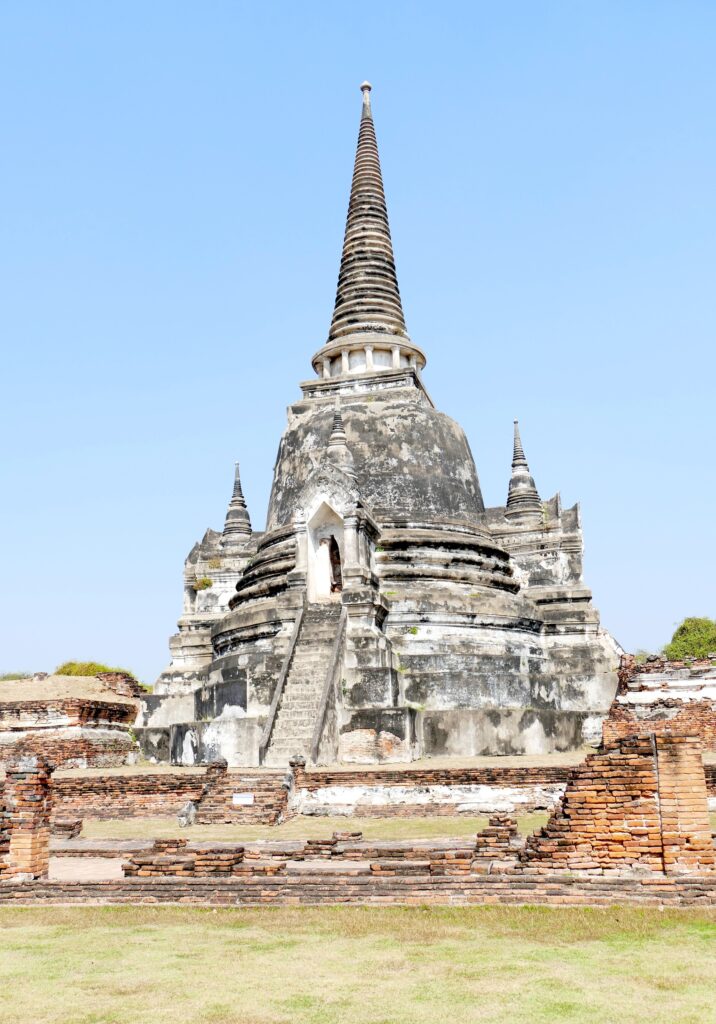
Ayutthaya is the former royal capital of Siam, sacked by the Burmese army in 1767, and today it is one of the more extensive open-air ruin complexes in Southeast Asia. It is also, logistically, one of the more forgiving day trips from Bangkok, which is why it belongs near the top of this list.
Why go. Ayutthaya Historical Park is a UNESCO World Heritage Site packed with the kind of temple ruins that photograph well in every direction: brick chedis stripped of their stucco, headless Buddha statues from the Burmese sacking, and the famous Buddha head wrapped in tree roots at Wat Mahathat. It is dense enough to see a genuinely representative slice of it in one focused day, and flat enough that most of the island is comfortably covered by bicycle.
How far and how long. Ayutthaya sits roughly 80 kilometers north of Bangkok. As of August 2026, this route got noticeably easier: the State Railway of Thailand launched a new commuter service, the SRT Bangkok Connex (BNEX), running directly between Krung Thep Aphiwat Central Terminal and Ayutthaya on August 1, 2026. The journey takes just over one hour, and the timetable runs six weekday services starting at 5:15 a.m. and four weekend services starting at 9:05 a.m. During the introductory promotional period, which runs from August 1 through October 31, 2026, fares from Krung Thep Aphiwat to Ayutthaya are capped at 50 baht; tickets are sold only at the station with no online booking, and seating is first-come, first-served. Because this is a newly launched service, confirm the current fare and timetable before travel, since pricing and scheduling on new routes sometimes shift in their first months.
Beyond this new commuter train, the regular SRT timetable also runs a substantial number of daily services between Bangkok and Ayutthaya across ordinary, rapid, and express classes, so there is essentially always a train running in either direction; check the current SRT timetable for the exact count and departure times on the day of travel, since this is exactly the kind of figure that shifts between timetable revisions. Most modern services terminate at Krung Thep Aphiwat, Bangkok’s newest station, connected via the MRT Blue Line at Bang Sue, while a small number of older ordinary trains still terminate at the historic Hua Lamphong station in the city center. Minivans from Bangkok’s Mo Chit area and buses from the Northern Bus Terminal also run to Ayutthaya, generally in a similar 1.5-hour window, and are a reasonable backup if train timings do not line up with a person’s plans.
Getting around once there. Bicycle rental is the standard move, typically 40 to 50 baht for the day, and the temple ruins are close enough together that cycling between them rarely takes more than a few minutes. A tuk-tuk driver for a half-day is another common option for anyone who wants a guide-adjacent experience without joining a formal tour, and boat trips around the island (roughly 200 baht per person on a shared boat) are worth doing for the different sightlines onto the ruins from the water.
What to see, what to skip. Wat Mahathat (the tree-root Buddha head), Wat Phra Si Sanphet (the three chedis of the former royal palace), Wat Ratchaburana, and Wat Chaiwatthanaram (an Angkor-influenced temple on the riverbank, arguably the best sunset spot) form a strong core four. Entrance to each major temple runs about 50 baht. Trying to see all 30-plus ruins in the historical park in one day is a mistake; four to six well-chosen sites, with breaks for food and shade, makes for a far better day than a rushed checklist.
Independent vs. tour. Ayutthaya is one of the easiest places in Thailand to do entirely independently. A tour adds convenience and narration, but does not save meaningful time, and it removes flexibility around how long to spend at any given ruin.
What can go wrong. Ayutthaya in the middle of the day, especially March through May, is brutally hot with almost no shade at the ruin sites. Starting early (the 5:15 a.m. or similarly early trains, or an 8 a.m. departure by van) and finishing sightseeing before 1 p.m. makes a real difference. Bicycles have no real security; lock them and do not leave valuables in the basket.
Highly Recommended:
Ayutthaya Grand Pearl River Cruise Tour and Ayutthaya Must-Visit Tour: Summer Palace, Floating Market & Temples for the complete experience.
Important Note: You will need strong mobile data and service coverage here, since travelers navigating between temple sites and booking boat rides benefit from reliable mobile data outside central Bangkok’s hotel Wi-Fi zones… check out Airalo – one of the most reliable eSIM providers in Thailand.
Kanchanaburi is built around one of the darkest chapters of the Pacific War: the “Death Railway” the Japanese army forced Allied POWs and Southeast Asian laborers to build, including the bridge over the Mae Klong (commonly known internationally as the River Kwai). It is a genuinely moving place to visit, and it is also a genuinely demanding day trip.
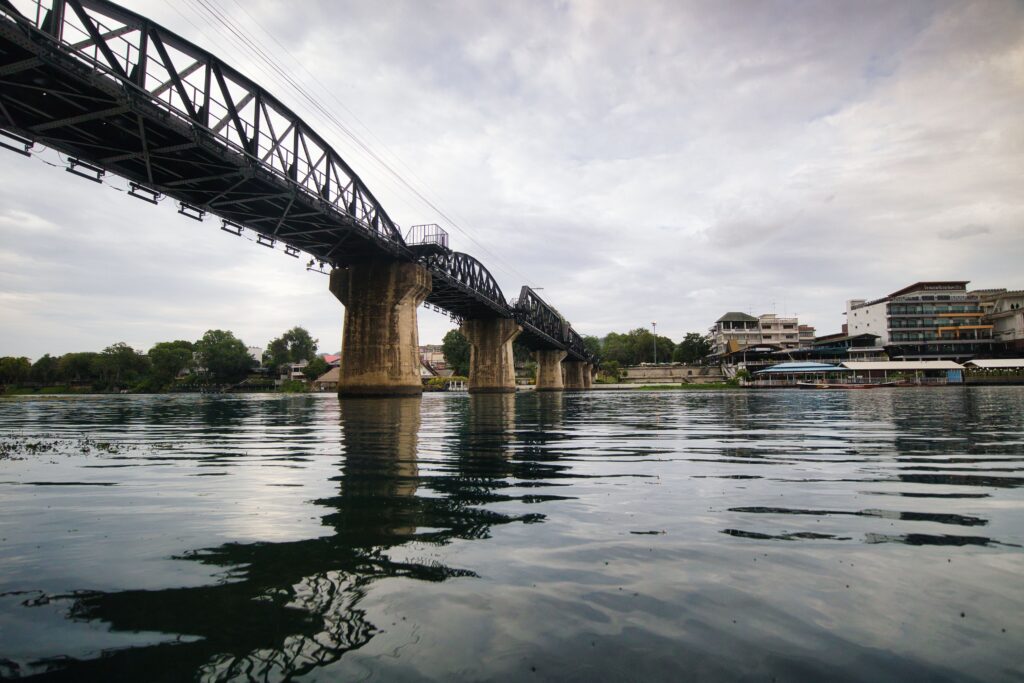
Is it worth a day from Bangkok? Yes, but a Kanchanaburi day trip should be planned as a full, disciplined day, not a leisurely one. The town itself is around 130 to 150 kilometers from Bangkok, and getting there realistically costs 2 to 3.5 hours each way depending on the transport chosen and traffic conditions, which pushes total round-trip transit time to somewhere between 4 and 7 hours out of a single day.
Transport options. Two trains a day run from Thonburi (also called Bangkok Noi) Station to Kanchanaburi, departing at 07:50 and 13:55, stopping in Nakhon Pathom along the way, with a flat fare regardless of boarding point. The direct train journey takes just under three hours. The train is scenic and cheap, but Thonburi station is on the opposite bank of the river from most of Bangkok’s hotel districts and is not connected to the BTS or MRT, so allow real time and cost for a taxi to reach it. Return trains from Kanchanaburi generally depart in the morning and mid-afternoon; confirm the current return times at the station on arrival, since this schedule is a common source of missed connections.
Minivans and buses are faster and more flexible. Most Kanchanaburi-bound buses leave from the Southern Bus Terminal (Sai Tai Mai), while some private van operators run from the Northern terminal at Mo Chit, with hourly departures roughly from 4 a.m. to 6 p.m., taking about three hours. Private taxi or car transfer is the fastest and most comfortable option, typically taking around two and a half hours, at a meaningfully higher price point, and is the most sensible choice for a group splitting the cost.
What to see. The Bridge over the River Kwai, the Thailand-Burma Railway Centre or the JEATH War Museum for context, the Death Railway walk along the cliffside wooden trestle at Tham Krasae, and, for those with extra time and their own transport, the Hellfire Pass Memorial further out of town. Trying to add Erawan Falls onto this same day is where things usually fall apart (see below).
Independent vs. tour. A private car or an organized day tour genuinely earns its cost here, because it removes the two biggest friction points: the ambiguous train schedule and the spread-out sites once in Kanchanaburi that are awkward to link without a vehicle.
What can go wrong. Underestimating the return trip is the single biggest failure mode. People plan the outbound leg carefully and then get stuck deciding what to see next without checking what time the last reasonable transport back to Bangkok actually leaves.
Highly Recommended Kanchanaburi Tours:
Erawan Falls, a seven-tiered waterfall inside Erawan National Park, is one of the most photographed natural attractions in this part of Thailand, and it gets pitched constantly as a Bangkok day trip. The honest answer is that it is a poor one when attempted directly from Bangkok and a genuinely good one from Kanchanaburi.
Erawan Falls sits around 190 to 200 kilometers from Bangkok, and a one-way drive from Bangkok realistically takes three to four hours. Public transport makes this worse rather than better: the practical public-transport route runs through Kanchanaburi via bus and minivan and takes over five hours each way, which makes a same-day return from Bangkok by public transport effectively unworkable. Even the fastest option, a private car straight from Bangkok, means roughly six to eight hours of driving alone, out of a day that also needs to include hiking to the falls and getting back before dark.
The park is open daily from 8 a.m. to around 4:30 p.m., with last entry at 3:30 p.m., and foreign adult entrance is 300 baht, with 150 baht for children. If Erawan Falls is a priority, the better plan is either to base in Kanchanaburi for a night and treat Erawan as a half-day trip from there, where it is genuinely close, or to book a full private-car day tour from Bangkok that combines Kanchanaburi’s main sites with a shorter Erawan stop and accepts a long day on the road. Attempting it as a bolt-on to an already-full Kanchanaburi day trip from Bangkok is the classic way this day goes wrong.
RoamRiot recommendation: Getting an Airalo eSIM for booking private transfers and confirming last-entry cutoff times while en route.
These three sit close enough together, all in or near Samut Songkhram and Ratchaburi provinces southwest of Bangkok, that they are usually discussed as a set, and for a day trip that is exactly how they should be planned: pick one as the anchor and use the others as add-ons if time allows.
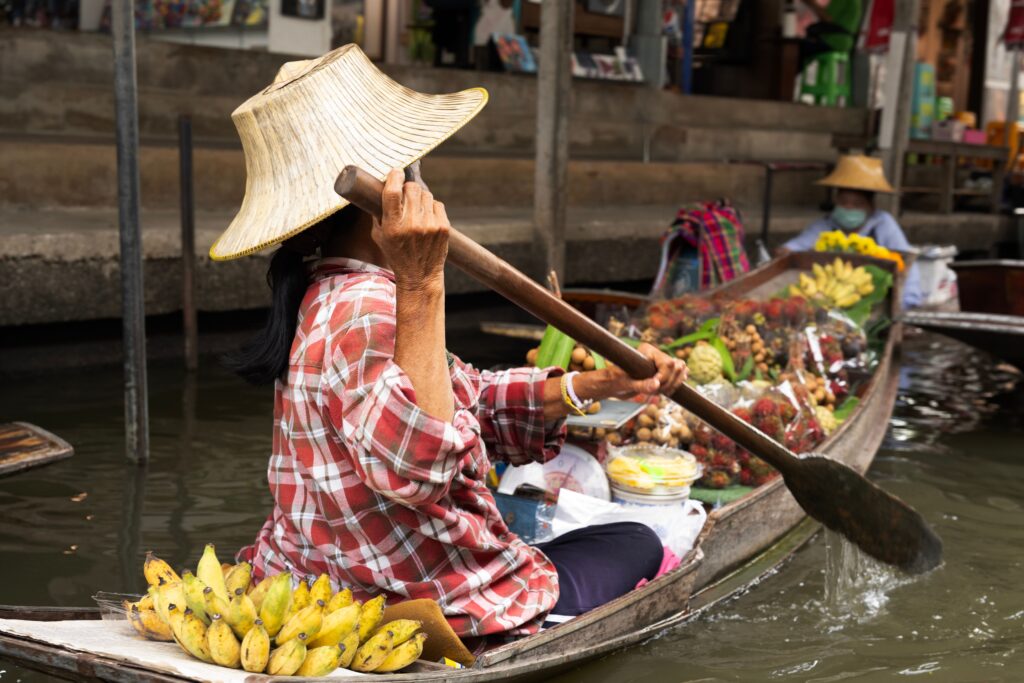
Damnoen Saduak Floating Market. Roughly 1 hour and 45 minutes from central Bangkok, this is the market most people picture when they hear “Thai floating market”: narrow canals crowded with wooden boats selling produce, noodles, and souvenirs. It runs daily, roughly from 7 a.m. to midday, and it is genuinely busiest, and most authentic-feeling, in the early morning before tour buses from Bangkok arrive around 9 to 10 a.m. A public bus (route 78 from the Southern Bus Terminal) is the budget option; private vans running around 1.5 hours are a common independent choice, and some van operators are geared toward small groups, so it is worth checking minimum group size or shared-seat availability before booking. This is a market people should be honest with themselves about: it is undeniably touristy, and the boat rides are commercial transactions, not folk theater, but the canal scenery and food are still a reasonable reason to make the trip.
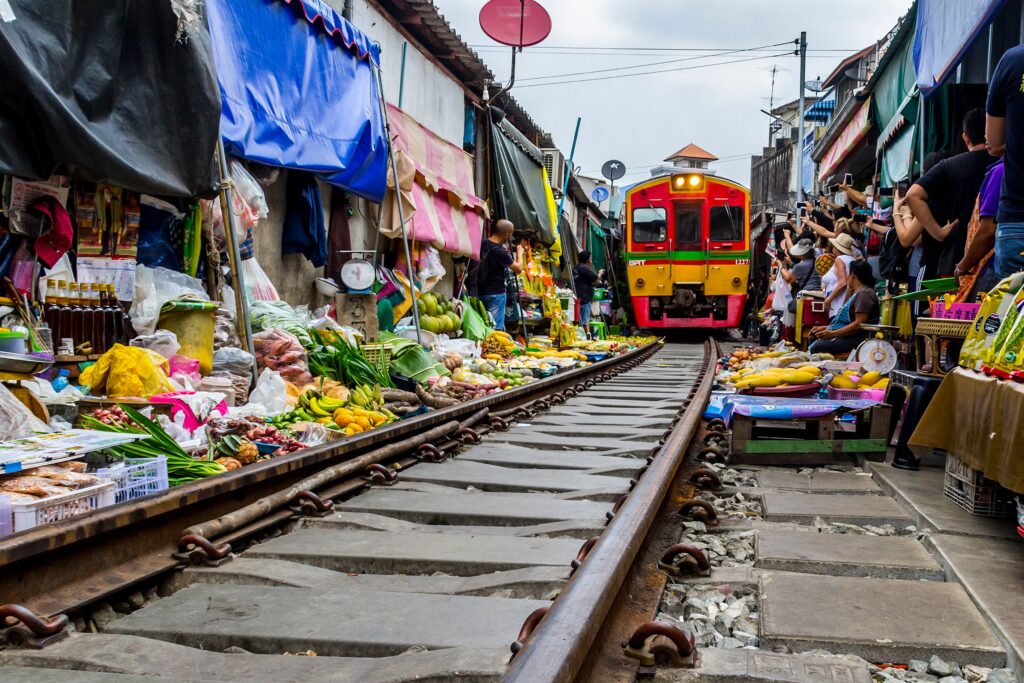
Maeklong Railway Market. This is the market built literally along an active train track, where vendors fold back their awnings and produce every time a train rolls through, several times a day. The current SRT timetable lists Mae Klong services at approximately 8:30 a.m., 11:10 a.m., 2:30 p.m., and 5:40 p.m., but this is a local timetable that gets revised without much notice, so confirm the day’s actual times on arrival or via a current source rather than working from any printed schedule, including this one; showing up and missing the train by twenty minutes is a common disappointment. By car or taxi, Maeklong is roughly 1.5 hours from Bangkok, and it combines naturally with Damnoen Saduak, since the two markets sit about 20 kilometers apart, connected by local minivan for a nominal fare of around 20 baht.
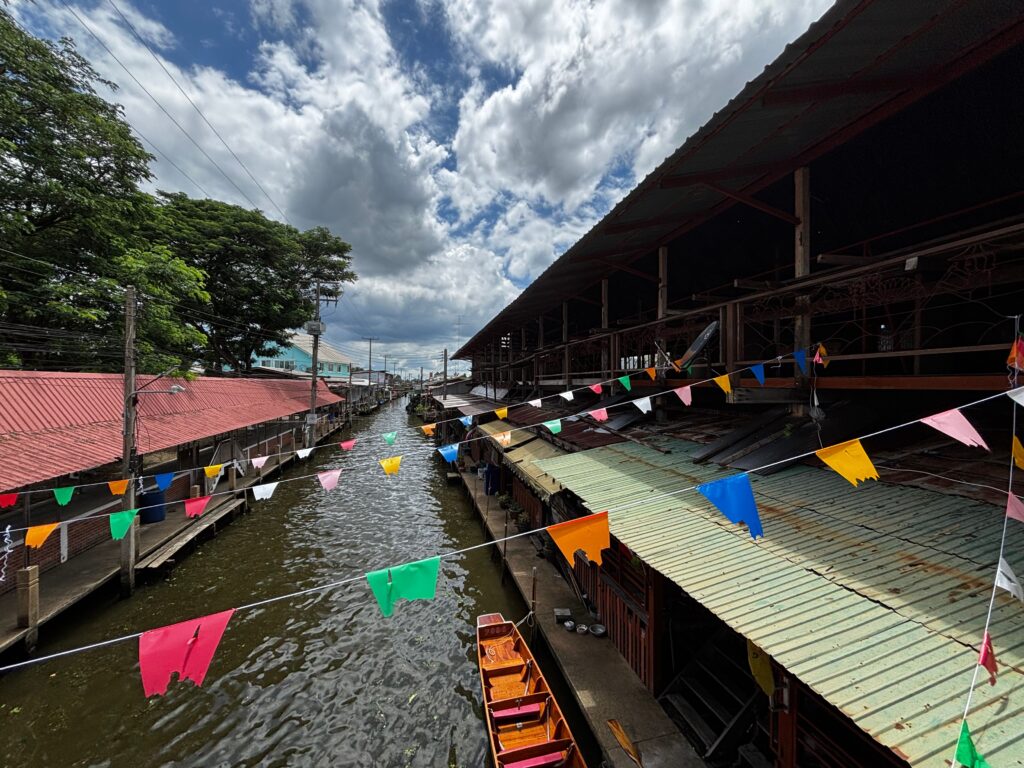
Amphawa Floating Market. The most laid-back of the three, and the one best experienced in the late afternoon and evening rather than the morning, when local vendors sell food from boats along the canal and the town’s cafés and guesthouses light up. It runs about 75 minutes from Bangkok by taxi or car, and it is particularly lively on Friday, Saturday, and Sunday evenings, when it draws domestic weekend visitors as much as tourists. Amphawa pairs naturally as the last stop of a day that started at Damnoen Saduak in the morning, took in Maeklong around midday, and wound down in Amphawa for dinner before heading back to Bangkok.
Independent vs. tour. Public transport between these three towns exists but requires stitching together buses, minivans, and the odd shared songthaew. Independent travel is possible, but combining several markets by public transport requires multiple connections, so a private driver or organized tour simplifies the day considerably. A single-destination visit (just Damnoen Saduak, or just Amphawa in the evening) is easy to do independently by bus or van; the full three-market combination is where a private driver or tour starts to earn its cost. This is one of the most booked tours available combining destinations such as Damnoen Saduak Floating Market and Mae Klong Market.
What can go wrong. Arriving at Damnoen Saduak after 9 a.m. and finding it swamped with tour groups is one of the more frequent disappointments travelers report. Arriving at Maeklong and missing the train because the schedule shifted is another.
RoamRiot Recommends:
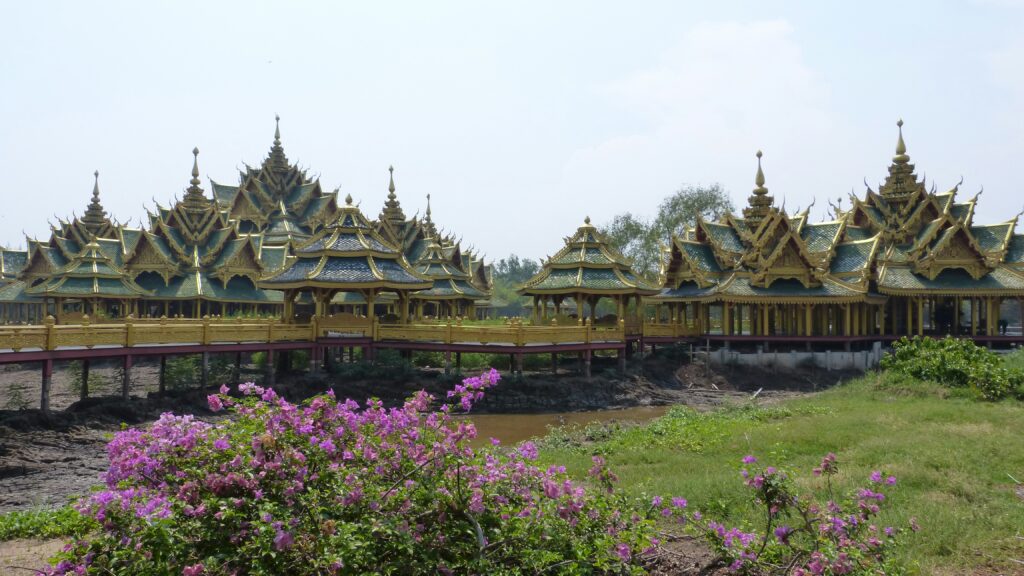
Muang Boran, marketed internationally as “Ancient City,” is a large open-air museum built in the rough shape of Thailand, containing scaled and full-size reconstructions of the country’s most significant temples, palaces, and monuments in one walkable (or cyclable) park. It gets far less attention than Ayutthaya or the floating markets, which is part of its appeal.
Why go. For anyone who cannot fit a trip to Ayutthaya, Sukhothai, or the north into their Thailand itinerary, Muang Boran condenses replicas and relocated original structures from across the country’s history into a single afternoon.
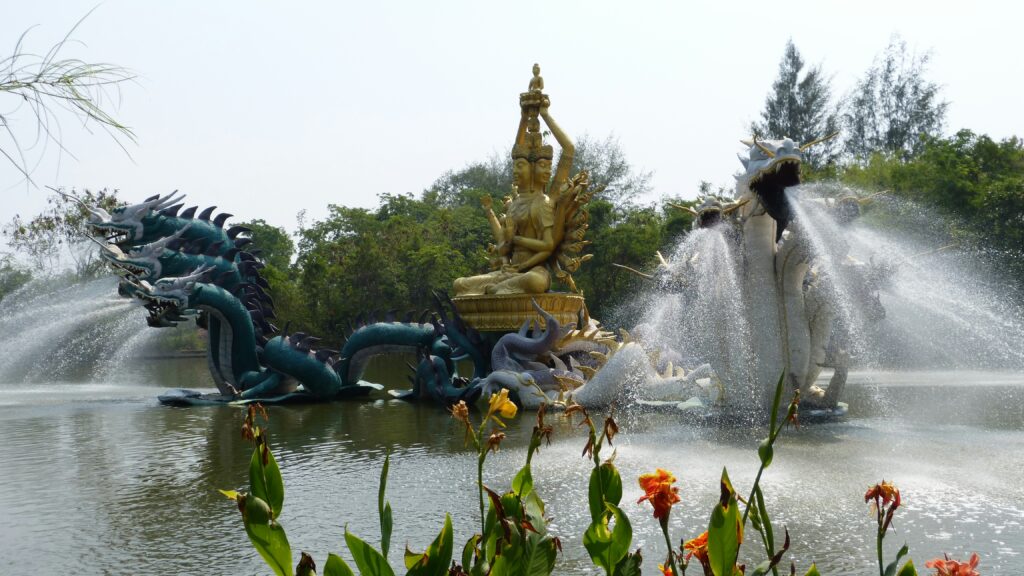
How to get there. The budget route is the BTS Sukhumvit Line to Kheha station, the last stop on the line, followed by a shared songthaew for the final stretch (around 10 baht per person, 5 to 10 minutes). Total journey time from central Bangkok runs 75 to 90 minutes. A direct Grab or taxi from central Bangkok takes roughly 35 to 45 minutes and is the faster, pricier option. The museum currently lists a free shuttle from Kheha BTS running on Saturdays and Sundays; confirm the day’s shuttle timing before relying on it, since weekend-only services like this are the first thing to change without notice.
Cost and hours. Muang Boran’s official pricing lists adult admission at 700 baht and child admission (ages 6 to 14) at 350 baht, with the museum open from 9:00 a.m. to 7:00 p.m. and ticket sales closing at 6:00 p.m. These figures come directly from the museum’s own site and should still be reconfirmed before visiting, since admission pricing and hours are exactly the kind of detail attractions revise periodically; official pricing and third-party vendors such as Klook are both worth checking, as one is not always cheaper than the other depending on current promotions. Getting around the grounds is done by bicycle rental, golf cart, or the park’s own tram/shuttle, and covering the highlights realistically takes three to five hours.
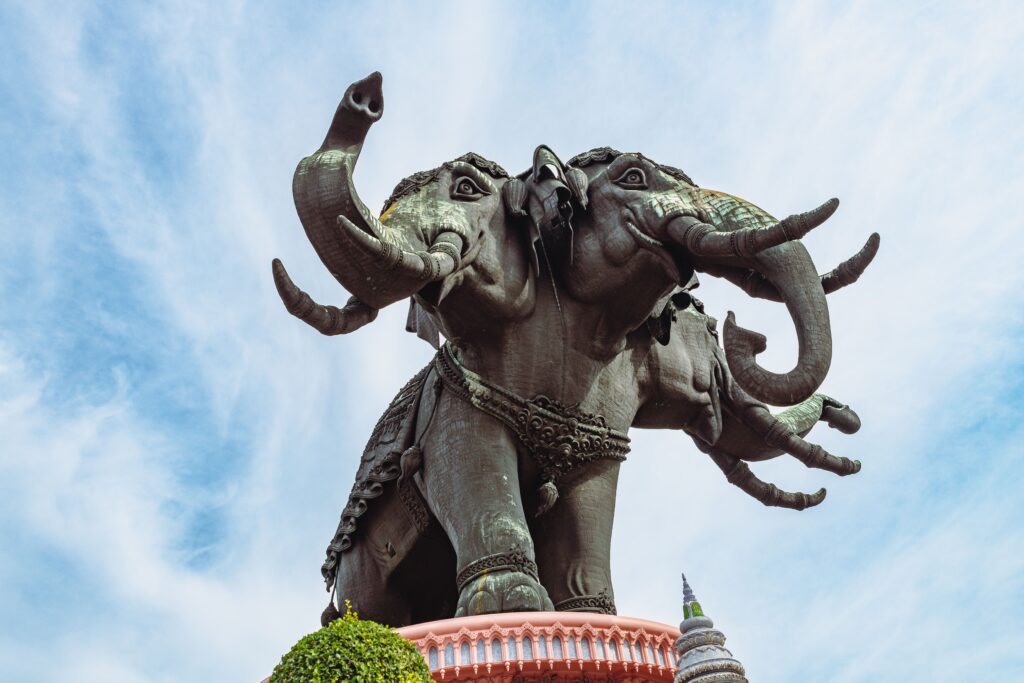
Combining with the Erawan Museum. The Erawan Museum, home to the enormous three-headed elephant statue, sits along the same BTS line on the way to Kheha and pairs naturally with a Muang Boran visit; several ticket vendors sell a combined entry.
Who should skip it. Travelers who already have Ayutthaya or another major historical site on their itinerary may find Muang Boran redundant rather than complementary, since much of its content is reconstruction rather than an original site.
RoamRiot Recommends: Bangkok Ancient City Muang Boran Full-Day Guided Tour
Safari World, on Bangkok’s northeastern outskirts, is best classified as a Bangkok-area day trip or full-day excursion rather than a true out-of-town day trip in the sense of Ayutthaya or Kanchanaburi, since it never actually leaves Bangkok’s metropolitan area. It is included here because it is searched for and booked as a day trip regardless, particularly by families, and it is worth being upfront that its geography is not comparable to the other destinations on this list.
Why go. It combines a drive-through Safari Park, where animals including giraffes, zebras, lions, and tigers roam in open habitats viewed from a vehicle, with Marine Park, a more conventional zoo-and-show format including a dolphin show.
How to get there. Safari World sits on the edge of the city, roughly 45 minutes to an hour from central Bangkok by taxi or private car, depending on traffic. Public transport options exist but are limited enough that most visitors are better served by taxi, Grab, or a booked transfer.
Hours and cost. The park operates Tuesday through Sunday, closed Mondays. Safari Park runs 9 a.m. to 4:30 p.m. on weekdays and 9 a.m. to 5 p.m. on weekends; Marine Park runs 9 a.m. to 5 p.m. on weekdays and 9 a.m. to 5:30 p.m. on weekends. Single-zone tickets and combined tickets are available, with combined admission running toward the upper end of the price range; as with Muang Boran, it is worth comparing official pricing against third-party vendors, since one is not always cheaper than the other depending on current promotions. Budget six to eight hours for a full visit covering both zones and the main shows; three to four hours is enough for a single zone.
Who should skip it. Travelers without children, or those who have already done a proper wildlife encounter elsewhere in Thailand, likely get more out of one of the other destinations on this list.
RoamRiot Recommends:
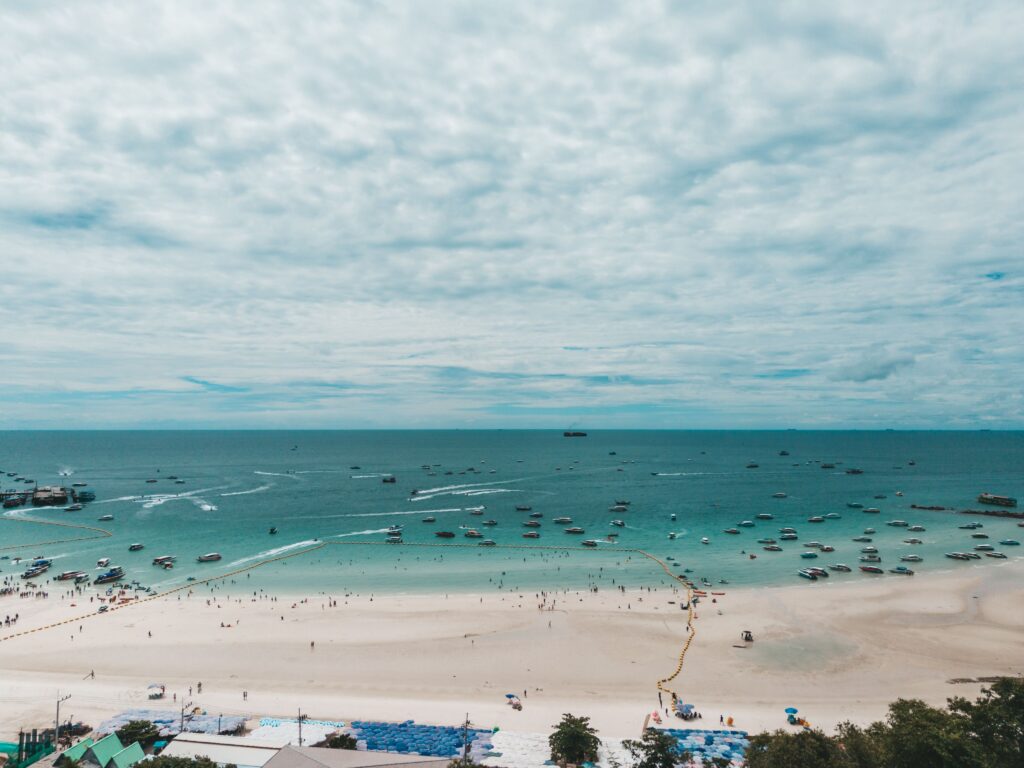
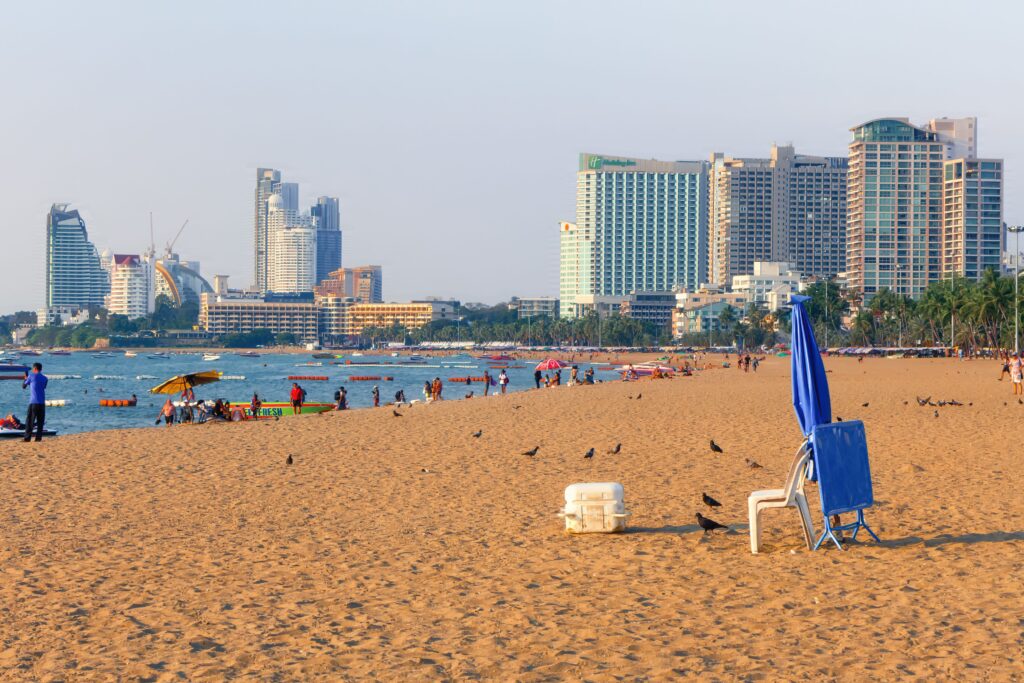
Pattaya is Thailand’s most-visited beach resort city outside the southern islands, roughly 150 kilometers southeast of Bangkok on the Gulf of Thailand. As a day trip, it works, but it asks a lot of a single day for what it delivers.
Is it worth a day from Bangkok? For a first look at Pattaya, or a beach fix without an overnight commitment, yes. For actually experiencing what Pattaya is known for, its nightlife and multi-day resort pace, a day trip undersells it badly, and an overnight stay is the more honest recommendation.
How to get there. Buses leave from the Eastern Bus Terminal at Ekkamai, directly accessible via BTS Ekkamai, with first-class air-conditioned services from Roong Reuang Coach running roughly every 30 minutes from 5 a.m. to 11 p.m. Fares run in the range of 130 to 170 baht, with typical travel time of 2 to 2.5 hours depending on traffic. A single daily train runs from Hua Lamphong at around 6:55 a.m., taking about 3.5 hours for a fare of roughly 31 baht, but with only one departure a day in each direction, it is impractical to build a day trip around unless the timing happens to fit perfectly. Minivans from Ekkamai and Mo Chit, and private transfers, are also widely available, with private transfers running from roughly 1,500 to 2,500 baht.
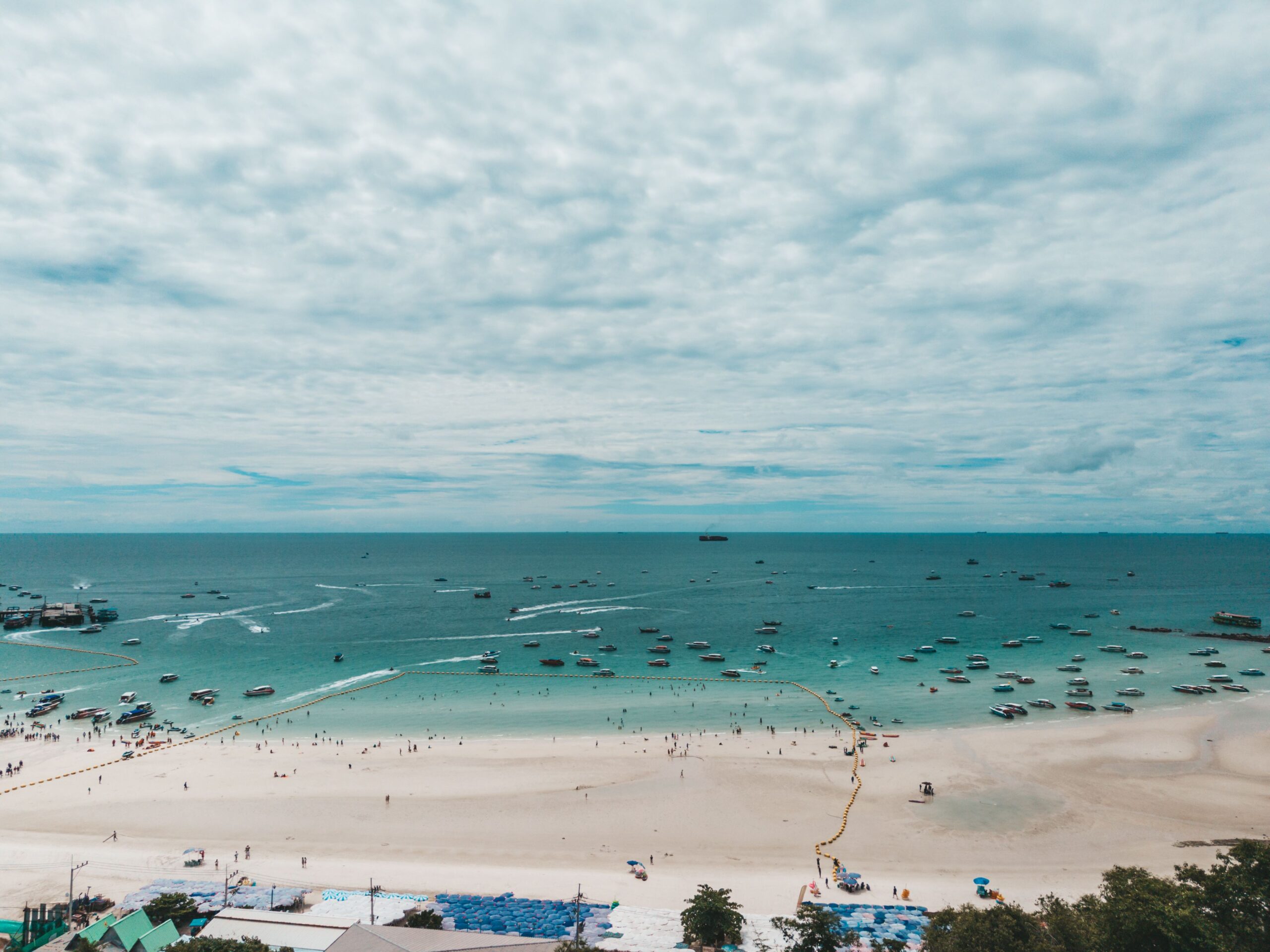
What to do and skip in a single day. Given the transit time eating 4 to 5 hours round trip, a Pattaya day trip works best focused on one clear anchor: a beach afternoon at Jomtien (generally cleaner and calmer than the main Pattaya beach), a visit to the Sanctuary of Truth wooden temple, or a specific activity like a boat trip to Koh Larn island. Trying to sample the beach, the nightlife district, and an island trip in one day is not realistic once transit time is accounted for.
What can go wrong. Missing the last comfortable bus back to Bangkok is the main risk; services do continue into the evening, but travelers who linger past a certain point should confirm the last reliable departure rather than assume one exists.
RoamRiot Recommends:
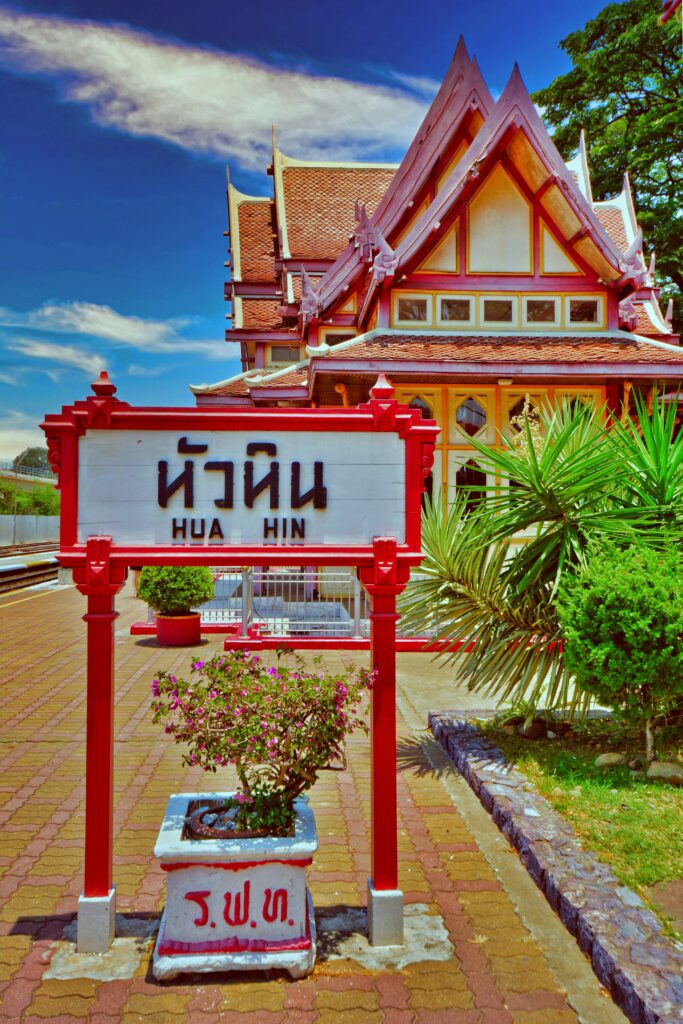
Hua Hin is Thailand’s original royal beach resort, calmer and more upscale in character than Pattaya, but it sits far enough from Bangkok that a day trip genuinely struggles to justify itself.
Is it worth a day from Bangkok? Marginally, and mostly for travelers who specifically want to see the town rather than spend meaningful beach time. The distance is around 220 kilometers, with a driving time of roughly 2 hours 45 minutes by car under good conditions, but public transport takes noticeably longer. Direct train service from Krung Thep Aphiwat runs roughly every three hours and takes about 3 hours 35 minutes, while buses from the Eastern Bus Terminal or Suvarnabhumi Airport run several times daily and private minivans from Victory Monument depart roughly every half hour from 6 a.m. to 6:30 p.m., taking about three hours.
That means a realistic day trip involves 6 or more hours of round-trip transit for perhaps 4 to 5 usable hours in Hua Hin itself, once time for the walk from the station or bus stop is factored in. Trains are the cheapest and most frequent option, with over 40 departures a day and third-class fares starting around 110 baht, which makes the train a genuinely low-cost way to test the town even on a tight day-trip schedule, provided the return timing is planned carefully.
Who should skip it. Anyone hoping for a relaxed beach day should treat Hua Hin as an overnight rather than a day trip; the transit-to-beach-time ratio simply does not work in a single day the way it does for closer, more purpose-built day-trip destinations like Ayutthaya or the floating markets.
RoamRiot Recommends Hua Hin Private Customize Day Tour.
Good combinations:
Poor combinations:
Money. Cash is still essential outside central Bangkok. Floating markets, songthaews, and rural bus and train ticket counters frequently do not take cards. Carry small denominations; vendors at markets rarely have change for large notes.
Connectivity. Google Maps, Grab, and translation apps become genuinely necessary once outside central Bangkok’s hotel Wi-Fi zones, particularly for navigating songthaew routes, confirming train times at markets, and booking a return Grab from a rural bus stop. A local eSIM activated before departure avoids relying on patchy public Wi-Fi at stations and markets.
Get the Airalo eSIM and stay connected for Grab bookings, live train times, and translation at rural markets.

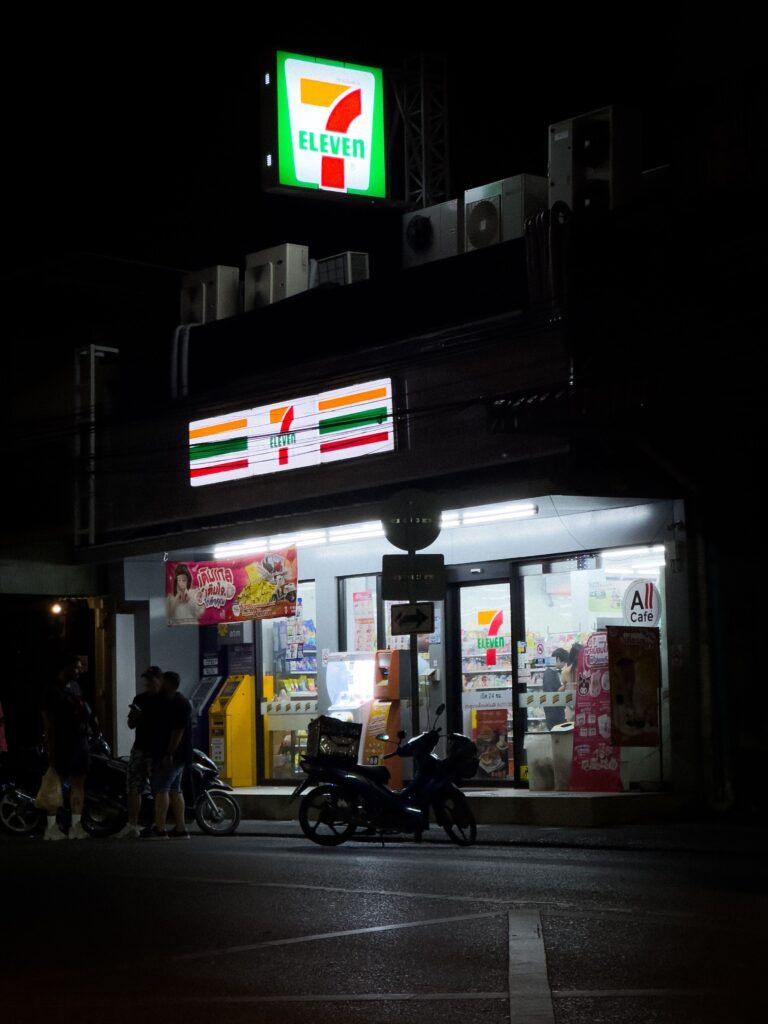
Toilets. Train stations, 7-Elevens (found in nearly every Thai town of any size), and market food courts are the reliable options. Rural bus stops and songthaew waiting areas often are not.
Luggage. Day trips should mean day bags. Bringing full luggage onto a minivan or the Damnoen Saduak bus is a common mistake that makes boat rides, bicycle rentals, and crowded markets significantly harder to manage.
Scams and tourist traps to be aware of. One of the more common issues at the floating markets is inflated “tourist price” boat fares agreed to without asking the standard rate first; agreeing a price before stepping into a boat avoids most disputes. At Ancient City and Muang Boran, it is worth comparing gate pricing against pre-booked online tickets before arriving, since online vendors are frequently, though not always, the cheaper route. Unlicensed “travel agents” near Khao San Road offering suspiciously cheap Kanchanaburi or Ayutthaya tour packages are worth vetting against reviews before paying in full.
If plans go wrong. Missing a train (particularly the twice-daily Thonburi to Kanchanaburi service, or the once-daily Pattaya train) is one of the more common ways a day trip goes sideways. In nearly every case, a minivan or bus from the same city serves the same destination within an hour or two, at a similar or lower price, so a missed train is rarely a ruined day, just an adjusted one. Grab may be available for local transport in larger destinations on this list, but coverage and driver availability vary by town and time of day, so it should not be treated as a guaranteed return option in more rural areas.
Food on the road. Food is built into most of these visits rather than being an afterthought. Ayutthaya’s night market near the train station and the boat noodle stalls around the historical park are worth budgeting real time for, not just a rushed lunch between temples. The floating markets are built around food as much as shopping: Damnoen Saduak’s coconut pancakes cooked in half-shells over charcoal, and Amphawa’s evening seafood grills, are worth trying rather than skipping in favor of the boat ride alone. Kanchanaburi has plenty of riverside restaurants along the Kwai, which makes lunch or dinner easy to build into the itinerary without extra planning. Pattaya’s seafood scene, particularly around Naklua, is worth factoring in if extending a Pattaya day into an overnight.
Best Bangkok day trips for couples. Amphawa’s evening atmosphere, with its string-lit canals and slower pace, is a strong pick for couples, especially paired with a firefly-spotting boat ride after dark, offered by several small operators along the canal. Ayutthaya at sunset, particularly around Wat Chaiwatthanaram on the riverbank, is another option for couples who prefer history and photography over a market’s crowds and noise. Kanchanaburi, given its slower, greener character away from the war-history sites, also works well for couples with a full day to spend.
Best Bangkok day trips for families. Safari World is the clearest pick here, purpose-built for a full family day with shows, animal encounters, and enough variety to hold younger children’s attention for hours. Ancient City works well for families with older children interested in history, since the grounds are large enough for golf-cart or bicycle exploration, which most kids treat as an attraction in itself. Ayutthaya is manageable with children too, particularly by bicycle, though the heat and the amount of walking between some ruins make it a better fit for families with kids old enough to handle a full day outdoors. The floating markets are hit or miss with young children; the crowds and narrow walkways at Damnoen Saduak in particular can be a lot to manage with a stroller or a toddler who wants to move independently.
Must Read: Bangkok Street Food Guide by RoamRiot
What are the best day trips from Bangkok for first-time visitors? For a first visit, Ayutthaya is one of the strongest choices: it delivers a genuinely different, historically rich experience from central Bangkok, and the new commuter train service has made it more accessible than ever. Pairing it with the floating markets, on a separate day, rounds out a first-time visitor’s sense of Thailand beyond the capital without the transit fatigue of the longer routes.
How do I get to Ayutthaya from Bangkok? The newest and often cheapest option is the SRT Bangkok Connex commuter train from Krung Thep Aphiwat Central Terminal, taking just over an hour with fares capped at 50 baht as of its 2026 launch. The wider SRT timetable also runs around 27 daily services on this route across ordinary, rapid, and express trains. Minivans from the Mo Chit area and buses from the Northern Bus Terminal offer a similar travel time as a backup if train timings do not fit.
What is the cheapest day trip from Bangkok? By raw transport cost, Ayutthaya and the floating markets are the cheapest options, with train or minivan fares typically in the range of 30 to 150 baht each way, plus modest entrance fees of around 50 baht per temple in Ayutthaya. Kanchanaburi’s train, at a flat low fare from Thonburi station, is also among the most budget-friendly options for a full-day trip, even factoring in a taxi to reach the departure station.
Can Bangkok day trips be done without joining a tour? Yes, for most single-destination trips on this list. Ayutthaya, any one of the floating markets on its own, Ancient City, and Kanchanaburi’s core sites are all realistic to do independently by train, bus, or minivan. Multi-stop days, such as combining all three floating markets, and trips to Erawan Falls are the main scenarios where an organized tour or private car meaningfully outperforms going independently.
Are Bangkok day trips by train reliable? Generally yes, though frequency varies enormously by route. Ayutthaya has dozens of daily services and, as of August 2026, a dedicated commuter line, making trains a highly reliable option. Kanchanaburi has only two direct trains a day, and Pattaya has only one, which makes both far less forgiving of a missed departure or a change of plan; a bus or minivan is the safer backup on those two routes specifically.
What should I pack for a Bangkok day trip? Cash in small denominations, a printed or downloaded copy of the return schedule, sun protection, a light rain layer during the June-to-October rainy season, and modest clothing (shoulders and knees covered) for temple visits at Ayutthaya, Ancient City, and any wat encountered along the way. A portable phone charger is worth the small extra weight, since a day of navigation apps, translation, and photos drains a phone fast, especially with GPS running continuously outside Bangkok’s denser urban coverage.
| Destination | Choose this if… | Skip this if… |
|---|---|---|
| Ayutthaya | This is a first Thailand trip and only one day trip is possible | Already planning to see Sukhothai or Chiang Mai’s temples |
| Damnoen Saduak | An early start is realistic and classic floating-market photos matter | Sleeping past 7 a.m. is non-negotiable |
| Maeklong Railway Market | Already heading toward Damnoen Saduak or Amphawa | It is the only stop planned for the day; alone it is a 10-minute novelty |
| Amphawa | An evening return to Bangkok works, especially on a weekend | Only a morning is available |
| Kanchanaburi | WWII history genuinely interests the traveler and a full day is available | Only a half-day can be spared |
| Erawan Falls | Already staying in or routing through Kanchanaburi, or booking a private tour and accepting a long day | Trying to combine it with a from-Bangkok Kanchanaburi day trip |
| Ancient City | Limited time for other historical sites in Thailand | Already visiting Ayutthaya or another major historical park |
| Safari World | Traveling with children | Traveling without children or already did a wildlife park elsewhere |
| Pattaya | A beach fix is wanted without an overnight commitment | Wanting to actually experience Pattaya’s nightlife or resort pace |
| Hua Hin | Curious about the town and comfortable with a long train day | Wanting real beach relaxation time |
Still not sure where to go? Here are 60 Best Things To Do In Bangkok!
Want a better itinerary? Read Best Bangkok Itineraries here.
The best Bangkok day trips share one trait: they respect how much of a single day gets consumed by transit before anything scenic even starts. Ayutthaya, the floating market trio, and Ancient City earn their place because the transit math actually leaves a real day on the other end. Kanchanaburi and Pattaya are worth doing, but only with a disciplined schedule. Erawan Falls and Hua Hin are better destinations than they are day trips from Bangkok specifically, and the honest move is to treat them as reasons to leave Bangkok for more than 24 hours, not squeeze them into one.
Pick one destination, commit to an early departure, and confirm the return schedule before leaving in the morning. That single habit prevents more ruined day trips than any packing list ever will.
For travelers with more than a single free day, the strongest sequence is usually Ayutthaya first, since it rewards an unrushed visit and sets a useful baseline for how Thai intercity transport works, followed by one of the floating market combinations, and finally Kanchanaburi if a full extra day is available. Anyone tempted to squeeze Erawan Falls or Hua Hin into the same trip is better served treating either as the reason to extend the stay by one night rather than forcing it into an already tight day-trip schedule. Bangkok itself rewards this kind of pacing too: a city this dense is easiest to enjoy in the evenings after a day trip, not rushed through on the same days as the ruins, markets, and beach towns covered here.