Physical Address
304 North Cardinal St.
Dorchester Center, MA 02124
Physical Address
304 North Cardinal St.
Dorchester Center, MA 02124

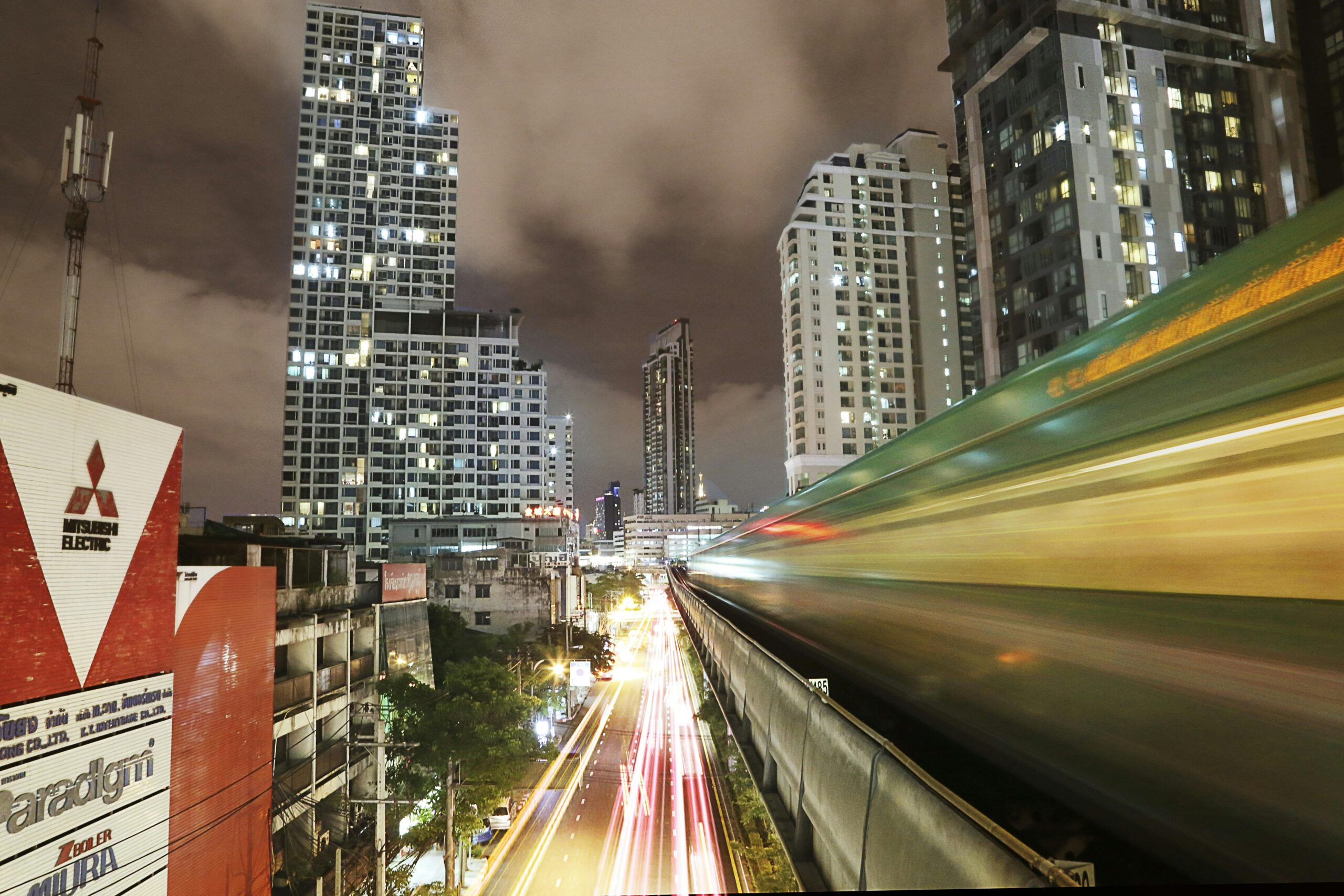
The most tactical Bangkok digital nomad guide available: neighborhoods, realistic costs, internet setup, SIM cards, coworking spaces, apartment frameworks and productivity systems.
Bangkok is one of the most misunderstood cities on the digital nomad circuit. Most people expect chaos. What Bangkok Digital Nomads find instead is a city engineered, almost accidentally, for productive remote work.
Fiber internet in most modern condos. A metro rail system that slices through traffic. Dozens of coworking spaces at every price point. Private hospitals better than anything most nomads have at home. Street food for $1.50. A legal long-term visa for remote workers launched in 2024. And a nomad community so active that building a social life requires almost no effort.
But Bangkok also breaks people who show up without a plan. The wrong neighborhood costs four hours a week in traffic. The wrong apartment costs a month of productivity in internet problems. The wrong routine and the city’s nightlife scene quietly destroys output without anyone noticing until week six.
This guide is not a list of things that exist in Bangkok. Every other guide does that. This one is a system for setting up Bangkok correctly, making smart decisions fast, and optimizing the setup over 30, 60 and 90 days. Every section answers the question: what should you actually do?
Before diving deep into this also check out our Destination Thailand Visa (DTV) Guide and Chiang Mai Digital Nomad setup guide.
Before committing to Bangkok, run this quick self-assessment. Score yourself on each factor.
| Factor | Bangkok Suits You If… | Bangkok Does Not Suit You If… |
|---|---|---|
| Income | You earn $1,200+ USD/month remotely | You are under $900/month |
| Pace | You want big-city energy | You need extreme quiet for focus |
| Climate | You handle heat and humidity | Heat above 35°C affects your health |
| Discipline | You can self-regulate nightlife | Party scenes historically derail your work |
| Community | You want an active social scene | You prefer deep solitude |
| Travel | You want a Southeast Asia hub | You rarely travel regionally |
| Health | You want excellent affordable healthcare | You need specific specialist care not available in Thailand |
Score 5 or more in the left column: Bangkok is very likely a good fit. Set it up properly and it runs itself.
Score 4 or fewer: Consider Chiang Mai (quieter, cheaper, good infrastructure) or Koh Phangan (beach lifestyle, smaller community) as alternatives. Here is the Chiang Mai Digital Nomad Setup guide.
Averages are useless. Here are three actual nomad budget profiles based on realistic 2026 Bangkok prices. Use these to find where your budget lands.
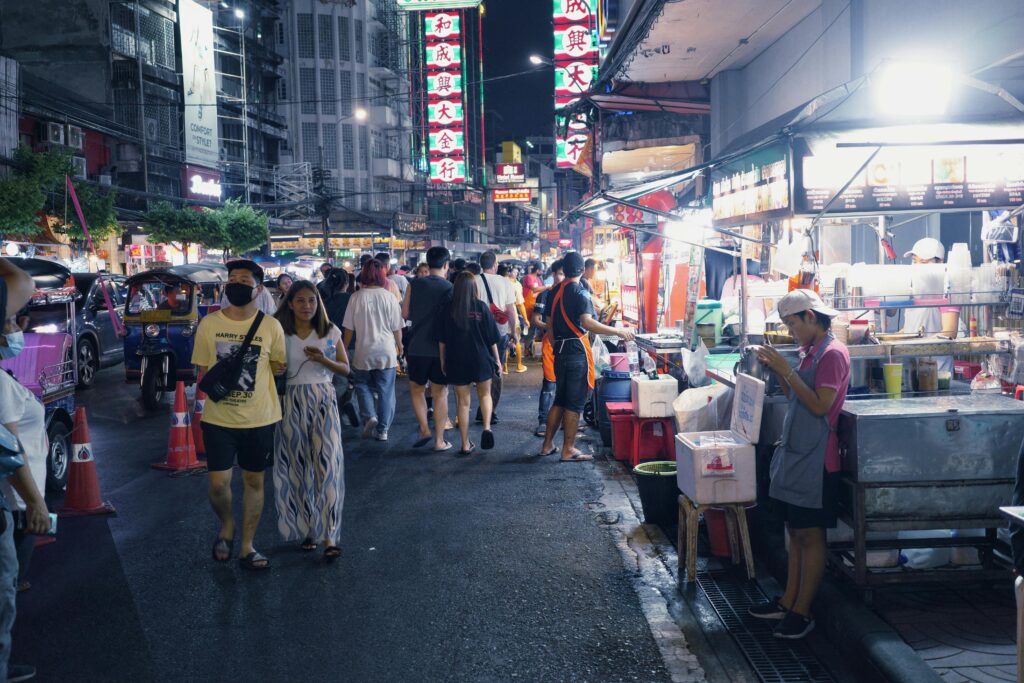
Studio condo in On Nut or Phra Khanong (BTS access): 10,000-14,000 THB Street food and local restaurants daily: 4,000-6,000 THB BTS/MRT monthly travel: 1,500-2,500 THB Mobile data (TrueMove H unlimited): 299-399 THB No coworking (works from home): 0 THB Basic health insurance: 1,400-2,800 THB Gym (building gym free): 0 THB Entertainment and social: 2,000-4,000 THB Miscellaneous: 2,000-3,000 THB Monthly total: ~21,000-32,000 THB ($590-$900 USD)
Realistic. Comfortable. Not luxurious. On Nut gives full BTS access and a modern pool/gym building for this budget.
One-bedroom condo in Ekkamai, Asok or Phrom Phong: 18,000-28,000 THB Mixed eating (street food + occasional restaurants): 7,000-12,000 THB BTS/MRT + occasional Grab: 2,000-4,000 THB Home fiber internet + mobile SIM: 800-1,200 THB Coworking day passes or part-time membership: 2,000-4,000 THB Mid-range health insurance: 2,800-5,600 THB Gym membership or boutique classes: 1,500-3,500 THB Entertainment, social, weekends: 5,000-10,000 THB Miscellaneous: 3,000-5,000 THB Monthly total: ~42,000-73,000 THB ($1,200-$2,100 USD)
This is the sweet spot. Good neighborhood, comfortable apartment, solid social life, gym, real coworking access.
Modern one-bedroom in Thonglor or Phrom Phong (pool, gym, high floor): 30,000-55,000 THB Restaurant dining most nights: 15,000-25,000 THB BTS + regular Grab: 3,000-6,000 THB Full fiber + premium SIM: 1,000-1,500 THB Full coworking membership (WeWork or similar): 6,000-12,000 THB Premium international health insurance: 5,600-10,500 THB Boutique gym or Muay Thai: 4,000-8,000 THB Entertainment, travel, nightlife: 15,000-30,000 THB Monthly total: ~80,000-148,000 THB ($2,300-$4,200 USD)
Premium Bangkok living is genuinely excellent value compared to an equivalent lifestyle in Singapore, Sydney or London.
Check out the Thailand Cost of Travel Guide to see Real World Pricing for every traveler segment.
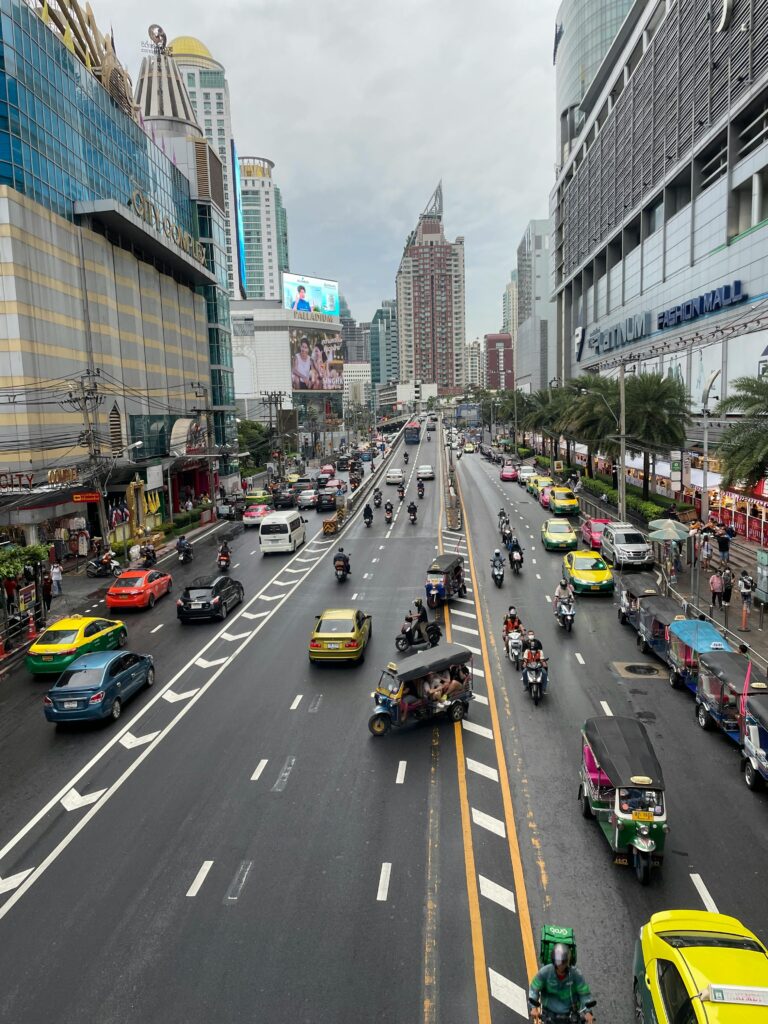
For Bangkok Digital Nomads or Nomads aspiring to land and live in Bangkok, this is the most important decision you will make. Most guides describe neighborhoods. This one tells you which one to choose based on your actual situation.
| Your Profile | Best Neighborhood | BTS Station | Studio Monthly (THB) | Why |
|---|---|---|---|---|
| First-time nomad in Bangkok | Asok | Asok (BTS+MRT) | 16,000-24,000 | Best transit intersection, everything accessible, easy orientation |
| Budget-focused but needs BTS | On Nut | On Nut | 12,000-18,000 | BTS access, modern buildings, significantly cheaper than central Sukhumvit |
| Premium lifestyle | Thonglor | Thong Lo | 25,000-45,000 | Best cafes, restaurants, boutique gyms, social scene |
| Startup founder / professional | Sathorn | Chong Nonsi | 18,000-28,000 | Business district, WeWork nearby, professional energy |
| Wants local-expat balance | Ari | Ari | 14,000-22,000 | Independent cafes, quieter streets, strong Thai character |
| Values quiet + value | Phra Khanong | Phra Khanong | 10,000-16,000 | Young Thai crowd, good food, underrated, quiet evenings |
| Married couple / needs space | Phrom Phong | Phrom Phong | 25,000-40,000 (1BR) | Upscale, Japanese expat community, Emporium mall, quieter |
| Creative / artsy | Ekkamai | Ekkamai | 15,000-28,000 | Between Thonglor and On Nut energy, concept cafes, creative community |
Here is the calculation that most people skip when choosing a neighborhood.
Scenario: Condo A in On Nut costs 12,000 THB/month. Condo B in Asok costs 20,000 THB/month. Most nomads choose Condo A.
Here is why that can be wrong:
Real cost difference:
Difference: 4,160 THB and 10 hours of your life per month.
At a modest freelance rate of $25/hour, those 10 hours are worth $250 (8,750 THB). Suddenly Condo B is mathematically cheaper.
The rule: Live within 10 minutes walking of your primary work location or the BTS station closest to it. Do the full math including transport and time before choosing based on rent alone.
Understand which are the best areas to stay in Bangkok in detail here.
Do not guess on accommodation. Run this system.
Before searching, answer these four questions:
Lock these. Do not compromise on BTS proximity or internet quality.
| Platform | Best For |
|---|---|
| DDProperty.com | Largest Thai listing site, good filters, verified agents |
| Hipflat.com | Clean interface, good photos, direct owner listings |
| Superagent.co | Well-curated, honest descriptions, 2026 updated pricing |
| Facebook: “Bangkok Condo Rentals” | Direct owner deals, often 10-20% below agency prices |
| Facebook: “Digital Nomads Bangkok” | Community recommendations and sub-lets |
Search filter sequence: Select target BTS station, set price ceiling, filter “Furnished,” filter by building amenities (pool, gym, fiber). Start with Hipflat or DDProperty for overview, then check Facebook groups for direct owner deals on buildings you like.
Visit every apartment with this list. Do not sign before completing it.
Internet (most critical):
Workspace:
Building and practicality:
Lease terms:
Bangkok’s rental market in 2026 favors renters. Vacancy is above 25% citywide. Negotiate.
Standard opening move: Offer 10% below asking for a 3-month commitment, 15-20% below for 6 months. Most owners accept. The worst they say is no.
Things that are negotiable beyond price:
Losing internet during a client call is an emergency. Bangkok’s infrastructure is excellent, but no single connection is bulletproof. Build three layers before the first important call. If you trust me enough, do not go without an eSIM and read how to setup one here. That is my advice at least for initial few weeks when setting up. Longer term, AIS, True and DTAC work well. Personally, I love AIS. We’re talking unmatched speed.
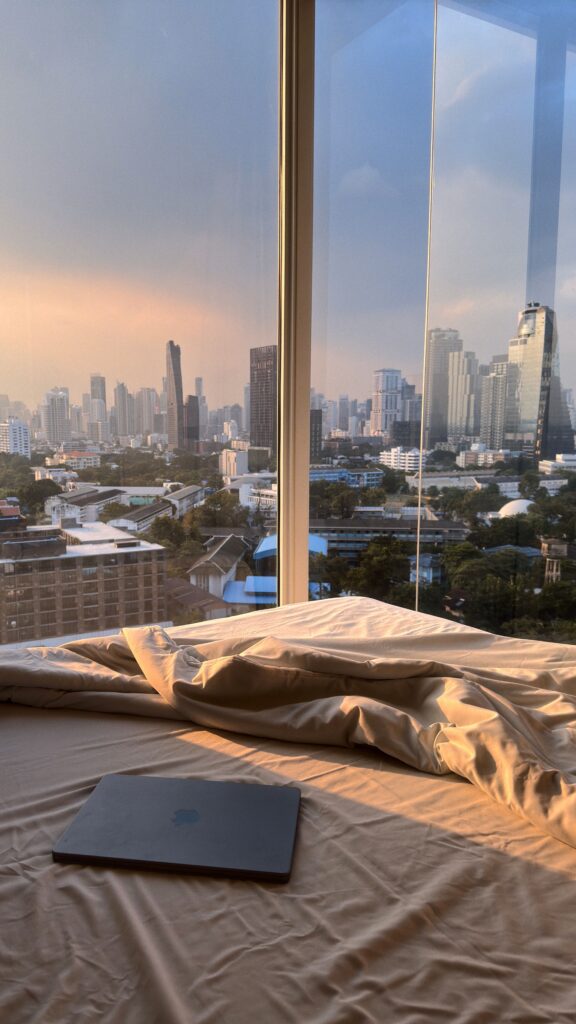
Most modern Bangkok condos built after 2015 have in-building fiber. The main providers:
| Provider | Speeds Available | Monthly Cost | Notes |
|---|---|---|---|
| AIS Fiber | 100-1,000 Mbps | 500-800 THB | Widest coverage, most reliable, best for nomads |
| TrueMove H Fiber | 100-1,000 Mbps | 500-800 THB | Fast in urban areas, competitive pricing |
| 3BB | 30-500 Mbps | 400-700 THB | Older provider, good backup option |
| NT Broadband | 30-300 Mbps | 350-600 THB | Budget option, less common in modern buildings |
Setup timing: Technician visits typically happen within 1-3 days of signup. Passport required. Internet is usually active same day as technician visit.
Non-negotiable rule: Test speeds the day the technician leaves. Open Speedtest.net. If download is under 50 Mbps, call the provider immediately. Do not wait a week.
Get this SIM on day one at the airport. Use it the moment home internet has any issue.
| Provider | Bangkok Speed | Monthly Unlimited Plan | Best For |
|---|---|---|---|
| AIS | Excellent 4G/5G across Bangkok | ~399 THB | Nomads traveling all Thailand |
| TrueMove H | Fast 5G in central Bangkok | ~299-399 THB | City-based speed priority |
| DTAC (now True Corporation) | Good urban 4G | ~299 THB | Budget, city-only use |
Buy at Suvarnabhumi Airport on arrival. Passport mandatory. 30-day unlimited plans are available at the airport and are typically cheaper when renewed in-store or through the provider’s app. Verify current pricing with the provider directly. Note: If you get it from a 7 Eleven, you’ll get it for much cheaper.
Key insight: TrueMove H is the better choice for Bangkok-based nomads who rarely leave the city. AIS is the better choice for nomads who travel regularly to other parts of Thailand.
Know exactly which coworking space is closest to your apartment before a deadline hits. Buy a day pass in advance so you have it ready. This is not a nice-to-have.
Pre-call internet protocol (the 10-minute rule): 10 minutes before any important client call:
Never start an important call without this check.
The SIM question is simple once the use case is clear.
Decision tree:
Are you staying only in Bangkok?
YES - TrueMove H (fastest 5G in the city)
NO - Will you travel to rural Thailand?
  YES - AIS (widest nationwide coverage)
  NO (other Thai cities only) - Either works; TrueMove H slightly faster
eSIM vs Physical SIM:
For long stays (3+ months): Ask about postpaid plans at an AIS or TrueMove H official store. Monthly postpaid plans often offer better value than tourist prepaid renewals and reduce admin friction.
Verify all current pricing directly with providers. Plans and promotions change frequently. Read more on Thailand eSIM/SIMcard guide for informed decision making.
Not all coworking spaces in Bangkok are worth the money. Use this decision system.
| Work Session Type | Best Location | Reason |
|---|---|---|
| Deep focused writing, coding, solo work | Home (if internet is fast) | Zero commute, zero distraction |
| Video calls with clients | Home (quiet) OR coworking (guaranteed connection) | Control over background and audio |
| Days with unstable home internet | Coworking immediately | Do not gamble with client relationships |
| Collaborative work, networking | Coworking | Community energy improves output |
| Short 2-3 hour focus blocks | Laptop-friendly cafe | Cheaper, flexible, lower commitment |
| Monthly productive deep work sprints | Full coworking membership | Community, structure, reliability |
| Tier | Day Pass | Monthly Membership | What You Get |
|---|---|---|---|
| Basic | 250-350 THB | 3,000-4,000 THB | Seat, outlets, basic Wi-Fi. No frills. |
| Mid-range | 350-500 THB | 4,000-6,000 THB | Faster internet, lockers, meeting room access (limited) |
| Premium | 500-800 THB | 6,000-12,000 THB | Dedicated desk option, fast internet, meeting rooms, phone booths, events |
| Enterprise (WeWork) | 700-1,000 THB | 8,000-15,000+ THB | Professional-grade, meeting rooms, printing, reception service |
The Hive (Thonglor / Ekkamai / Pratunam): Three Bangkok locations. Strong community. Monthly memberships around 4,000 THB depending on plan. Good internet, regular events. Well-suited to creative professionals and startup founders.
Common Ground (multiple locations): Professional, well-designed. Better for people who need a serious work environment without enterprise pricing.
WeWork Bangkok (Sathorn, Silom): Enterprise-grade. Meeting rooms, phone booths, fast Wi-Fi, professional reception. Worth it for nomads doing regular client video calls or needing meeting room access. Higher price reflects the quality.
KO Kreate Space (Ari area): Budget-friendlier. Good community, starting around 3,000 THB monthly.
Hubba-TO (Ekkamai): One of Bangkok’s longest-running coworking brands. Creative community, good for building connections with Bangkok’s tech and startup scene.
Due diligence protocol before signing a monthly membership:
Cafes are for 2-4 hour focused sessions, not full workdays. Use them strategically. Check out our detailed Best Cafes in Bangkok guide here.
Must-have signals:
Ari: Best cafe culture in Bangkok for nomads. Independent roasters, quiet mornings, consistent Wi-Fi, less tourist traffic. If working from cafes is a regular habit, base yourself here.
Thonglor / Ekkamai: Higher-end concept cafes. Good aesthetics, generally reliable internet, more crowded mid-morning but manageable early.
Phrom Phong: Reliable options near Emporium. Good for morning sessions before the area fills with shoppers.
Silom: Several solid options near the BTS. Better for business-style nomads who like a formal cafe energy.
Practical cafe workflow:
This is the section most guides skip. Bangkok offers everything a productive person needs and everything a distracted person needs to self-destruct. The difference is system design.
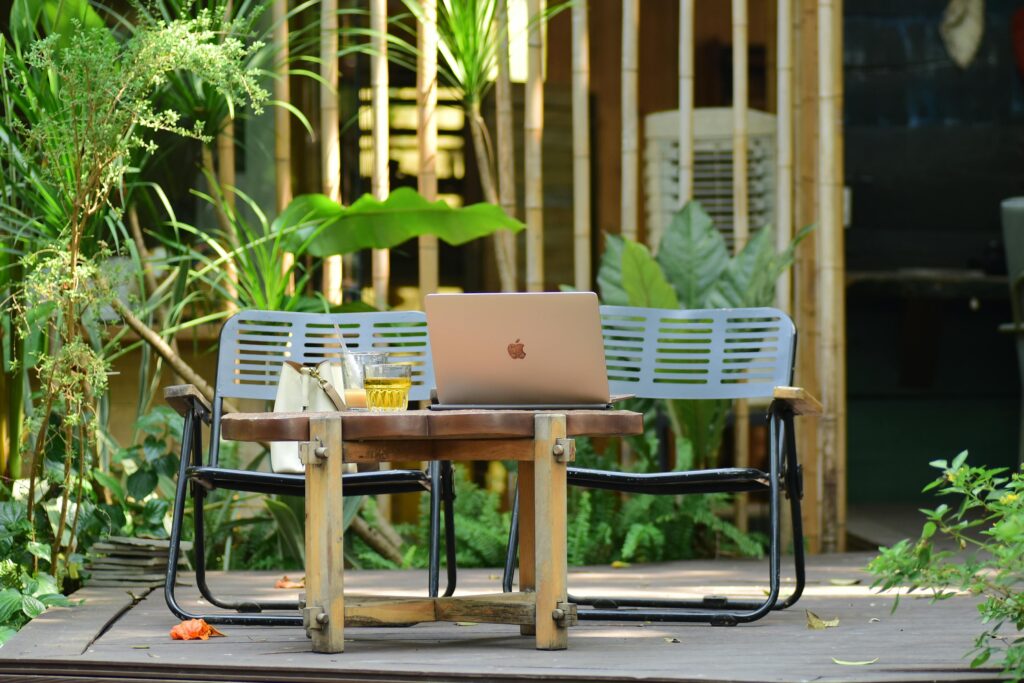
Bangkok runs on UTC+7 (Indochina Time, ICT). Here is how to use that.
| Client Time Zone | Bangkok Work Window | What This Means |
|---|---|---|
| US East Coast (EST, UTC-5) | 6:00 AM-2:00 PM Bangkok = 6:00 PM-2:00 AM EST | Morning deep work, overlap with US evening for calls |
| US West Coast (PST, UTC-8) | 6:00 AM-2:00 PM Bangkok = 3:00 PM-11:00 PM PST | Full morning for deep work before any US calls needed |
| UK / Europe (GMT/CET, UTC+0/+1) | 2:00 PM-8:00 PM Bangkok = 7:00 AM-1:00 PM London | Afternoon call window, mornings fully free |
| Australia East (AEDT, UTC+11) | 7:00 AM-4:00 PM Bangkok = 10:00 AM-7:00 PM Sydney | Strong overlap, excellent for Australian client work |
The pattern that works for most Bangkok nomads: 6 AM to 12 PM is protected deep work time. No calls, no social media, no social plans. 12 PM to 2 PM is lunch and genuine rest. 2 PM to 5 PM is calls and collaborative work. Evenings are free.
Front-loading output in the morning protects evenings without guilt. Bangkok evenings are excellent. Protect access to them by making mornings sacred.
Working from the same location every day is a productivity trap. Bangkok offers an asset most home cities do not: genuine variety within a 20-minute radius.
Weekly rotation example:
| Day | Location | Why |
|---|---|---|
| Monday | Home desk | Start of week high-focus, zero commute |
| Tuesday | Home desk | Second high-output day |
| Wednesday | Coworking space | Midweek energy reset, community contact |
| Thursday | Favorite cafe (3 hours morning) then home | Shorter session, lighter day |
| Friday | Home desk or coworking | Wrap up week |
This rotation prevents the psychological flattening that comes from working in one place for 30 consecutive days.
Distraction in Bangkok is world-class. So must be the protection against it.
Non-negotiable rules that Bangkok long-term residents commonly use:
Bangkok’s air quality drops during the agricultural burning season, roughly February through April. On high-pollution days, outdoor time and even indoor air can affect focus and energy in sensitive individuals.
System for maintaining productivity during poor air quality months:
Must Read: The Tactical Nomad Relocation Map
The single biggest time waster for Bangkok nomads is transportation. The single biggest time saver is the BTS.
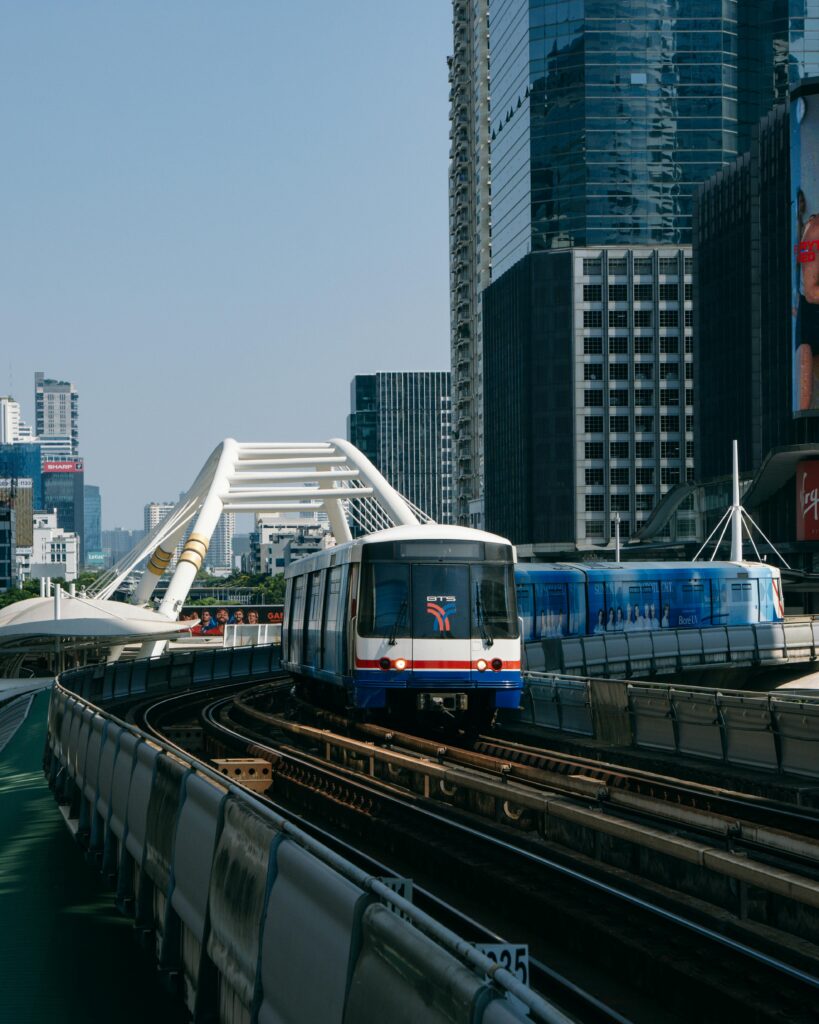
Distance to destination?

Under 1 km: Walk (use Grab only in intense heat or rain)

1-5 km near BTS/MRT stations: BTS or MRT (17-59 THB, 5-20 minutes)

1-5 km not near stations: Bolt (cheaper than Grab; check both)

Last mile from BTS station to apartment: Motorcycle taxi (15-40 THB, 3-8 minutes)

Airport transfer (Suvarnabhumi): Airport Rail Link to Phaya Thai BTS (45 THB, 30 min) then BTS to destination

Airport transfer (Don Mueang): Grab (~250-400 THB to central Bangkok)
| Transport Type | Average Cost Per Trip | Monthly if Used Daily |
|---|---|---|
| BTS (10-stop average) | 35 THB | 1,400 THB |
| MRT (average) | 30 THB | 1,200 THB |
| Grab (5 km trip) | 100-150 THB | 4,000-6,000 THB |
| Bolt (5 km trip) | 80-120 THB | 3,200-4,800 THB |
| Motorcycle taxi (short hop) | 20-40 THB | 800-1,600 THB |
The optimization: A nomad who lives near a BTS station and uses the BTS for all main transit spends roughly 1,500-2,500 THB/month on transport. A nomad who relies primarily on Grab due to a non-BTS location spends 5,000-8,000 THB/month. That difference, 3,000-5,500 THB/month, is the hidden cost of choosing a cheaper apartment far from transit.
Must Read: How To Get Around Bangkok by RoamRiot
Buy a Rabbit Card at any BTS station (50 THB deposit + initial credit). Load credit at the station machine. Tap in and tap out. Never buy single tickets, as the card is cheaper per trip and eliminates machine queues. Top up 500-1,000 THB at a time.
MRT uses a separate stored-value card. Buy at any MRT station. Same system.
BTS and MRT during peak hours (7-9 AM, 5:30-7:30 PM) are genuinely crowded but still dramatically faster than ground transport. If running late to a client call, always choose BTS over Grab during peak hours. The BTS runs on a schedule. Grab does not.
Arrive in Bangkok with these already set up:
| Tool | Function | Why |
|---|---|---|
| Wise card | International spending + ATM withdrawals | Low fees, real exchange rate, widely accepted |
| Revolut (European users) | Multi-currency spending and exchange | Good THB rate, ATM access |
| Charles Schwab debit (US users) | ATM fee reimbursement | Eliminates 220 THB ATM fees |
| Grab app (linked card) | Cashless rideshares | Essential daily tool |
| Cash (5,000-10,000 THB on hand) | Street food, motorcycle taxis, small markets | Many vendors cash-only |
Target: Kasikorn Bank (KBank). Most foreigner-friendly. English-language app. Branches inside major malls.
Documents typically required (verify with branch before visiting, as requirements vary):
Realistic timeline: Walk in, expect 30-60 minutes. Not all branches open accounts for foreigners. The branches inside major malls (Terminal 21, EmQuartier, Siam Paragon) tend to be more experienced with expat and nomad account setups.
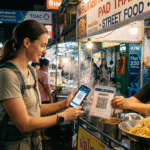
Once open: Set up PromptPay (Thailand’s instant payment system) within the KBank app. This enables cashless payment to landlords, local vendors, and market stalls that use QR codes.
Also Read: How To Setup PromptPay KBANK PAY&TOUR Without A Thai ID
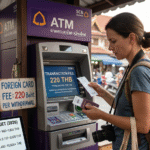
Bangkok ATM fee for foreign cards: 220 THB per withdrawal regardless of amount.
Optimization: Withdraw 10,000-20,000 THB at a time from ATMs inside 7-Eleven or bank branches rather than standalone street ATMs. Fewer transactions, lower total fees. With a Schwab card (fee reimbursed) this becomes irrelevant. Read more on Thailand ATM Fee Saving Hacks.
Bangkok is genuinely safe for daily life. Violent crime against foreigners is rare. The risks are specific and preventable. [Must Read: Bangkok Scams And How To Avoid Them by RoamRiot]
| Scam | How It Works | Prevention |
|---|---|---|
| Temple closure scam | Stranger says temple is “closed today” and offers tuk-tuk to gem shop | Ignore all unsolicited “guides” near temples |
| Taxi meter refusal | Driver quotes flat rate above actual meter cost | Insist on meter or use Grab/Bolt instead |
| Gem shop tour | Friendly local redirects to overpriced jewelry | Decline all shopping “recommendations” from strangers |
| Airport “helpers” | Inside terminal, offering unofficial transport | Use official taxi queue (ground floor, outside) or Grab |
| ATM skimmer | Card data captured at standalone street ATMs | Use ATMs inside 7-Eleven, banks, or mall branches only |
| Currency exchange manipulation | Street money changers short-count or give bad rates | Use Superrich, TT Exchange, or Vasu Exchange only |
Carry a phone photo of your passport daily. Leave the physical passport in the apartment safe or a secure drawer. Thai police can ask for ID but rarely demand the original for regular nomad activity.
Thailand has one of the highest road accident rates in the world. Motorcycle taxis are fast and cheap. They are also risk-concentrated. Use them for short, slow-street hops, not for high-speed main road travel. For any trip on fast roads, use Grab or BTS.
Always use the helmet provided by the motorcycle taxi driver. Always.
Bangkok’s private hospital system is excellent. Set this up before needing it, not after.
Pick one and register as an outpatient even if healthy:
Bumrungrad International Hospital (BTS Nana area): Asia’s most internationally known private hospital. International Patient Center with English-language support. Specialist access usually within 24-48 hours. Consultation: 1,000-2,000 THB without insurance.
Bangkok Hospital (multiple locations): High quality across specialties. International department. Good for general care and specialist referrals.
Samitivej Sukhumvit: Well-regarded for general practice and pediatrics if traveling with family.
Registration is free. Walk in with your passport, ask to register as an international outpatient. This creates a file and makes future visits faster.
Minor illness is cheap in Bangkok. A scooter accident, broken bone, or emergency surgery without insurance can reach 300,000-1,500,000 THB. That ends a nomad lifestyle immediately.
Minimum acceptable coverage for Bangkok: $50,000 USD medical coverage (which also meets the DTV visa requirement).
Budget options worth researching: SafetyWing, Pacific Cross, AXA. Mid-range: Cigna Global, Allianz Care. Verify current premiums and coverage directly with providers, as plans change.
Many medications available only by prescription in Western countries are sold over-the-counter in Thailand at a fraction of the cost. Boots Pharmacy and Watsons are on most major BTS corridors. Local pharmacies are on almost every block. For minor illness, a pharmacy visit before a hospital visit saves time and money.
Save this section. This is what a well-optimized Bangkok-based nomad uses daily.
| Tool | Purpose |
|---|---|
| AIS or TrueMove H SIM | Primary mobile data and backup internet |
| Home fiber (AIS Fiber or TrueMove H) | Primary working internet |
| Speedtest.net | Daily internet quality check |
| Portable Wi-Fi router (optional) | If building Wi-Fi is shared and unreliable |
| NordVPN or Mullvad VPN | Privacy on public cafe/coworking Wi-Fi; access to home-country services |
| Tool | Purpose |
|---|---|
| Wise card | International spending, ATM withdrawals |
| Revolut | Secondary card, multi-currency |
| KBank app | Thai bank account, PromptPay |
| Grab Pay | Cashless in-app transport payment |
| App | Purpose |
|---|---|
| Grab | Primary rideshare, food delivery (GrabFood) |
| Bolt | Secondary rideshare, often cheaper than Grab |
| Via BTS app | BTS map and fare calculator |
| Google Maps | Transit routing (includes BTS/MRT) |
| App | Purpose |
|---|---|
| GrabFood | Food delivery (fast, wide coverage) |
| Foodpanda | Alternative food delivery, different restaurant selection |
| Wongnai | Thai restaurant reviews (like Yelp for Thailand) |
| HungryHub | Restaurant booking app for Bangkok |
| App | Purpose |
|---|---|
| AirVisual | Daily AQI check (important Feb-April) |
| Line | Thailand’s dominant messaging app (landlords, local contacts) |
| Google Translate | Camera translate function for Thai menus and signs |
| Tool | Purpose |
|---|---|
| Notion or Obsidian | Daily planning, project management |
| Krisp.ai | Noise cancellation for client calls from cafes |
| World Time Buddy | Multi-timezone scheduling |
| Calendly | Client scheduling across time zones |
Bangkok’s nomad community is large, active, and exceptionally welcoming to newcomers. The challenge is not finding community. The challenge is not drowning in it.
Facebook Groups (start here):
Meetup.com: Active Bangkok groups for tech, language exchange, photography, fitness, and general nomad networking. Check weekly for new events.
Coworking space events: The Hive, Common Ground, and WeWork Bangkok all run community events. These are the highest-density nomad social gatherings in the city.
Language exchanges: Thai locals practicing English regularly connect with nomads at language exchange events. Check Facebook and Eventbrite for recurring events. These are genuinely good community investments, not just for language practice.
Week 1-2: Attend one coworking event or Meetup. Introduce yourself honestly. Do not oversell anything.
Week 3-4: Identify 3-5 people worth knowing better. Suggest a specific plan (dinner, gym session, weekend trip) rather than vague follow-ups.
Month 2+: Depth over breadth. A group of 5 reliable people beats 50 shallow contacts. Bangkok’s social scene is enormous. Narrowing focus is the actual optimization.
All visa information below is for orientation only. Rules change. Always verify current requirements directly with the Royal Thai Embassy in your home country or at thaievisa.go.th before taking any action.
| Visa Type | Duration | Best For | Key Requirement |
|---|---|---|---|
| Visa Exemption (tourist) | 30-60 days per entry | Short stays, testing Bangkok | Passport from qualifying country |
| Tourist Visa (TR) | 60 days + 30 day extension | Medium stays, first-time visitors | Application at Thai embassy abroad |
| Destination Thailand Visa (DTV) | 5-year, 180 days per entry | Long-term nomad base | ~$16,000/yr income, $50k health insurance |
The Destination Thailand Visa launched in June 2024. As of early 2026:
Important 2025/2026 enforcement update: Thailand has been tightening enforcement around repeated short-term tourist entries. Travelers who rely on frequent back-to-back tourist entries risk scrutiny at the border. If planning to stay more than 4 months per year, the DTV is the more appropriate and responsible path. Verify current entry policies with the Thai immigration authority or your nearest Thai embassy.
Tax note: Staying 180 or more days in Thailand per calendar year may trigger Thai tax residency obligations. Consult a qualified tax advisor if planning a long-term stay. Some nationalities have tax treaties with Thailand that affect obligations.
| Season | Months | Conditions | Nomad Impact | Recommendation |
|---|---|---|---|---|
| Cool Season | Nov-Feb | 22-32°C, low humidity, clear | Best Bangkok weather, higher accommodation demand | Ideal arrival window |
| Hot Season | Mar-May | 34-40°C, intense humidity | Midday outdoors difficult; stay inside, use BTS | Workable; plan all outdoor time before 10 AM |
| Rainy Season | Jun-Oct | Hot, afternoon rains, flood risk in some low areas | BTS/MRT travel minimizes rain impact; indoor lifestyle easy | Manageable; know your area’s flood history |
| Air Quality | Feb-Apr | AQI spikes from agricultural burning | Affects outdoor exercise, some people’s focus | Use air purifier at home; monitor AirVisual daily |
Strategic tip: Many Bangkok-based nomads plan a month-long trip to Bali, Chiang Mai, or a Thai island during the worst weeks of March to April. This covers the burning season air quality period and resets perspective on Bangkok before returning.
Already covered in the neighborhood math section. The short version: the rent savings are almost always smaller than the transport and time costs. Live near BTS.
The single most common nomad horror story in Bangkok. Sign the lease, move in, discover shared building Wi-Fi at 8 Mbps. Test speeds before signing. Non-negotiable.
Cafes are for 2-4 hour sessions. Not 8-hour workdays. By 11 AM most popular cafes are full. By 1 PM, outlet seats are gone. Build a home internet setup and treat cafes as a tool, not a primary workspace.
Buy the SIM card on the day of arrival. Test it in the apartment before the first client call. Do not discover connectivity problems during an active call.
Covered above. Repeating because it matters. Do not arrive without it.
Bangkok’s social energy is extraordinary. It is also the thing most likely to derail the first month. Meet people. Go to events. And then create a schedule that protects morning output before doing any of it.
220 THB per withdrawal. Withdraw 15,000-20,000 THB at a time. Or get a Schwab card before departure and eliminate the fee entirely.
Line is Thailand’s primary messaging app. Landlords communicate via Line. Local contacts communicate via Line. Building managers communicate via Line. Download it on day one and get a local number registered.
Thailand is actively tightening restrictions on repeated tourist entries. Plan the DTV application if staying more than 4 months annually.
Thonglor is Bangkok’s most prestigious nomad neighborhood. It is also expensive, and the premium is not always justified for newcomers who have not yet figured out what they actually need. Start in Asok or Phrom Phong. Upgrade to Thonglor after you know Bangkok. Most long-term nomads recommend this sequence.
Days 1-7: Stabilize Do not optimize. Do not sign anything long-term. Use these seven days to physically walk neighborhoods, test internet in potential apartments, visit coworking spaces, find the nearest good street food, and figure out the BTS map. Keep work at minimum viable until the setup is stable. Snap photos of apartment listings during viewings for later comparison.
Days 8-14: Commit Sign a monthly lease. Set up home internet. Get the bank account process started. Lock in the primary workspace (home + one backup coworking or cafe). Run the first full productive week with the Bangkok time zone structure in place.
Days 15-21: Optimize the Work System Review what the first full week of output looked like. Adjust work hours to match client time zones better. Test the coworking space for a full day. Evaluate whether the morning block is actually protected or being eroded. Make one adjustment to the daily schedule.
Days 22-30: Evaluate and Plan Month Two Assess: Is the neighborhood working? Is the internet reliable? Is the social life developing without consuming the work schedule? Is the budget tracking close to plan? Start researching DTV visa requirements if planning a long stay. Begin negotiating a better apartment rate for a longer commitment if staying.
Month One: Stability. Build the system. Establish the routine. Meet people without letting it derail output.
Month Two: Optimize one thing per week. Better gym. Better cafe rotation. One skill or language class. A weekend trip to Chiang Mai or Koh Lanta to reset perspective and test Bangkok’s value as a base. Consider a coworking membership if day passes are adding up. Negotiate a 6-month apartment deal if the neighborhood is confirmed right.
Month Three: Evaluate the long game. Bangkok often becomes a long-term home for nomads who give it this three-month test. The city’s real quality reveals itself slowly: the ease of daily life, the quality of the healthcare system, the depth of the community, the efficiency of the transport. If Bangkok is passing the test, apply for DTV, lock in a longer accommodation deal, and build the infrastructure for a real base.
| Factor | Bangkok | Chiang Mai | Koh Phangan | Bali (Canggu) |
|---|---|---|---|---|
| Internet (fiber) | Excellent (200-500 Mbps) | Very good (100-300 Mbps) | Variable (20-100 Mbps) | Variable (20-150 Mbps) |
| Monthly cost (mid-range) | $1,400-$2,000 | $800-$1,400 | $900-$1,500 | $1,200-$2,000 |
| Coworking quality | Excellent, many options | Good, established scene | Limited, growing | Good, Canggu-focused |
| Transit | Excellent BTS/MRT | Car/scooter dependent | Scooter dependent | Scooter dependent |
| International flights | Excellent (2 airports) | Limited direct routes | Via Koh Samui airport | Via Denpasar |
| Nomad community | Very large, diverse | Large, established | Medium, party-leaning | Large, surf/creative |
| Healthcare | World-class private hospitals | Good private hospitals | Limited, evacuate for serious issues | Moderate, Bali-specific |
| Pace | Fast, urban | Slow, creative | Very relaxed, beach | Relaxed, beach/surf |
| Air quality (Feb-Apr) | AQI spikes, manageable | Burning season problematic | Good | Good |
When Bangkok beats everything else: Healthcare access, transit efficiency, airport connectivity, coworking infrastructure, and community diversity. For nomads who prioritize productivity infrastructure over lifestyle aesthetics, Bangkok wins clearly.
When to choose an alternative: Chiang Mai for significantly lower budget with good internet. Koh Phangan or Bali for beach lifestyle and a slower pace. Many Bangkok-based nomads use 4-6 week trips to these locations as intentional resets from Bangkok’s intensity.
Is Bangkok good for digital nomads? Yes. It is one of the best-configured cities in the world for remote work when set up correctly. Fast internet, excellent transit, world-class healthcare, modern condos at affordable prices, and an active community make it exceptional. The main risks are distraction and poor setup decisions in the first two weeks.
Which BTS station should a digital nomad live near? Asok (BTS + MRT interchange) for the best overall infrastructure and transit access. On Nut for budget with full BTS connectivity. Thong Lo (Thonglor) for premium lifestyle. Ari for quiet local energy. Choose based on budget and lifestyle profile, not just rent cost.
What internet backup should a nomad have before a client call? Three layers: home fiber (primary), mobile hotspot from AIS or TrueMove H 5G SIM (backup), and knowledge of the nearest coworking space with a confirmed fast connection (emergency backup). Test all three before the first important call.
Which coworking spaces are worth paying for? The Hive (Thonglor / Ekkamai) for community and mid-range pricing. WeWork Bangkok (Sathorn / Silom) for professional-grade infrastructure. Common Ground for clean professional environment. Test with a day pass before committing to monthly membership. Minimum standard: test internet speed at the desk before signing.
How much does a realistic monthly budget look like? Frugal but comfortable: 35,000-45,000 THB ($1,000-$1,300). Mid-range with good apartment and social life: 50,000-70,000 THB ($1,400-$2,000). Premium lifestyle: 80,000-120,000 THB ($2,300-$3,400). Numbers based on 2026 Bangkok pricing; verify on arrival.
How do remote workers avoid wasting hours in Bangkok traffic? Live within 10 minutes walking of a BTS or MRT station. Use BTS/MRT for all transit above 1 km. Use motorcycle taxis for the last-mile connection from station to apartment. Never rely on ground transport (taxis, Grab) for deadline-sensitive travel during peak hours (7-9 AM, 5:30-7:30 PM).
What is the DTV visa and do nomads need it? The Destination Thailand Visa is a 5-year multiple-entry visa for remote workers, launched in June 2024. It costs 10,000 THB and requires proof of approximately $16,000 USD/year remote income and $50,000 USD health insurance coverage. With Thailand tightening enforcement around repeated tourist entries, nomads planning to stay more than 4 months annually should seriously investigate the DTV. Verify current requirements at thaievisa.go.th.
What is the best SIM card for Bangkok-based digital nomads? TrueMove H for fastest 5G speeds within Bangkok. AIS for best nationwide coverage if traveling around Thailand. Both offer unlimited data plans in the 299-399 THB/month range. Buy at the airport on arrival. Passport required.
Is Bangkok safe for digital nomads? Daily life is very safe. Violent crime against foreigners is rare. Main risks are traffic accidents and tourist-targeted scams (gem shops, taxi meter refusal, fake “helpful strangers” near temples). Use Grab instead of street taxis. Avoid motorcycle taxis on fast roads. Stay alert near major tourist sites.
Bangkok is the right long-term base for nomads who:
Bangkok is the wrong choice for nomads who:
Get the first two weeks right, covering neighborhood, internet, SIM, and routine, and Bangkok runs efficiently on its own. The setup decisions made in days 1 through 14 determine 80% of the experience. Make them deliberately.
Still Want More? Check out what Things Nomads Do has to say.
All prices are in THB and approximate USD based on ~35 THB:$1 USD exchange. Exchange rates fluctuate; verify on arrival. Visa rules, internet plans, and accommodation prices are subject to change. Verify all practical information directly with providers, official Thai government sources, and local communities before making financial or legal decisions.