Physical Address
304 North Cardinal St.
Dorchester Center, MA 02124
Physical Address
304 North Cardinal St.
Dorchester Center, MA 02124

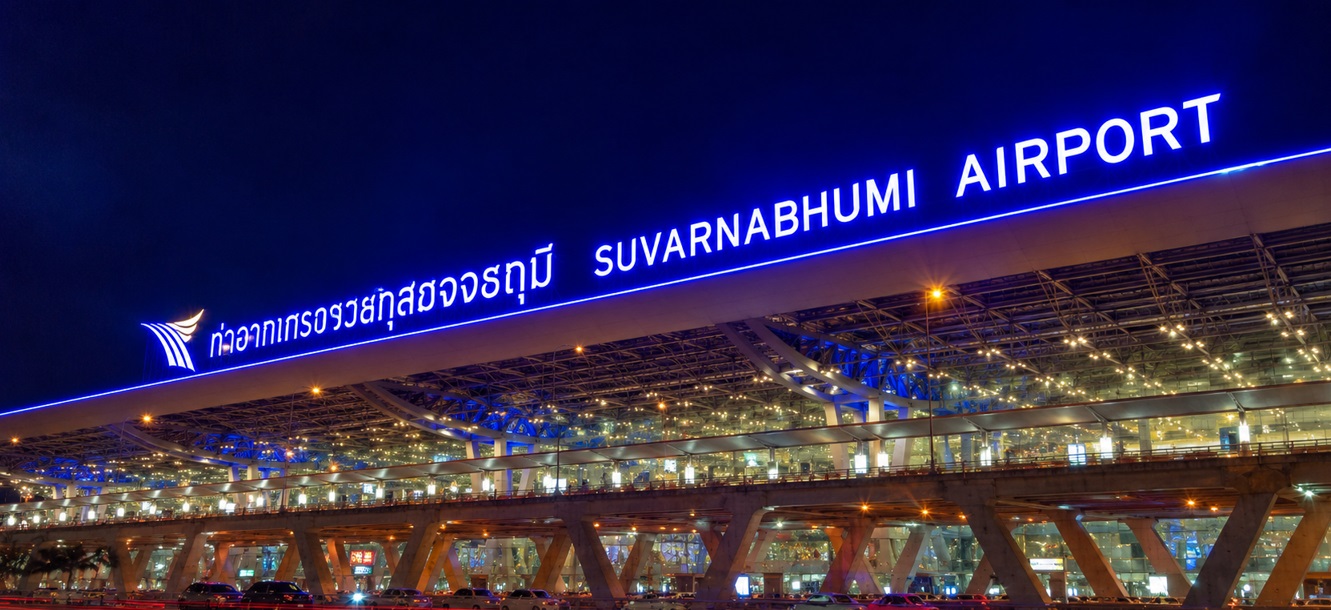
The most detailed tactical Airport Survival guide to Suvarnabhumi Airport (BKK) in 2026. Covers arrivals, departures, immigration, TDAC, transport, SIM cards, layovers, lounges and 20+ common mistakes. Updated for 2026.
Suvarnabhumi Airport is not just an airport. It is a transit corridor for tens of millions of travelers moving through Southeast Asia every year. It handles long-haul arrivals from Europe, the Middle East, Oceania, and North America. It connects onward to dozens of regional destinations. It absorbs massive flight banks from East Asia in the early morning hours. It sends off overnight departures to the Gulf. It is rarely quiet.
For anyone entering Thailand by air, Suvarnabhumi is usually the first point of contact with the country. The quality of that first contact, and how efficiently it goes, often sets the tone for the entire trip.
Under normal conditions, many prepared travelers clear arrivals and reach transport within 60-90 minutes of wheels-down. Times vary significantly depending on immigration queues, baggage delivery speed, flight arrival waves, and how organized documentation is. Underprepared travelers can spend that same window entirely in immigration queues, ATM lines, and SIM card confusion before they even think about transport.
This is the Bangkok Suvarnabhumi (BKK) Airport Survival Guide and it exists to close that gap.
Everything here is grounded in how the airport actually works in 2026: the procedures, the systems, the common failure points, and the tactical decisions that separate smooth arrivals from chaotic ones. The guide also covers departures, layovers, transit strategies, and digital nomad workflows.
Travelers who read this guide before landing at BKK will know exactly what to do, in what order, and why.
Suvarnabhumi is one of the busiest airports in Southeast Asia. Bangkok’s second airport, Don Mueang (DMK), handles mainly low-cost domestic and some international routes. Travelers flying with AirAsia from Bangkok typically depart from Don Mueang, not Suvarnabhumi. Confirming which Bangkok airport is relevant to each leg of travel is essential and is one of the most common sources of traveler confusion.
For comprehensive Bangkok transport connections from the airport into the city, see the RoamRiot Bangkok Transport Survival Guide.
Not every traveler will experience Suvarnabhumi the same way. Understanding where the friction points are for different traveler profiles helps everyone prepare more effectively.
Solo travelers with light luggage: Generally find BKK manageable. The Airport Rail Link is a logical option, signage is in English, and the immigration process is systematic. Friction typically appears only at peak arrival periods or if documentation is incomplete.
Families with young children: Will find BKK functional but tiring. Distances inside the terminal are significant. Stroller access works but requires planning. Food options are available at multiple levels. The primary challenge is managing children through immigration queues, which can be long during peak periods.
Elderly travelers: The airport has elevators and accessible facilities, but the scale of the building means considerable walking distances. Travelers with limited mobility should request assistance through their airline in advance. Wheelchair assistance is available through airlines, not the airport directly.
Backpackers: The Airport Rail Link and the lower-cost transport options on Level 1 work well for budget travelers. The airport itself is not hostile to backpackers, though it is not as relaxed as some smaller regional airports.
Business travelers: BKK suits business travelers reasonably well. Priority lanes at immigration, contract lounges (Miracle and Coral), and the direct hotel connection make fast movement possible with the right preparation. Verify lounge access eligibility with Priority Pass, DragonPass, or your airline before travel, as programs and terms change.
Digital nomads: Free airport Wi-Fi is available throughout the terminal. Actual speed and reliability may vary depending on location and passenger volume. SIM card counters in the arrivals hall make BKK workable. See the dedicated Digital Nomad Airport Playbook section below.
Transit passengers: BKK transit is manageable within the international zone for most itineraries. Long layovers benefit significantly from lounge access. Travelers with 8-plus hour layovers can leave the airport and enter Bangkok visa-free under most nationality agreements (verify current visa exemption rules before assuming eligibility).
First-time Thailand visitors: The TDAC requirement (see below) and the combination of immigration plus transport decisions create the most friction for first-timers. Preparation before boarding is the primary tool for reducing that friction.
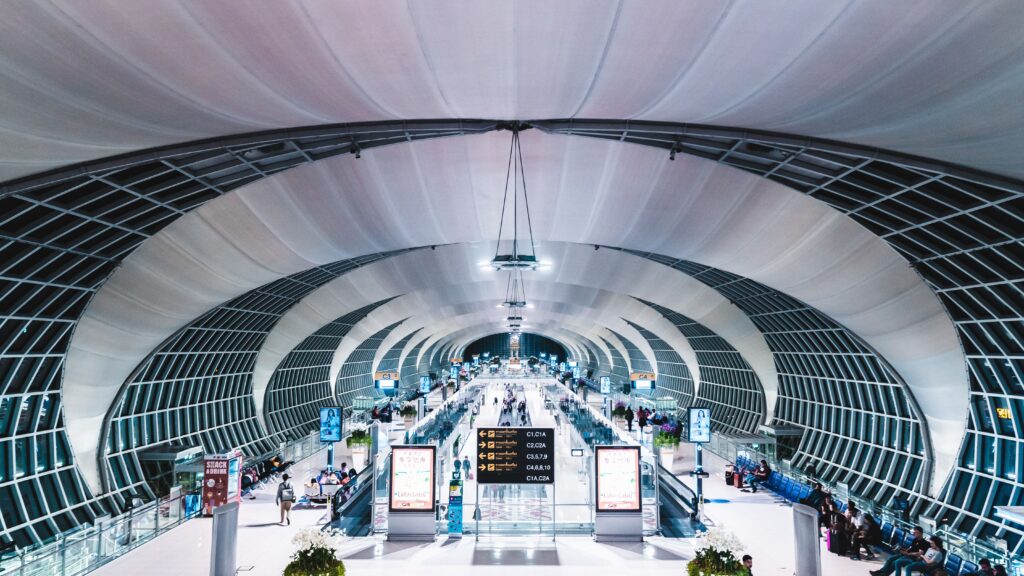
Suvarnabhumi’s main terminal is one of the largest airport buildings in the world, spanning approximately 563,000 square meters. Understanding the floor structure before arriving is the single most effective navigation tool available.
The main terminal has the following floor levels:
Floor B (Basement): Houses the Airport Rail Link (ARL) City Line station. This is where travelers take the train into Bangkok. Signage in the arrivals hall directs travelers to the ARL entrance via escalators or elevators. The ARL station is clearly marked with “Airport Rail Link” and “Train to City” signage in English, Thai, and Chinese.
Floor 1 (Ground Level / Arrivals Pickup): The official pickup zone for taxis, Grab, private transfers, buses, and hotel shuttles. The public taxi queue and automatic vending machines are located between Gate 4 and Gate 7. This is where travelers exit after clearing customs and collecting baggage, unless they are taking the ARL. Ground floor also contains convenience stores and some food options, which become relevant for travelers with long waits or late-night arrivals.
Floor 2 (Arrivals Hall): The primary arrivals level for international passengers. This is where arriving passengers emerge after clearing immigration and customs. SIM card counters, currency exchange counters, ATMs, and travel information services are located here. This is the organizational center of the arrival experience.
Floor 3 (Dining and Retail Level): Contains restaurants, coffee shops, food courts, and the Miracle Arrival Lounge. Travelers waiting to pick someone up or managing time between transit stages often spend time on this floor.
Floor 4 (Departures Level): The main departures level. Check-in counters, bag drop, and the entrance to outbound security screening are all on this floor. Travelers departing should start here. Some airlines offer self-service check-in kiosks for boarding passes, but staffed counters remain necessary for visa checks, baggage drop, and some long-haul routes.
Floor 5: Star Alliance airline offices and select administrative functions.
Floor 7: Observation deck with views of the airside and runway operations.
SAT-1 (Midfield Satellite Terminal): A separate four-floor building connected to the main terminal via an underground automated people mover (APM) system. SAT-1 handles overflow flights and some airlines have been routed there permanently. Travelers must check their boarding pass carefully for gate assignments, as SAT-1 gates are distinct from the main terminal concourses A through G. The walk to SAT-1 via the APM adds meaningful time and should be factored into departure planning.
Concourses A through G extend from the main terminal hub. Concourse assignments by airline vary and travelers should confirm their gate and concourse from their boarding pass at check-in.
Key navigation insight: vertical movement through the building (between floors via escalators, stairs, and elevators) is faster and more intuitive than expected, because the building is organized logically by function at each level. Horizontal distances within concourses can be significant, particularly for gates at the far ends of longer concourses.
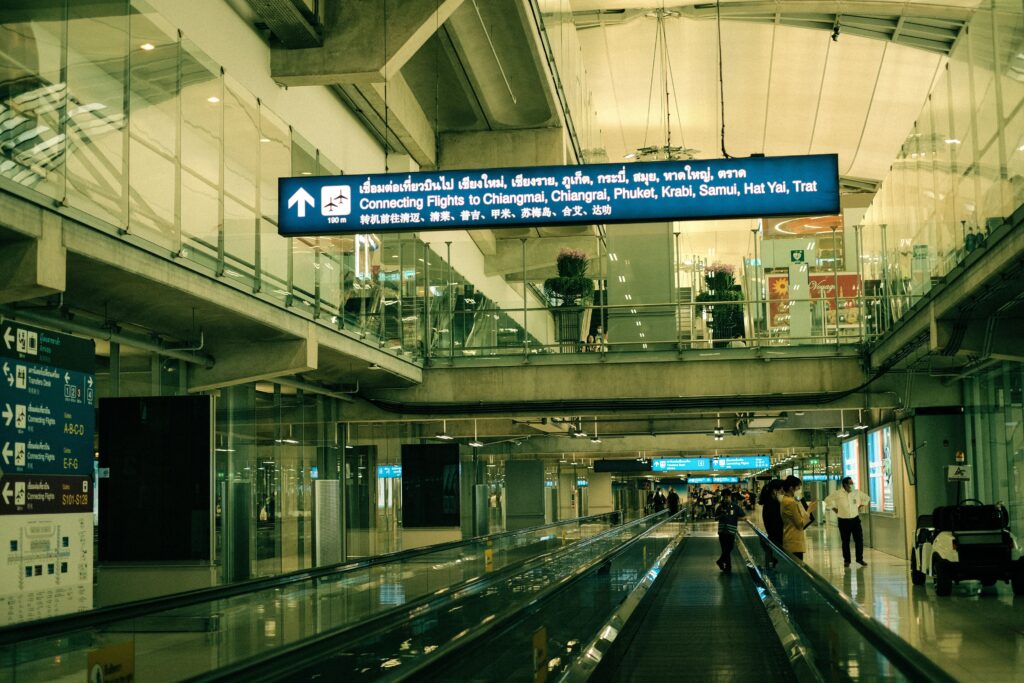
This is hands down the most important part of this Bangkok Airport Survival Guide.
As of 1 May 2025, all non-Thai nationals entering Thailand must complete the Thailand Digital Arrival Card (TDAC) online before arrival. The TDAC replaces the old paper TM6 form that was previously filled out on the plane or at the border.
Key facts about TDAC:
The information required includes: passport details, personal information, financial declaration, travel plans, accommodation address in Thailand, recently visited countries, and a health declaration. The same information that was previously provided on the paper TM6 form is essentially required here, now in digital form.
Completing the TDAC before boarding the flight to Thailand is the single most impactful pre-travel preparation step available. Immigration officers can see TDAC status in their system. Presenting the QR code at the immigration counter makes the process faster and smoother. The difference between a prepared arrival and an unprepared one shows up immediately at the immigration counter.
Here’s your detailed Thailand Visa Systems Guide if you want to learn more.
This is the sequence every arriving traveler follows. Understanding each stage in advance prevents the disorientation that causes delays.
Aircraft park at contact gates directly connected to the terminal via air bridges, or at remote stands requiring a bus transfer. Remote stand arrivals are less common at BKK for major international routes but do occur. Bus transfers add 10-20 minutes to the arrival process.
After disembarking, follow signs reading “International Arrivals” or “Immigration.” The signage is in English, Thai, and Chinese throughout the terminal. The walk from the gate to the immigration hall varies by concourse position, ranging from a few minutes at central gates to 15 minutes or more from far ends of Concourses D, E, or G.
Immigration is the most variable stage of the arrival process. During off-peak hours with good documentation, it can take under 15 minutes. During banked arrival waves, particularly early morning arrivals from the Middle East and Europe, queues can extend to 45-60 minutes or more.
At the immigration counter, have ready:
Business Class passengers typically have access to Priority Immigration Lanes. These are separate counters with significantly shorter queues. Passengers should look for the Priority Lane signs and present their Business Class boarding pass.
Immigration officers take biometric data (fingerprints and photograph) from most foreign nationals at the counter. This is standard procedure and adds approximately 1-2 minutes per passenger.
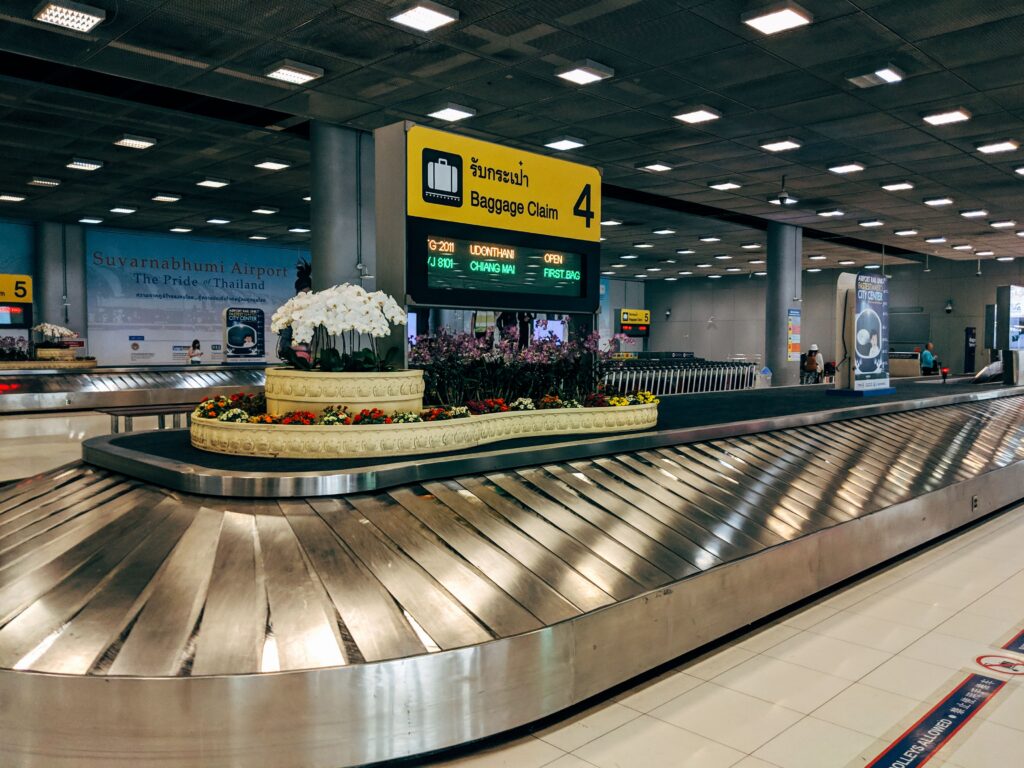
Baggage carousel assignments are displayed on screens throughout the arrivals area. Note the carousel number from the screen as soon as possible, as multiple flights often arrive simultaneously and carousels fill quickly.
Baggage delivery time varies by flight and ground handling arrangements. Typical delivery for most international flights ranges from 15-35 minutes after landing. Very heavy widebody aircraft loads may take longer.
The baggage claim area is also where the first SIM card counters appear. Travelers who want connectivity as early as possible can purchase at these counters before clearing customs.
After collecting baggage, all passengers pass through customs. Thailand uses a color-coded customs system:
The duty-free allowance and customs regulations are set by Thai customs authorities and may change. Travelers carrying high-value goods, significant amounts of currency, or commercial quantities of any items should use the red channel and present documentation.
For most travelers with standard personal luggage, the green channel process takes 2-5 minutes and may involve no interaction at all, or a brief baggage scan.
After clearing customs, travelers emerge into the main arrivals hall on Level 2. This is the first point of contact with the general public.
Here, travelers will immediately encounter: currency exchange counters, ATMs, SIM card counters (AIS, TrueMove H, DTAC), travel information desks, and transport options. This is the moment where most arriving travelers face the convergence of several immediate decisions at once: connectivity, cash, and transport.
The recommended sequence for most travelers:
The immigration hall at Suvarnabhumi can process very large volumes when staffed fully. The challenge is that staffing levels do not always match arrival volumes, and banked flight waves create simultaneous surges.
What causes long queues:
What reduces immigration time:
What to have ready at the counter:
Common immigration mistakes:
Arriving without a completed TDAC is the most common mistake since May 2025. Travelers who have not completed the TDAC online will need to use self-service kiosks, which takes additional time and adds to queue pressure.
Providing incorrect or mismatched information between the TDAC and the passport creates problems at the counter. Every field in the TDAC must match the passport exactly, including exact name spelling.
Traveling without proof of onward travel is a risk for travelers on visa exemption. Immigration officers have discretion and may ask for confirmation of a return or onward ticket. Having this readily available avoids extended counter interactions.
Getting connected immediately upon arrival is one of the highest-value actions a traveler can take at Suvarnabhumi. Maps, transport apps, accommodation confirmations, and communication all depend on data connectivity.
SIM card counters from Thailand’s major operators (AIS, TrueMove H, and DTAC – note that TrueMove and DTAC merged as True Corp in 2023, though both brands may still appear) are located in two areas:
All major operator counters at the airport are generally open 24 hours, which means late-night arrivals can purchase SIM cards immediately.
Tourist SIM cards at Suvarnabhumi Airport typically range from approximately 299 THB to 1,199 THB depending on the operator, data allowance, validity period, and plan type. Prices at the airport carry a slight premium compared to city-center operator stores. The convenience premium is generally modest for short-stay travelers, though for longer stays or specific data requirements, comparing options at city-center stores is worthwhile.
Note: Prices change frequently. Verify current pricing directly at airport counters or on operator websites before making assumptions.
The most important factor is plan validity matching the trip duration, and data volume matching expected usage. Staff at the airport counters can advise based on stated itinerary.
Travelers arriving with pre-purchased eSIMs from providers like Airalo, Holafly, or regional providers should activate the eSIM before landing or in the arrivals hall, where Wi-Fi is available. Activation typically requires downloading a QR code before arrival. eSIM users generally have the smoothest connectivity experience, as activation can happen on the aircraft before landing or during the taxi to the gate.
Digital nomads and frequent travelers may benefit from eSIM for immediate activation paired with the option to purchase a physical SIM for extended stays at lower per-day cost. For more on Bangkok connectivity strategy, see the RoamRiot Bangkok Digital Nomad Guide.
[IMAGE: SIM card kiosk counter at Bangkok Suvarnabhumi Airport arrivals hall | Purpose: Show travelers what SIM card counters look like for navigation | Alt text: Thailand SIM card counter at Suvarnabhumi Airport BKK arrivals | Unsplash search: Thailand SIM card airport counter]
Money decisions at the airport directly affect the budget for the first hours of a trip. The wrong decisions here are recoverable but add unnecessary friction.
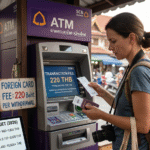
ATMs at Suvarnabhumi Airport, as at most Thai ATMs, apply a foreign transaction fee of 220 THB per withdrawal (verify this figure with your bank and current ATM notices, as fees are subject to change). This fee is applied by the Thai bank operating the ATM, in addition to any fees charged by the home bank.
The practical implication: withdrawing a larger single amount is more cost-efficient than multiple smaller withdrawals. Travelers who anticipate needing Thai Baht should withdraw a meaningful amount in a single transaction rather than making repeated small withdrawals.
ATMs are available in the arrivals hall on Level 2 and throughout the terminal.
Multiple currency exchange counters operate in the arrivals hall and on other floors. Exchange rates at airports are generally less favorable than rates available in the city. For most travelers arriving with some foreign currency, exchanging a modest amount at the airport (enough for transport and initial expenses) and converting the majority in the city offers better overall rates.
SuperRich currency exchange, which operates branches in Bangkok city and is generally considered to offer competitive rates, has a branch near the ARL station at the airport’s basement level according to some traveler reports. Travelers should verify availability and rates directly on arrival, as branch locations and hours can change.
Major international debit and credit cards (Visa, Mastercard) are accepted at the airport and throughout Bangkok. For transport via Grab or private transfer booked online, card payment is typically available. Contactless card and mobile wallet payment has been reported on the Airport Rail Link; verify current payment options at the station on arrival.
However, Bangkok’s street food vendors, markets, local transport, and smaller establishments are predominantly cash-based. Arriving with access to Thai Baht remains important for most travel scenarios.
Travelers with leftover Thai Baht at departure can convert at currency exchange counters on Level 4 (Departures). Rates at the airport may be less favorable than city-center exchanges, but the convenience factor for small remaining amounts is reasonable. Coins are typically not exchangeable at any counter.
A practical framework for leftover Baht:
Before converting anything, consider whether the remaining amount is worth converting at all given the rate difference. A general approach:
Airport spending hierarchy before conversion:
Before rushing to a currency exchange counter with leftover Baht, consider spending it down within the airport at better value than conversion loss:
This approach extracts actual value from the currency rather than losing a percentage to exchange margins. Most travelers who think they have “too much leftover Baht” actually have a manageable amount that is either worth keeping or spending down before departure.
For Thailand’s digital payment systems including PromptPay which reduces the need for cash, see the RoamRiot Thailand PromptPay and Banking Guide.
Transport from Suvarnabhumi to Bangkok city involves several options, each with meaningful tradeoffs. The right choice depends on destination, luggage volume, time of day, budget, and group size.
[IMAGE: Airport Rail Link train at Suvarnabhumi Airport basement station | Purpose: Show the ARL as a primary transport option | Alt text: Airport Rail Link City Line train at Suvarnabhumi Airport Bangkok | Unsplash search: Bangkok airport rail link train station]
The Airport Rail Link City Line is the fastest, most predictable option for reaching central Bangkok. The service is operated by the State Railway of Thailand and runs entirely on elevated tracks, making it immune to Bangkok’s road traffic.
Key facts:
Best for: Solo travelers and couples with manageable luggage, travelers heading to Sukhumvit, Silom, or Sathorn areas via BTS, or to central Bangkok via MRT; travelers arriving during rush hour when taxi journey times become unpredictable.
Not ideal for: Families with heavy luggage or strollers in peak conditions, travelers heading to areas far from BTS/MRT lines, late-night arrivals where onward connections from Phaya Thai or Makkasan may be limited.
The ARL does not reach the Old City (Rattanakosin) area, Khao San Road, or areas north of Phaya Thai without an additional connection. Travelers to those areas should plan the connection or consider alternative transport.
For a complete breakdown of Bangkok’s transport systems including the ARL in context, see the RoamRiot Bangkok Transport Guide.
Official airport taxis depart from Level 1, between Gate 4 and Gate 7. The queue system uses automatic ticket vending machines. Take a ticket, proceed to the designated bay, and board the next available taxi for that bay.
Key facts:
What to watch for: Drivers who refuse to use the meter, quote a flat rate, or want to negotiate before departure are operating outside official guidelines. A driver who does not start the meter should be politely but firmly declined. Return to the queue for a compliant driver.
Best for: Travelers with heavy luggage, families, travelers heading to areas not well-served by the ARL, night arrivals where ARL has ended service, destinations on the west side of the city.
For more on Bangkok taxi safety and scam avoidance, see the RoamRiot Bangkok Safety and Scams Guide.
Grab and Bolt are widely used ride-hailing platforms in Bangkok. Both operate at Suvarnabhumi Airport, though the pickup procedure differs from street hailing.
Grab: The app provides a pickup point designation at the airport. Travelers should confirm the pickup location within the app before walking to meet the driver. Grab estimates are quoted in advance, which eliminates meter-related ambiguity. Prices during peak hours can be significantly higher than meter taxis. During peak airport hours, Grab fares to central Bangkok can range from 400-700 THB or more.
Bolt: Operates similarly to Grab. Availability varies, and checking both apps for price and wait time comparison is practical.
Best for: Travelers who prefer fixed-price rides with no meter negotiation risk, those with reliable mobile data for app use, night arrivals when taxi queue management may feel uncertain.
Not ideal for: Travelers without connectivity, situations where Grab surge pricing makes it significantly more expensive than the metered taxi option.
Pre-booked private transfers (sedan, van, or limousine) are an efficient option for business travelers, families, or large groups. A driver meets the passenger in the arrivals hall with a name sign. Pricing is fixed regardless of traffic.
Pre-booked transfers are also the smoothest option for travelers who value minimizing cognitive load on arrival, particularly after very long flights. A driver with a name sign in the arrivals hall eliminates every transport decision from an already-busy arrival sequence. And for many travelers, the moment of stepping outside the terminal into a waiting car is also the moment Bangkok first announces itself, in small but memorable ways that no airport floor plan can prepare for.
Public buses depart from Level 1, Gate 7. The S1 bus serves the Khao San Road and Old City area with a flat fare of 60 THB, operating approximately 06:00-20:00. Additional routes serve other Bangkok zones. Bus services are the most budget-conscious option but have significant travel times due to road traffic and do not operate all night.
Best for: Budget backpackers heading to Khao San Road area during daytime hours with manageable luggage.
| Scenario | Recommended Option |
|---|---|
| Solo traveler, moderate luggage, Sukhumvit destination | Airport Rail Link + BTS |
| Family with heavy luggage, evening arrival | Metered Taxi |
| Business traveler, fixed schedule, flexibility matters | Pre-booked Private Transfer |
| Budget backpacker, daytime, Khao San Road | S1 Bus |
| Any traveler, peak hour traffic concern | Airport Rail Link |
| Late night, ARL not running | Metered Taxi or Grab |
| Large group | Private Van Transfer |
Level 1 (Ground Floor) serves primarily as the transportation pickup zone, but it also contains practical resources that matter for travelers with waiting time before transport or those reorganizing after arrival.
Convenience stores, including 7-Eleven, are accessible in the terminal across various floors. The Ground Floor provides practical access to snacks, water, basic supplies, and toiletries for travelers who did not anticipate a delay or who arrive with depleted supplies. For anyone sitting out a wait before their transfer arrives or killing time before heading to the train, the ground floor stores are the most useful and affordable food access point in the terminal.
Travelers waiting for transport who need to reorganize luggage, change clothes after a long flight, or handle a quick phone charge before moving into the city can use this level practically. Seating is available, though it fills during peak arrival periods.
Hydration is important, particularly for travelers arriving from long-haul flights. Water is available at 7-Eleven and vending machines throughout the terminal at significantly lower prices than cafes or food counters.
The Ground Floor is also where hotel shuttle pickup points are typically designated. Travelers with hotel transfers should check with their accommodation for specific pickup instructions and look for hotel representatives in the designated meeting areas.
The mix of travelers on the Ground Floor reflects BKK’s position at the center of Southeast Asian travel. Regional travelers from across the subcontinent and Southeast Asia move through this space alongside long-haul arrivals from every continent, creating an atmosphere that is distinctly different from European or North American airports.
How to handle a layover at Suvarnabhumi depends almost entirely on the duration. Every time bracket requires a different strategy.
A sub-2-hour layover at BKK is tight. Travelers on international-to-international connections should not leave the secure airside zone. The priority is: confirm the connecting gate, check departure board for any gate or schedule changes, and move directly to the departure area.
Do not assume time for shopping, eating, or lounge access unless the gate is confirmed nearby. Walking distances between concourses can consume 15-20 minutes.
A manageable layover with time for basic needs. After confirming the connecting gate and checking departure times, travelers have time for food, a café, and a walk between concourses. Miracle and Coral lounges are accessible with Priority Pass, DragonPass, or walk-up fees, and provide food, beverages, and Wi-Fi. A lounge hour is well-spent for weary long-haul travelers. This window does not allow meaningful time to leave the airport.
This is the productive layover window at BKK. Options include:
Leaving the airport to explore Bangkok is not recommended for layovers under 8 hours given immigration clearance times, transport to the city, and the need to return with sufficient buffer before the next departure.
At 8 hours and above, leaving the airport becomes viable for travelers whose nationality qualifies for visa-free entry to Thailand. Immigration processing, ARL journey, time in the city, and return to the airport with adequate pre-departure buffer should be mapped out carefully.
Sample 8-hour exit template:
This is tight. At 10-12 hours, a comfortable city excursion becomes more realistic. Bangkok’s nearby attractions, street food areas, and shopping centers are all accessible via the ARL within this window. For itinerary ideas, see the RoamRiot Bangkok Itinerary Guide.
Transit visa requirements vary by nationality. Travelers should verify current Thailand visa exemption status for their passport before assuming visa-free entry is available.
For overnight layovers, genuine rest is the goal. Options:
Airside (no immigration required):
Landside (requires clearing immigration):
For overnight stays, immigration clearance adds time and the need to return with full pre-departure buffer the next day. Budget an extra 3 hours before any morning departure after a landside hotel stay.
[IMAGE: Airport lounge seating area with food and beverage service | Purpose: Illustrate lounge options for layover travelers | Alt text: Airport transit lounge seating area Bangkok Suvarnabhumi BKK | Unsplash search: airport lounge seating food transit]
Power access at Suvarnabhumi is better than it was, but not as abundant as some newer airports. Planning ahead prevents the situation where a flat phone creates connectivity and transport problems at the worst possible moment: when a Grab needs booking, a QR code needs displaying, or a hotel address needs confirming.
Not all devices are equally critical. When power access is limited, the priority order matters:
This is easy to overlook and disproportionately important. Before boarding any flight into BKK, screenshot or download to camera roll:
These screenshots work without any internet connection. They are the difference between a flat-phone landing being manageable versus genuinely stressful.
If using an eSIM, the QR code required for activation is sent by email. Screenshot it and save it before traveling. An eSIM QR code needed at the airport that is buried in an email that cannot be accessed without internet connection creates a circular problem.
Arriving with a fully charged power bank is the most reliable guarantee of sustained connectivity throughout any BKK experience. For long layovers, charging at a lounge or during a sit-down meal is more reliable than competing for gate outlets.
Travelers with European-style plugs should note that Thailand uses Type A (flat two-pin, US-style) and Type C (round two-pin, European) outlets, with Type A being most common. A universal travel adapter covers all scenarios. Most modern airports provide USB outlets in addition to standard sockets.
The Airport Rail Link journey of approximately 30 minutes is a practical opportunity to charge on the go with a power bank if needed. Do not arrive at the city without at least 30% battery remaining on the primary phone.
Food at Suvarnabhumi covers a wide range: from airport-priced international chains to Thai food options that are reasonable for an international airport context.
Convenience stores (7-Eleven is present at multiple points in the terminal) provide water, snacks, instant food, and basic supplies at standard 7-Eleven prices. For travelers who do not want a sit-down meal, the 7-Eleven option is budget-efficient.
Level 3 contains more substantial restaurant options. Thai food is available airside, including recognizable Thai dishes at airport pricing (higher than street food but generally competitive for an international airport).
For transit passengers who want genuine Thai food during a layover, the airside Thai food options are worth exploring over the international chains. This is also where some travelers get their first taste of Thailand even before leaving the airport.
Lounge food at BKK’s Miracle and Coral lounges includes buffet dining with hot and cold options, beverages, alcoholic drinks in select lounges, and snacks. For travelers with lounge access, this is the highest-value food option in the airport, combining quality with included cost in the access fee.
BKK operates 24 hours, but late-night food options narrow significantly after midnight. The 7-Eleven locations maintain 24-hour operation and remain the most reliable option for late-night snacks and meals. Some airside food counters maintain limited late-night service, but travelers should not assume full restaurant availability at 2-4 AM.
For travelers departing on early morning flights and expecting the airport food court to be fully operational, arriving earlier than necessary to account for reduced choices is practical.
Bangkok’s climate is hot and humid year-round. Long flights are dehydrating. The combination means hydration should be a conscious priority on arrival. Water from 7-Eleven or vending machines at the airport is affordable. Buying water before leaving the arrivals hall is a useful habit.
For very budget-conscious travelers, 7-Eleven at the airport covers basic meal needs (sandwiches, prepared meals, instant foods) at much lower prices than sit-down restaurants. For something more substantial without lounge access, the food court on Level 3 offers the best combination of price and variety within the airport.
Understanding Suvarnabhumi’s traffic patterns helps travelers plan timing for departures and set realistic expectations for arrivals. The airport does not operate at a constant pace. It absorbs massive, predictable surges at specific times of day, driven by long-haul flight waves from specific regions.
BKK receives several distinct banked arrival waves based on long-haul flight departure patterns in origin cities:
Early morning (approximately 01:00-07:00): The heaviest window. This is when long-haul flights from Europe, the Middle East, and Oceania converge on Suvarnabhumi. European airlines departing evening (20:00-23:00 local time) land Bangkok at roughly 05:00-08:00. Gulf carriers (Emirates, Qatar, Etihad, FlyDubai, Air Arabia) departing Dubai and Doha in the late evening land Bangkok from 02:00-06:00. Qantas and airlines from Australia departing afternoon arrive in the early morning Bangkok window. Multiple A380s and B777s clearing gates within the same 30-60 minute window send hundreds of passengers simultaneously into the immigration hall. This is the highest-risk period for long immigration queues and the time when staffing relative to volume is most strained. Travelers landing between 02:00-06:00 should expect the longest possible queues and build their mental preparation accordingly.
Mid-morning (approximately 08:00-11:00): A secondary wave. Regional and East Asian arrivals from short overnight or early-morning departures in China, Japan, Korea, and Southeast Asia create a second, more moderate surge. Generally more manageable than the early morning long-haul wave, but still noticeably busier than the afternoon. Chinese tour groups, which tend to travel in large organized cohorts, often arrive in this window and can significantly extend queue times at specific counters.
Afternoon (approximately 13:00-18:00): The clearest window. This is the most comfortable arrival time at BKK. Long-haul flights are not landing in volume and regional flights are distributed. Immigration queues during this period tend to move steadily. Travelers who have flexibility in booking arrival times should target this window if immigration stress is a concern.
Evening (approximately 19:00-23:00): Departure surge. This is the peak departure window at Suvarnabhumi. Flights to East Asia, the Gulf, Europe, and regional destinations depart heavily in this block. The departures level (Level 4), check-in counters, security screening, and outbound immigration all absorb maximum pressure. Travelers departing during this window should arrive 3 hours before departure as a minimum and should treat the 45-minute outbound immigration estimate as realistic rather than pessimistic.
Early morning departures (04:00-08:00): Flights to East Asia and some regional routes depart early. Check-in opens 2-4 hours before departure, meaning some travelers arrive at the airport from 02:00-04:00. Despite the hour, the terminal is active with early-morning departures. Food options are limited at these hours; 7-Eleven remains the most reliable option.
The European and Oceanian evening departure surge: Major long-haul flights to London, Frankfurt, Paris, Amsterdam, Sydney, Melbourne, and similar destinations typically depart Bangkok between 22:00 and 01:00. These flights have 3-hour pre-departure windows that overlap with the 19:00-23:00 general departure surge, creating maximum pressure at outbound immigration from approximately 19:00-22:00. This is statistically the most congested period for outbound passengers.
Gulf carrier evening departures: Emirates, Qatar Airways, Etihad, and smaller Gulf carriers depart heavily in the 21:00-00:00 window. Combined with European flights in the same queue for outbound immigration, the 20:00-22:00 window can see the longest outbound immigration queues of the day.
All of the above patterns intensify significantly during:
During all holiday periods, add a minimum of 30-60 minutes to every time estimate in this guide.
Departing from Suvarnabhumi is a multi-stage process with clear deadlines at each stage.
Standard recommendation: Arrive at the airport 3 hours before an international departure.
During peak periods, holiday travel, or early morning departures: Allow 3.5 hours.
Travelers who are cutting timing close should note that Suvarnabhumi’s departure process includes multiple stages: check-in, bag drop, security screening, outbound immigration, and a potentially significant walk to the departure gate. Each stage has queue variability.
Check-in counters are organized by airline on Level 4. Counter assignments and zone locations are displayed on screens throughout the departures level. Arrive at the correct counter zone based on the airline.
Many airlines offer self-service kiosks for boarding pass issuance. These work for passengers with no checked bags and straightforward bookings. Travelers with checked luggage, special baggage, or complex itineraries (multi-airline connections, visa verification requirements) should use staffed counters.
Bag drop counters are separate from check-in at many airlines. After obtaining a boarding pass, proceed to the designated bag drop counter for the checked baggage process.
After check-in, proceed to security screening. At Suvarnabhumi, security screening takes place on the floor above check-in (Level 5 area). Escalators from Level 4 lead to the security screening area. Business Class passengers may have access to Fast Track security lanes.
Standard security rules apply: liquids in containers of 100ml or less in a clear bag, laptops and large electronics removed from bags, shoes removed (varies by screening configuration). Following international standard security protocols prevents delays.
After security screening, outbound immigration for departing passengers processes passports and exit stamps. This stage can have significant queues during peak departure periods.
Business Class and Priority Pass holders have access to Priority Immigration Lanes, which carry materially shorter queues than standard lanes.
For standard lane travelers during peak departure waves: this stage can take 30-45 minutes. This is where under-timed departures miss flights. Allow realistic time.
After clearing outbound immigration, travelers are in the secure airside departure zone. Duty-free shopping is concentrated in the area directly beyond outbound immigration. Airlines often begin boarding 30-40 minutes before departure for wide-body international flights.
Gate assignments appear on screens throughout the departure area and in airline apps. Check the gate assignment at the screens nearest the duty-free area after clearing immigration, as gates can change. Walk to the gate before spending time in retail or dining to confirm it is as expected.
Boarding announcements and gate screens indicate boarding progress. At BKK, boarding gates for major international flights can be a significant walk from the central duty-free area, particularly for gates at the ends of longer concourses or in SAT-1. Build 10-15 minutes of walking time into gate arrival planning.
Suvarnabhumi’s duty-free zone offers a typical international airport retail mix: alcohol, cosmetics, perfumes, electronics, Thai snacks and gifts, jewelry, and fashion.
Thai snacks and food gifts: Legitimate airport-exclusive Thai gift sets (coconut products, herbal teas, snacks) are reasonable purchases. These items are also available cheaper in the city, but airport convenience pricing is the tradeoff.
Alcohol: Thailand’s duty-free alcohol prices can be competitive, particularly on branded spirits. Travelers with clear duty-free allowances for their home country who are buying specific bottles they know the market price for can find value here.
Cosmetics and perfumes: Airport pricing on international brands is competitive for tax-free buyers. Thai cosmetic and skincare brands available in duty-free are also worth considering.
Travelers who have time in Bangkok’s shopping districts (Siam, Sukhumvit, Chatuchak) will find Thai handicrafts, clothing, accessories, and many souvenirs available at better prices in the city. See the RoamRiot activities guide for Bangkok shopping context: RoamRiot 60+ Things to Do in Bangkok.
For travelers who missed city shopping entirely, the airport is a functional last resort, not an optimal retail venue.
Suvarnabhumi has become a familiar transit point for the digital nomad community moving through Southeast Asia. Here is how to use it productively.
On arrival: Get a SIM card at the arrivals hall counter (AIS recommended for widest coverage) or activate a pre-purchased eSIM. Verify data speeds in the terminal before committing to a lounge or work session dependent on connectivity.
Airport Wi-Fi: Free Wi-Fi is available throughout the terminal. Quality and speed vary by location and congestion level. For work requiring video calls or significant uploads, relying solely on airport Wi-Fi carries risk. A local SIM card or eSIM provides the backup needed for professional deadlines.
For a 4-8 hour working layover, the most productive setup is:
For nomads without lounge access, the food court on Level 3 is the best alternative during off-peak hours. Reliable power access is the main challenge.
Video calls from airport environments carry risks: background noise, connectivity fluctuation, and the time pressure of departure. When possible, scheduling calls for after arrival in the destination is preferable. If a call during a layover is unavoidable, booking a lounge and using a corner seat with headphones is the most controlled approach available.
For a comprehensive look at Bangkok as a digital nomad base, including neighborhood guides, coworking spaces, and connectivity strategy, see the RoamRiot Bangkok Digital Nomad Guide 2026.
Traveling through Suvarnabhumi with children requires more planning than solo or couple travel. The airport is manageable with children, but the scale and queue times require specific preparation.
Priority lanes for families vary by immigration staffing on the day. Business class priority applies to all passengers on the boarding pass, including children. Families without business class access should proceed to standard lanes and allow additional time.
Children under 15 may have their fingerprints waived at some counters, but this is subject to current immigration policy. Check current rules before assuming any exemptions.
With children and significant baggage, the taxi or private transfer is almost always the most practical airport exit option. The ARL with strollers and multiple bags is manageable but tiring; during peak hours it becomes significantly more challenging.
Pre-booking a private transfer or large vehicle (van) before arrival eliminates the need to manage transport decisions with tired children after a long flight.
7-Eleven, available at multiple points in the terminal, stocks a range of recognizable snack items including bread, sandwiches, milk, and packaged items that work for children. Level 3 food options include more substantial choices. For airport-priced food, expect significantly higher than city prices.
Carrying snacks in hand baggage for children, particularly for long flights with connections at BKK, is a practical strategy that many experienced family travelers use.
Business travel through BKK is generally efficient with the right protocols in place.
Arrival optimization:
Departure optimization:
Meeting-to-departure window:
Travelers heading directly to a meeting from the airport should account for: immigration (15-45 minutes), baggage claim (15-35 minutes), transport to city (45-90 minutes by taxi or private transfer, approximately 60 minutes by ARL plus onward connection). A realistic door-to-meeting time from wheels-down is 2-2.5 hours under good conditions, 3 hours during peak arrivals.
Post-meeting departure: Allow 3 hours at the airport before international departure. Traffic from central Bangkok to BKK can vary significantly, particularly during evening rush hour (16:00-19:00). Private transfers with professional drivers who know alternate routes reduce this risk.
These are the recurring mistakes that cause stress, delay, and extra cost at BKK. Every one of them is preventable.
1. Not completing the TDAC before arrival. Since May 2025, this is mandatory. Arriving without a submitted TDAC means using airport kiosks during arrival, adding 20-40 minutes and creating stress at one of the most sensitive moments of the arrival process.
2. Submitting the TDAC too early. The system only accepts submissions within 72 hours (3 days) before arrival. Attempting to submit earlier will be rejected. Set a reminder for 3 days before departure.
3. Confusing Suvarnabhumi (BKK) with Don Mueang (DMK). These are two different airports, approximately 50 kilometers apart. AirAsia and several other low-cost carriers predominantly use Don Mueang. Taking transport to the wrong airport means missing a flight. Verify which airport applies to each leg of every booking.
4. Accepting a flat-rate taxi offer. Taxi drivers outside the official queue, in the arrivals hall, or on upper floors who offer flat rates are operating illegally. The official system requires metered fares plus the 50 THB surcharge. Flat-rate offers are almost always higher than what a metered ride would cost, and they are unregulated.
5. Not having the TDAC QR code accessible at immigration. Lining up at immigration and then needing to wait for a TDAC email or logging into a website at the counter slows the process and frustrates immigration officers. Download the QR code to the camera roll or screenshot it before boarding.
6. Withdrawing too little cash from the airport ATM. The 220 THB foreign transaction fee makes multiple small withdrawals inefficient. Withdraw enough for initial transport, first-night expenses, and a day’s budget in a single transaction.
7. Changing large amounts of currency at the airport. Airport exchange rates are less favorable than city rates. Exchange the minimum needed for immediate expenses (transport, SIM card if cash-only) at the airport and convert the rest in the city.
8. Not checking which terminal the connecting flight departs from. With SAT-1 now operational, some flights depart from the satellite terminal via the APM. Not checking the terminal and walking to the wrong area wastes time. Confirm the terminal from the boarding pass and departure screens.
9. Underestimating walking distances to far gates. Gates at the ends of Concourses D, E, and G are significant walks from the central duty-free area. At least 15-20 minutes should be allocated for long concourse walks. Travelers who spend too much time at duty-free and then sprint to a far gate risk missing boarding.
10. Not keeping onward travel proof readily accessible. Immigration officers on visa exemption arrivals may request proof of onward travel. Having this on the phone (or printed) and accessible without extended searching prevents counter delays.
11. Using only airport Wi-Fi for critical transit navigation. Airport Wi-Fi at BKK is useful but inconsistent in speed and coverage. For Grab booking, transport decisions, or any connectivity-dependent task, having a working local SIM or eSIM is significantly more reliable.
12. Not pre-downloading Bangkok maps for offline use. Travelers who lose connectivity between the airport and their first Bangkok destination benefit from offline maps. Google Maps and Maps.me both allow area pre-download.
13. Assuming the S1 bus is faster than the ARL. The S1 bus to the Old City area is budget-friendly but subject to Bangkok traffic. At peak hours, what could be a 45-minute journey becomes 90 minutes or more. The ARL is time-predictable; buses are not.
14. Booking an overly tight connection at BKK for international-to-international transfers. Thai aviation authorities and airports recommend a minimum 2-hour connection for international transfers at BKK. Given immigration-free airside transfer, this refers to the transit process. Travelers booking tickets independently should not book connections under 90 minutes. If a previous flight is delayed, tighter connections become a missed-flight risk.
15. Leaving the airport for a short layover when timing does not support it. Clearing immigration, transport to Bangkok, time in the city, return to airport, and pre-departure buffer requires a minimum of 8 hours layover and ideally more. Travelers with 5-6 hour layovers who attempt a city exit routinely cut it dangerously close.
16. Not checking the current visa exemption status for their nationality. Thailand’s visa exemption rules have evolved significantly in recent years. What applied 2 or 3 years ago may have changed. Verify current status at the official Thai Ministry of Foreign Affairs or Thai Embassy website before travel.
17. Trying to use Don Mueang-intended tickets or routes at Suvarnabhumi. Some travelers book connecting flights from two separate bookings: one arriving at BKK and one departing from DMK, or vice versa. These airports do not have a shared transit system. Transfer between them requires leaving the airport, ground transport (approximately 60-90 minutes minimum), and re-checking in. Self-transfer itineraries involving both airports require substantial time buffer.
18. Forgetting to account for SAT-1 in departure planning. If the boarding pass shows a gate in SAT-1, the automated people mover must be taken to the satellite terminal. This adds at least 15-20 minutes to the departure process. Departures from SAT-1 require earlier arrival at the gate relative to the standard terminal.
19. Assuming all lounge access cards work the same way. As of April 2025, all airline lounges at BKK (Thai Airways, etc.) departed the Priority Pass and DragonPass networks. Only Miracle and Coral contract lounges now accept these programs. Travelers assuming airline lounge access via Priority Pass will be turned away at airline lounge desks.
20. Not organizing family member TDAC QR codes before the immigration queue. Families must produce TDAC QR codes for each non-Thai family member. Having all codes organized in a single album or folder on the phone before joining the queue prevents counter-side fumbling.
21. Assuming taxi drivers know every hotel by name. Some hotels in Bangkok are known by different names, alternative transliterations, or are located in areas where addresses require clarity. Having the full Thai-language hotel address and/or Google Maps location ready for the taxi driver prevents routing confusion.
22. Buying high-value souvenirs at the airport without comparing city prices. Bangkok’s markets, Chatuchak Weekend Market, and mall retail stores offer the same or similar Thai products at materially lower prices than duty-free. Airport gift purchases made in departure haste are often regretted when the same item is seen at a fraction of the price in the city.
For travelers arriving in Thailand for the first time through Suvarnabhumi:
Before boarding your flight to Bangkok:
On the aircraft:
At immigration:
After clearing customs:
In Bangkok (first 24 hours):
Use this checklist on every arrival at Suvarnabhumi:
Before landing:
From gate to immigration:
At immigration counter:
Baggage claim:
Customs:
Arrivals hall:
Transport:
48-72 hours before departure:
Morning of departure:
At the airport:
Q: How far in advance should the TDAC be submitted? A: The system accepts submission within 72 hours (3 days) before arrival. Submit as close to 72 hours before arrival as possible to have maximum time for any corrections. Submitting earlier than 72 hours will be rejected by the system.
Q: Can the TDAC be completed at the airport if it was forgotten? A: Yes. Self-service kiosks are available at Suvarnabhumi Airport for passengers who missed the online submission window. However, kiosk queues during peak periods can add 20-40 minutes to the arrival process. Completing it before arrival is strongly recommended.
Q: Does the TDAC need to be completed for transit passengers? A: Transit passengers who remain entirely within the international airside zone and do not clear Thai immigration generally do not need the TDAC. Verify this with your airline if uncertain.
Q: Is the Airport Rail Link the best way to get into Bangkok? A: For most solo travelers and couples with manageable luggage heading to central Bangkok, yes. The ARL is the fastest and most predictable option. For families with heavy luggage, travelers going to destinations not near BTS or MRT stations, or late-night arrivals when the ARL has ended service, a taxi or private transfer is often more practical.
Q: What is the 50 THB airport surcharge on taxis? A: It is a mandatory fee added to the metered taxi fare for all official taxis departing from Suvarnabhumi Airport. It is set by the Ministry of Transport. Expressway tolls are additional and paid by the passenger during the journey.
Q: Are Grab rides available at BKK? A: Yes. Grab operates at Suvarnabhumi. Use the app to book and follow the designated pickup point instructions. During peak hours, Grab prices can be significantly higher than metered taxis.
Q: Where exactly are SIM card counters in the airport? A: In the baggage claim area (before customs) and in the arrivals hall on Level 2 (after customs). All major operators (AIS, TrueMove H, DTAC) have multiple counters. Staff install and activate the SIM card; a passport is required.
Q: Can the Airport Rail Link be paid for by contactless card? A: Yes, as of December 2025, the ARL accepts contactless payment via credit card, debit card, or mobile wallet at marked gates. Token machines remain available as an alternative.
Q: What is the ATM fee at the airport? A: Thai-bank-operated ATMs at Suvarnabhumi typically charge a 220 THB foreign transaction fee per withdrawal (verify current fee on the ATM screen before confirming the transaction). This is in addition to fees that may be charged by the home bank.
Q: How long does immigration typically take at BKK? A: It varies significantly. Off-peak arrivals with complete documentation can clear in 15-20 minutes. During early morning banked arrival waves (01:00-07:00), when multiple long-haul flights arrive simultaneously, queues can run 45-60 minutes or more.
Q: Is there an airside hotel at BKK? A: Yes. The Miracle Transit Hotel is located airside and offers private day rooms in 4-12 hour blocks. It is the only true airside hotel at BKK and advance booking is recommended, particularly for overnight layovers. For landside options, the Hyatt Regency Bangkok Suvarnabhumi is directly connected to the terminal.
Q: What lounges accept Priority Pass at BKK? A: As of April 2025, only Miracle and Coral contract lounges accept Priority Pass and DragonPass. Airline lounges (Thai Airways and others) are no longer part of these programs. Verify current access terms at your specific lounge before arriving.
Q: How early should I arrive for an international departure? A: 3 hours before departure under normal conditions. 3.5 hours during peak periods, holiday travel, or if unfamiliar with the airport layout.
Q: Is there a bus from the airport to Khao San Road? A: Yes. The S1 public bus departs from Level 1, Gate 7, with a flat fare of approximately 60 THB. Service runs approximately 06:00-20:00. Travel time is subject to traffic and significantly longer than the ARL, particularly during peak hours.
Q: Can I leave the airport during a layover? A: Yes, if your nationality qualifies for visa-free or visa-on-arrival entry to Thailand and your layover is long enough. A minimum of 8 hours is recommended for a meaningful city excursion, accounting for immigration, transport, time in the city, and return with full departure buffer.
Q: What should I do if my connecting flight departs from SAT-1? A: The boarding pass will show the SAT-1 terminal designation. After clearing outbound immigration in the main terminal, follow signs to the automated people mover (APM) connecting the main terminal to SAT-1. Allow at least 15-20 minutes of additional transit time beyond standard gate walk time.
Q: Are there power outlets for charging devices at the airport? A: Yes, but availability is inconsistent and popular seats near outlets fill during peak periods. Gate seating areas have some outlets. Lounges offer reliable power access. Arriving with a fully charged power bank is the most reliable preparation.
Q: Is there a hotel directly connected to Suvarnabhumi Airport? A: Yes. The Hyatt Regency Bangkok Suvarnabhumi is accessible via a 5-minute walk through a dedicated air-conditioned underground walkway at Level B1, or via complimentary 24-hour shuttle from Gate 4. The hotel offers a 24-Hour Flexi check-in policy.
Q: What is the difference between BKK and DMK? A: BKK (Suvarnabhumi) and DMK (Don Mueang) are two separate airports serving Bangkok, approximately 50 kilometers apart. BKK handles most full-service international and domestic flights. DMK handles most low-cost carrier operations including many AirAsia routes. Always confirm which airport each flight uses.
Q: Can I use a credit card for everything at the airport? A: Not everywhere. Major credit and debit cards are accepted at larger retailers, restaurants, and currency exchange counters. Some SIM card counters and smaller food vendors are cash-only. Having some Thai Baht available from the first ATM withdrawal covers all scenarios.
Q: What is the Miracle Transit Hotel? A: It is the only airside hotel at Suvarnabhumi, meaning travelers can access it without clearing immigration. It is located on the landside (before immigration) according to some sources, and confirmation of exact location should be verified directly with the hotel at time of booking. It offers private rooms in 4-12 hour blocks with beds and shower facilities, useful for overnight layover travelers who want genuine rest.
Q: How do I get back to the airport from Bangkok in time for departure? A: Via ARL from Phaya Thai (approximately 30 minutes) or by taxi or Grab (45-90 minutes depending on traffic; allow more during rush hour). For evening departures, traffic from central Bangkok to BKK during the 16:00-19:00 window can be severe. Departing for the airport earlier than expected during peak traffic periods is the safest approach.
Some airports are purely functional. Some aspire to be destinations in themselves. Suvarnabhumi sits in an interesting middle ground. It is large, efficient in its best moments, occasionally overwhelmed in its worst, and unmistakably the gateway to one of the most compelling travel destinations on the planet.
But statistics and floor plans do not capture what it actually feels like to move through this airport. The honest account of that experience comes from someone who has done it many times.
There is something hard to name about landing at Suvarnabhumi. The terminal is not architecturally exceptional by global standards. It is not Changi. It does not have the waterfalls or butterfly gardens or rooftop pools of airports that win design awards. And yet the feeling on arrival is disproportionate to what the building objectively offers.
I don’t know what it is about Suvarnabhumi Airport. It’s definitely not as beautiful as the top-rated airports of the world such as Changi Singapore, but every time I land in Suvarnabhumi I feel more excited than ever.
The airport may simply be borrowing its energy from what it represents: the entry point to Bangkok, a city that has a way of creating that feeling before you have even cleared immigration. The building becomes the vessel for the anticipation, and the anticipation is real regardless of the architecture.
The TDAC in hand, the tickets confirmed, the hotel booked, the connectivity ready. When that sequence is in order, the immigration process reflects it. I landed with the DTAC, tickets and hotel bookings on my phone. The immigration was seamless. That kind of smooth arrival does not happen by accident. It is preparation expressed as experience. You want the TDAC ready, trust me! During my last visit, I saw a whole bunch of travelers, travelling together from India, taken to a separate location away from the immigration hall to process. I saw all of them had tickets printed in their hands along with their passports. No sign of a printed TDAC. (You don’t need a printed TDAC. In this case I suspect they were all unfamiliar with TDAC. They seemed old traditional and the kind that would carry all required documents printed in hand.)
Out of immigration and into the arrivals hall, the transition to the ground floor is where Bangkok begins. The road outside, the warm air, the transfer waiting. For anyone taking a pre-booked car, the escort meets them at the exit and walks them to the vehicle. And somewhere in that first moment outside the terminal, something distinctly Thai appears that many first-timers do not expect.
You come out on to the road, if you are taking a pre-booked transfer, a person will escort you to your car. That’s when you first spot the infamous Thai Herbal Inhaler, in the hand of the escort or in the car you’re about to hop into, which trust me is outta this world! My nose loves nothing more. I got big packs to bring back home every time.
The Thai herbal inhaler, mostly a small green container of camphor, menthol, and aromatic herbs, is genuinely ubiquitous. It is in pockets, on dashboards and everywhere else you can imagine. For many travelers it becomes one of those sensory anchors that the memory returns to every time Bangkok is thought about.
On the ground floor of the terminal, while waiting for transport or reorganizing after a long flight, the scene has its own particular character. You get stores too to get some quick snacks in case you have a long waiting time ahead of you. The 7-Eleven is not glamorous. But it is there, it is reliable, and it is where many Bangkok arrivals begin. And looking around that ground floor, the mix of travelers is distinctly regional. You spot nearby country travelers there too. Southeast Asia converges here in a way that Bangkok’s position at the center of the region makes inevitable. Indian families, Filipino workers returning home, Thai students, Japanese tourists, Middle Eastern transit passengers. The ground floor of Suvarnabhumi is an accidental slice of the region’s movement.
And then there is departure.
Arrivals carry energy. Departures carry something different. The escalator to Level 4, the Departures level, is a specific kind of transit. The saddest I felt at the airport was when I had to take the escalator towards departures.
Anyone who has spent real time in Bangkok and built a relationship with the city understands this exactly. The escalator upward is not just a floor change. It is the moment where the trip formally ends, where the sensory loop of Bangkok, the food, the streets, the noise, the warmth, the pace, closes. The departure hall is functional. It processes people efficiently. But for the traveler who wanted more time, efficiency is not the point.
Knowing this in advance does not prevent the feeling. It just means the traveler arrives at that escalator having made the most of what came before it.
What consistently separates good BKK experiences from difficult ones is not the airport itself, but how prepared the traveler is for it. Every frustrated queue experience is preventable. Every smooth arrival, fast exit, and productive layover is the result of preparation made before the aircraft touched down.
Suvarnabhumi Airport works well for prepared travelers and creates friction for unprepared ones. That is the honest summary.
BKK works best for:
BKK requires more preparation for:
The non-negotiable preparation list:
What to expect overall:
The airport is large but navigable with its English-language signage. Immigration queues are the primary variable. The ARL is the most underutilized efficient option among first-time visitors. The taxi queue system works when used correctly. The SIM card counters in the arrivals hall are genuinely useful and legitimately priced.
Thailand rewards preparation. Suvarnabhumi is where that preparation first pays off.
For everything Bangkok after the airport: the RoamRiot Bangkok Digital Nomad Guide, the RoamRiot Bangkok Activities Guide, the Bangkok Transport Guide, and the Bangkok Safety and Scams Guide and Bangkok Airport Fun Guide are the logical next reads.
All information in this guide reflects publicly available data as of June 2026. Airport procedures, fees, transport fares, visa requirements, and airline operations are subject to change. Travelers should verify current information with official airport, airline, and Thai immigration authority sources before travel.