Physical Address
304 North Cardinal St.
Dorchester Center, MA 02124
Physical Address
304 North Cardinal St.
Dorchester Center, MA 02124

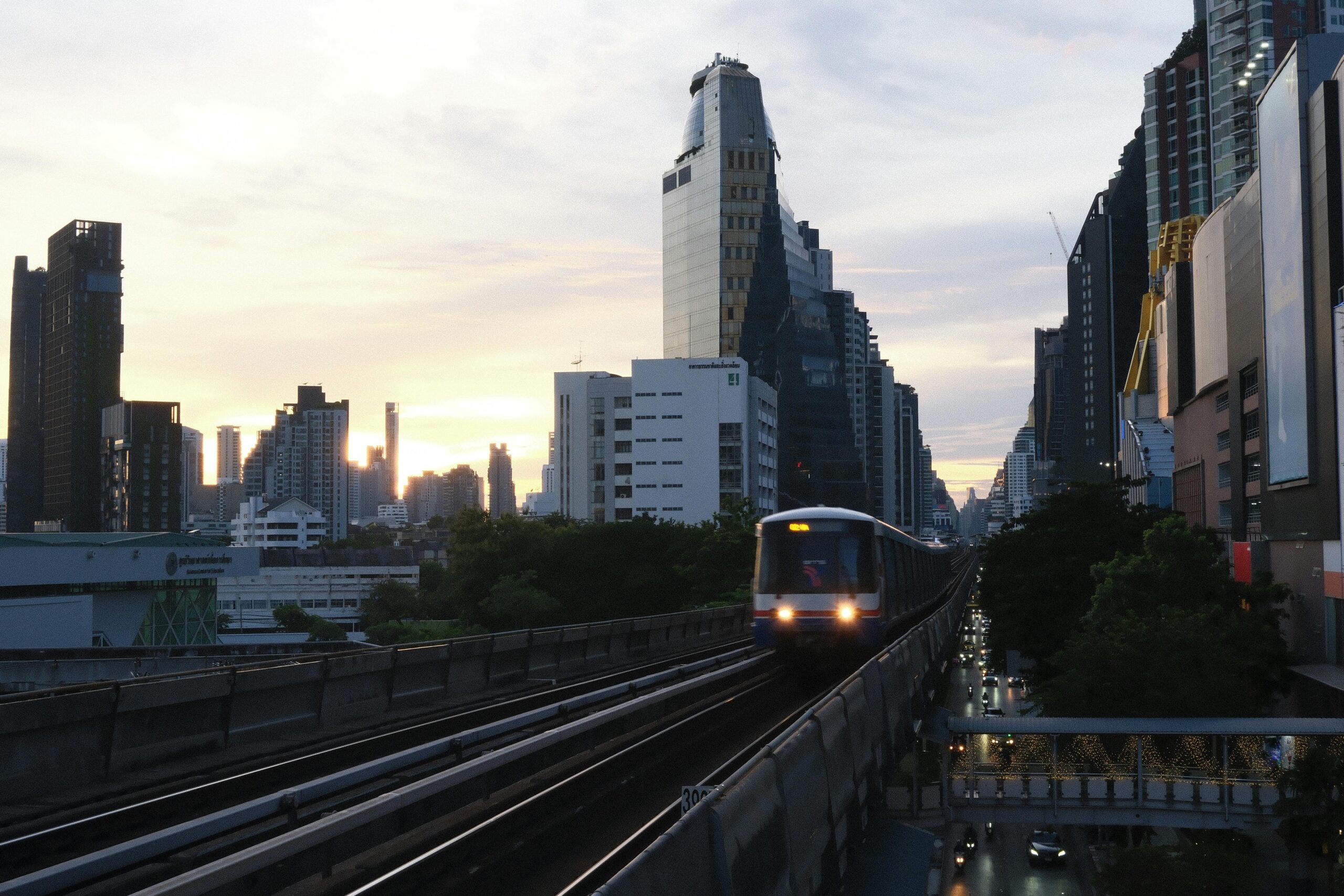
The definitive Bangkok transport guide for 2026. BTS Skytrain, MRT, Airport Rail Link, Grab, taxis, tuk tuks, river boats, and every neighborhood strategy you need to move through this city like a local.
Bangkok does not punish laziness slowly. It punishes it immediately, at rush hour, inside a cab that has moved 400 meters in 45 minutes. Getting around this city well is not just a logistics question. It is the difference between a good trip and a miserable one, between arriving at a temple in time for golden-hour light or arriving at a temple after dark, sweating through a shirt, wondering what went wrong.
This guide covers every transport method available in Bangkok in 2026, in enough tactical detail to actually be useful on the ground. Not which app to download in theory. Not a surface-level breakdown of BTS lines. The real mechanics: when each system breaks down, what tourists consistently misunderstand, how locals actually move, and what the right tool is for each neighborhood, each time of day, each type of traveler.
Bangkok is one of the most transport-complex cities in Southeast Asia. It has seven mass rapid transit systems, a functional river boat network, one of the most active ride-hailing markets in the region, a taxi fleet that ranges from scrupulously honest to deliberately exploitative, and a road network that transforms from tolerable to catastrophic depending almost entirely on the time of day. Understanding how these systems interact, overlap, and fail is not optional. It is foundational.
The confusion is structural, not incidental. Bangkok grew faster than its infrastructure planning could keep pace with, and the result is a city that was retrofitted with rail transit decades after the street grid had already calcified. The BTS Skytrain and MRT subway systems are genuinely excellent within their coverage areas, but those coverage areas have significant gaps. Old Town, Khao San Road, Chinatown’s deeper alleyways, and many residential neighborhoods are not on any train line. The river and canal systems fill some of those gaps but operate on their own logic and schedules.
Then there is geography. Bangkok is enormous and largely flat, which means there are no natural landmarks to orient yourself by. A short distance on a map can translate to a long journey in traffic. The Sukhumvit corridor alone stretches for kilometers, and a hotel on Sukhumvit Soi 71 is not meaningfully close to a restaurant on Sukhumvit Soi 11, despite sharing an address prefix. Tourists routinely underestimate Bangkok distances, assume they can walk between points that are actually forty minutes apart by train, and then end up stuck in taxi traffic because they decided to try walking and gave up.
The city is also divided by the Chao Phraya River, which separates the historic west bank, home to the Grand Palace, Wat Pho, and Wat Arun, from the modern commercial east bank where most hotels, malls, and nightlife concentrate. Crossing that river requires either a specific BTS stop with a long walk, a river boat to the correct pier, or a taxi willing to deal with bridge traffic. Most first-time visitors do not register this divide until they try to get to Wat Arun from Sukhumvit and discover it is not a short ride.
The final layer of confusion is the multi-operator transit system. The BTS Skytrain and the MRT subway are operated by different companies. Tickets are not shared. The Airport Rail Link is a third separate ticketing system. A trip involving a BTS-to-MRT transfer requires two separate tap-outs and tap-ins, which adds both time and cost. Interchange stations exist, but the physical walk between platforms at some of them, particularly Asok/Sukhumvit and Sala Daeng/Si Lom, takes several minutes and involves navigating through crowded concourses. None of this is insurmountable, but all of it is something to understand before arriving.
The BTS Skytrain is Bangkok’s elevated rapid transit network and the single most useful transport system for most tourists. It is air-conditioned, fast, bilingual in signage, reliable, and connects the vast majority of the city’s commercial and tourist districts. If there is one thing to understand about Bangkok public transport, it is the BTS.
The system currently operates on three main lines. The Sukhumvit Line runs northeast from Mo Chit (near Chatuchak Weekend Market) through the central interchange at Siam and then continues southeast through the heart of the Sukhumvit corridor, passing through major stops like Nana, Asok, Phrom Phong, Thong Lo, Ekkamai, and Udom Suk before extending to the outer suburbs. The Silom Line runs roughly east-west through the Silom financial district and connects at Siam before continuing to the National Stadium stop, with its southern terminus at Bang Wa. A third short line, the Gold Line, is a driverless people-mover that connects Krung Thonburi station to the ICONSIAM shopping complex, making the riverside megamall accessible without a boat crossing.
Siam station sits at the geometric center of the network and is where the Sukhumvit and Silom lines interchange. Virtually every BTS journey involving both lines passes through Siam, and the station itself is cavernous, busy, and connected via elevated skywalks to Siam Paragon, MBK Center, CentralWorld, and several other malls. During rush hour the interchange can become genuinely crowded, with narrow passageways filling with commuters moving in conflicting directions. Knowing which exit to use at Siam matters more than at almost any other station.
Tickets and the Rabbit Card
Single-journey tokens are available at ticket machines on every concourse. Machines accept coins and some accept banknotes, but they can be finicky with worn notes. The fare is distance-based, starting from around 17 THB for the shortest journeys and rising to around 59 THB for longer cross-city trips. For anyone spending more than a couple of days in Bangkok, the Rabbit Card is worth buying immediately.
The Rabbit Card is a stored-value card, available at all BTS stations for a deposit of around 100 THB plus whatever initial top-up amount is chosen. It functions like London’s Oyster card or Hong Kong’s Octopus card: tap in at the turnstile, tap out at the destination, fare deducted automatically. It eliminates the need to queue at ticket machines every journey and can also be used on the Chao Phraya Express Boat, the MRT Yellow and Pink Lines, some buses, and a growing number of retail outlets. The card has no expiry for stored value. For anyone with an existing Rabbit Card from a previous visit, the balance is still valid.
An important nuance: as of 2026, the BTS Skytrain still primarily requires either a physical ticket token or a Rabbit Card. Some gates at selected stations are being upgraded to accept contactless EMV payment (Visa or Mastercard tap-to-pay), but coverage is not yet universal across the BTS network. For complete reliability, carry a topped-up Rabbit Card.
Rush Hour Realities
Bangkok rush hour on the BTS runs from approximately 07:30 to 09:30 in the mornings and 17:00 to 19:30 in the evenings. During these windows, trains are packed. Standing room compresses. The gap between platform edge and train door fills with bodies. If traveling with large luggage, this is a genuinely uncomfortable experience and potentially a physical obstacle to boarding. Plan airport transfers and hotel check-ins around these windows if at all possible.
Outside rush hour, the BTS is excellent: trains every three to six minutes, clean carriages, consistent air conditioning, and a journey speed that no surface transport in central Bangkok can approach. A trip from Siam to Asok that takes six minutes by BTS can take thirty-five minutes by taxi in traffic.
Skywalk Systems
One underutilized advantage of the central BTS corridor is the elevated skywalk network connecting stations to surrounding buildings. Between Ratchadamri, Siam, Chit Lom, and Phloen Chit stations, it is possible to walk entirely above ground level, bypassing the sidewalks, the sun, and the motorbike traffic. This network has expanded in recent years and now includes convenience stores and coffee kiosks at skyway level. During rain, this matters enormously.
Best Stations by Neighborhood
For Sukhumvit: Nana (Soi 3-11 area), Asok (junction with Sukhumvit 21, near Terminal 21), Phrom Phong (Soi 24, Emporium, Emquartier), Thong Lo (Soi 55), Ekkamai (Soi 63). For Silom and Sathon: Sala Daeng (Silom Road), Chong Nonsi (Sathon area). For shopping: Siam (Siam Paragon, MBK), Chit Lom (Central Embassy, CentralWorld). For Chatuchak Market: Mo Chit. For the river: Saphan Taksin (connects to Central Pier for Chao Phraya boats). For Victory Monument: Victory Monument station on the Sukhumvit Line.
The MRT (Mass Rapid Transit) is Bangkok’s subway system and operates independently from the BTS. In 2026 it consists of several lines, but the two most relevant for visitors are the Blue Line and the Purple Line.
The MRT Blue Line is a roughly circular underground route that covers significant ground, including Chatuchak Park (Kamphaeng Phet station), the Sukhumvit corridor (at Sukhumvit/Asok station, the interchange with BTS), Lumphini Park, Silom (at Si Lom station, interchange with BTS Sala Daeng), Hua Lamphong (Bangkok’s legacy railway terminal), and critically, Sam Yot and Sanam Chai stations, which provide access to Chinatown and the Old Town area respectively. This Old Town access is one of the MRT’s most valuable features for tourists, since Rattanakosin Island and the temple district have no BTS coverage.
The MRT Purple Line extends the network northward into the Nonthaburi province, connecting to the Blue Line at Tao Poon station. For most tourists this line is less immediately relevant, but it is useful for accessing Bang Krasor and Nonthaburi markets.
MRT Fares and Ticketing
MRT Blue Line fares in 2026 start at 17 THB and rise to a maximum of 45 THB for a single journey, with fares increasing incrementally based on distance. For trips requiring a transfer between Blue Line and Purple Line, combined fares can reach up to 71 THB. Tickets are purchased via machine at each station using a token system similar to the BTS, but there is a key advantage: the MRT Blue Line and Purple Line accept contactless EMV payment, meaning a Visa or Mastercard can be tapped directly at the turnstile. This is genuinely convenient for travelers who would rather not acquire a separate card.
The MRT Plus card is a stored-value card valid on the Blue and Purple lines. The Rabbit Card is not valid on the MRT Blue or Purple Lines (though it does work on the MRT Yellow and Pink Lines). This ticketing fragmentation is one of Bangkok’s most persistent transport frustrations.
Interchange Points
The primary BTS-MRT interchange points are: Asok (BTS Sukhumvit Line) and Sukhumvit (MRT Blue Line), which are adjacent stations requiring a tap-out, walking through a concourse, and tap-in; and Sala Daeng (BTS Silom Line) and Si Lom (MRT Blue Line), with a similar process. These interchanges add time and cost but are necessary for cross-network travel. The physical walk between platforms at Asok/Sukhumvit is around three to five minutes through a connecting mall passage.
When MRT Beats BTS
For Old Town and Chinatown access, the MRT is definitively better than any alternative. The Sanam Chai station puts visitors within reasonable walking distance of the Grand Palace and Wat Pho areas. Sam Yot station is the closest rail stop to Chinatown’s Yaowarat Road. For anyone staying in the Silom or Lumphini area, the MRT Blue Line can be faster than the BTS Silom Line for some destinations. For accessing Hua Lamphong train station, the MRT has a dedicated stop.
Suvarnabhumi is Bangkok’s main international gateway, located approximately 30 kilometers east of the city center. The airport has three credible transport options into the city: the Airport Rail Link, licensed taxis, and ride-hailing apps.
Airport Rail Link
The Airport Rail Link is the fastest and most predictable option. It operates the City Line, a commuter service connecting Suvarnabhumi Airport to Phaya Thai station (the BTS Sukhumvit Line interchange) via Makkasan (the MRT Blue Line interchange at Phetchaburi station). The full journey to Phaya Thai takes approximately 26 to 30 minutes and costs 45 THB. To Makkasan it is 35 THB. Trains run every 10 minutes during peak hours and every 15 minutes off-peak. Operating hours are approximately 05:30 to midnight.
The station is in the airport’s basement level, accessed from the main terminal building via escalators and clear signage. Ticket machines accept coins and banknotes and have English-language interfaces. The Rabbit Card is not valid; a separate token or contactless card payment must be used.
From Phaya Thai, passengers can connect directly onto the BTS Sukhumvit Line. From Makkasan, the physical walk to the MRT Phetchaburi station entrance takes around five minutes. For hotels along the BTS Sukhumvit corridor (Nana, Asok, Phrom Phong, Thong Lo), the Airport Rail Link plus BTS combination is almost always the fastest and cheapest option, delivering a central Bangkok arrival for under 100 THB total in most cases.
The one significant limitation is luggage. Trains have limited space for large suitcases, and during morning and evening rush windows the carriages fill with commuters. If arriving with multiple large bags during rush hour, a taxi or Grab may be more practical even if slower.
Taxis from Suvarnabhumi
Licensed metered taxis depart from Level 1 of the passenger terminal. Queue tickets are collected at the designated taxi dispatch area. The meter starts at 35 or 40 THB depending on taxi type, and the total fare to central Bangkok areas like Sukhumvit or Silom typically runs 500 to 650 THB inclusive of the 50 THB airport surcharge and expressway tolls, which vary depending on which route the driver takes but commonly add 50 to 75 THB. Journey time is completely variable: 35 minutes in light traffic, 90 minutes in rush-hour congestion.
Always insist on the meter. Before entering the taxi, confirm the driver will use it. The airport taxi queue is officiated, so the chances of an unmetered scam are lower here than at other pickup points in the city, but asking explicitly remains good practice.
Grab and Bolt from Suvarnabhumi
Both Grab and Bolt operate from Suvarnabhumi. Grab is generally more structured for airport pickups, with clearer app instructions and a designated ride-hailing pickup zone at Level 1. Fares are upfront-quoted in the app. A typical Grab or Bolt to Sukhumvit from Suvarnabhumi runs 320 to 450 THB plus highway tolls. The tolls are either added to the app fare or, for some trip types, paid directly in cash at the toll booth.
For first-time arrivals, the most common mistake is approaching strangers in the arrivals hall who offer taxi services. These are touts, not Grab drivers. Rates offered by touts are routinely 800 to 1,500 THB for journeys that cost 350 to 450 THB on the app. Book through the app inside the terminal, then walk to the designated zone.
Late Night Arrivals
The Airport Rail Link stops at midnight. For arrivals after this time, taxis or ride-hailing are the only options. The taxi queue at Suvarnabhumi operates 24 hours. Grab driver availability after midnight decreases but remains functional in most circumstances.
Don Mueang is Bangkok’s budget airport, handling AirAsia, Nok Air, Thai Lion Air, and various international LCC routes. It is located approximately 25 to 30 kilometers north of central Bangkok and has fewer convenient transit connections than Suvarnabhumi.
The SRT Red Line train opened in 2021 and connects Don Mueang to Bang Sue Grand Station (also known as Krung Thep Aphiwat Central Terminal), which is the interchange point for the MRT Blue Line and Purple Line. The fare is 33 THB and the journey time is fast, but the connection to practical tourist areas from Bang Sue still requires at least one further MRT journey. For Sukhumvit or Silom, this involves MRT Blue Line from Bang Sue, then a transfer to BTS at one of the interchange stations, adding time and cost. The Red Line to Bang Sue is still a solid option for budget travelers with time to spare.
Taxis from Don Mueang start the meter similarly to Suvarnabhumi and charge the same 50 THB airport surcharge. Average total fare to central Bangkok is 300 to 400 THB, with expressway tolls adding to that. Grab and Bolt both operate from the airport, with slightly less organized pickup logistics than Suvarnabhumi. Drivers can sometimes have difficulty locating the exact pickup point, so clear communication through the app chat is useful.
A direct shuttle bus service links Suvarnabhumi and Don Mueang airports, which is useful for passengers connecting between the two. Frequency and schedules are updated periodically; check the Suvarnabhumi Airport website for current timings.
Ride-hailing transformed Bangkok transport for tourists and expats. The two dominant apps in 2026 are Grab and Bolt, and both should be installed before landing.
Grab has the larger driver network, particularly outside the central areas, and is generally the more structured option for airport transfers. It also offers the widest range of service types: GrabCar (private vehicle), GrabTaxi (licensed metered taxi ordered through the app), and GrabBike (motorbike). Its loyalty program accumulates points. It is the safer default for anyone who wants reliability.
Bolt entered the Bangkok market as an aggressive competitor and has positioned itself primarily on price. The general principle is that Bolt runs 10 to 25% cheaper than Grab on standard urban trips. For a 10-kilometer Bangkok journey, 2026 pricing examples typically show Bolt at around 120 to 150 THB versus Grab at 140 to 180 THB, though this depends heavily on demand and time of day. Both apps show upfront fixed fares before booking, which eliminates negotiation and post-trip fare disputes.
The correct strategy: install both apps. Before booking, open both, enter the destination, and compare the quoted fares. The price difference on a single trip is often small, but across a week of regular rides, it compounds. Bolt first for city trips; Grab as backup and for anything airport-related where its pickup infrastructure is more developed.
Surge Pricing and How to Counter It
Both apps adjust pricing dynamically. The most aggressive surges occur during heavy rain, when driver availability drops sharply and demand spikes simultaneously. Surges tend to be hyper-local. Moving two blocks away from a nightlife cluster, a major station exit, or a street flooding zone can reduce a quoted fare significantly. Waiting 15 to 20 minutes after the initial surge peak of a rain shower often returns prices to near-normal. For predictable early morning airport transfers, Grab allows advance booking up to a week ahead at the standard fare.
Payment
Both apps accept Visa and Mastercard, and linking a card before arriving simplifies the experience significantly. Wise and Revolut virtual cards typically work without issues. A cash payment option is available on both platforms if a card is unavailable or declined.
Motorbike Taxis Through Apps
Grab Bike and Bolt’s bike service connect users to motorbike drivers. This is genuinely useful for short distances in heavy traffic and is covered in more detail in the motorbike taxi section below.
Bangkok has a large metered taxi fleet and the overwhelming majority of drivers are honest. The persistent reputation for taxi scams is partly outdated and partly the result of a small minority of opportunistic drivers who concentrate in tourist-heavy areas. Understanding the few reliable rules eliminates almost all risk.
The fundamental rule is the meter. All licensed Bangkok taxis are required to use the meter, and the fare should always be metered from the moment the journey starts. The meter begins at 35 to 40 THB and increases incrementally with distance and time. For most cross-city journeys in moderate traffic, expect to pay 80 to 200 THB. Traffic delays cause the meter to tick up, which is why Bangkok taxi fares can feel disproportionately expensive even for relatively short physical distances.
Expressway Tolls
For journeys that use elevated expressways, toll charges apply and are paid by the passenger in cash at the toll booth. The driver will say “expressway” or gesture at the toll plaza, and the typical toll per gate is 25 to 75 THB depending on the route. Journeys from Suvarnabhumi Airport using the expressway into central Bangkok commonly pass two or three tolls. It is useful to have small cash denominations available for this.
Refusing Passengers
Some drivers, particularly near tourist hotspots, tourist-area bars, and hotel taxi ranks, will refuse to use the meter and propose a flat rate instead. This flat rate is almost always significantly higher than what the meter would produce. If a driver refuses the meter, the correct response is to get out and try another taxi. Outside of peak tourist areas and during normal traffic hours, this behavior is uncommon. Hailing taxis on side streets or residential roads rather than directly outside major hotels or tourist attractions significantly reduces its frequency.
Nighttime Taxis
Late at night and in the hours around last call in nightlife areas, driver behavior changes. Supply is tighter, drivers know it, and flat-rate propositions become more frequent. Post-midnight taxi strategy should default to Grab or Bolt first, as the upfront pricing removes negotiation entirely. If using a street taxi after midnight, be clear about the meter before entering.
The tuk tuk is Bangkok’s most iconic vehicle and one of its most misused by tourists. These three-wheeled, open-sided, deafeningly loud machines are visually extraordinary, particularly at night when they weave through neon-lit traffic at speed. The experience of riding one through Bangkok backstreets at dusk has genuine atmospheric value.
The practical case, however, is limited. Tuk tuk pricing is entirely negotiated and bears no relationship to distance in the way a metered taxi does. The rates tourists are quoted routinely run two to four times what a metered taxi or Grab would charge for the same journey. A ten-minute tuk tuk ride in central Bangkok that a taxi would charge 60 to 80 THB for will frequently be quoted at 200 to 300 THB or more from a tuk tuk waiting outside a major temple or mall.
The classic tuk tuk scam, which remains active around Wat Pho, the Grand Palace, and the Golden Mount, involves a driver who offers a heavily discounted or near-free ride to a destination but insists on making a stop at a gem shop, tailor, or travel agency along the way. The driver earns commission for each tourist dropped at the shop. The “stop” is not optional, and the shops themselves use high-pressure sales tactics. This scam has existed for decades and is documented extensively, yet it continues to claim new tourists every day. The tell is always the unusually low price and the insistence on “just five minutes” at a sponsor’s shop.
When do tuk tuks actually make sense? For short distances in areas with no nearby BTS/MRT access, where the novelty is worth paying a modest premium over a Grab price. For nighttime atmosphere when moving between a riverside restaurant and a nearby bar or hotel. For small groups where splitting a negotiated rate produces a per-person fare that is competitive. Budget around 100 to 200 THB for a short trip and negotiate firmly. Do not accept the first number offered.
Bangkok’s river system is one of its great transport secrets, and most tourists ignore it entirely because they have already purchased a canal cruise. The working Chao Phraya Express Boat service is something different: a commuter ferry network serving actual neighborhoods, connecting actual points, and moving faster than road traffic during peak hours.
The Chao Phraya River runs roughly north-south through central Bangkok, and the express boats stop at numbered piers called “Tha” along both banks. The most useful tourist piers are Sathorn (Pier 21, also called Central Pier, directly accessible from BTS Saphan Taksin), Wang Lang (Pier 10, opposite the Grand Palace area for Wat Pho), Maharaj (Pier 9, directly below Wat Pho and Wat Mahathat), Tha Tien (Pier 8, closest pier to Wat Pho’s river entrance and opposite for Wat Arun), and Phra Arthit (Pier 13, near Khao San Road and the Democracy Monument area).
Boat Services and Fares (Updated May 2026)
Multiple flag-coded services share the river, each stopping at different combinations of piers:
For tourists navigating the Old Town temples and riverside, the Tourist Boat pass is the simplest option. It is clearly signed in English, stops only at tourist-relevant piers, and the day pass represents good value for anyone making two or more trips. For a single crossing, the standard 40 THB single-trip Tourist Boat ticket is straightforward.
Using the Regular Boats
For budget travelers willing to navigate the local services, the orange and yellow flag boats are faster, cheaper, and more frequent. The challenge is that pier staff collect fares on board and the interactions happen quickly. Arrive at the pier, watch for the flag color, board decisively when the boat approaches (they do not wait long), and have cash ready. The pier decks become slippery in wet weather. The boats are not glamorous. They are functional, breezy, and genuinely faster than a taxi for riverside movement during traffic hours.
The River for Old Town Strategy
The single most efficient way to reach the Grand Palace, Wat Pho, and Wat Arun from a Sukhumvit or Silom hotel is: BTS to Saphan Taksin, then boat from Central Pier to Tha Tien or Maharaj. This avoids the significant road traffic that builds around Rattanakosin Island during the day, eliminates any taxi negotiation, and arrives at the temple area significantly faster than a surface route. This combination is one of Bangkok’s best transport tricks.
ICONSIAM Access
The Gold Line BTS runs from Krung Thonburi station to ICONSIAM’s dedicated pier. Alternatively, ICONSIAM operates its own free shuttle boat from Central Pier (Sathorn). The shopping mall is directly on the river’s west bank and the boat approach is part of the experience.
While the Chao Phraya gets most of the attention, Bangkok’s canal system includes Khlong Saen Saep, an east-west canal that runs from the Golden Mount area in the west through Pratunam and all the way to the eastern suburbs. A boat service operates along this canal and is used almost exclusively by locals and expats, making it one of the city’s most authentic and underused transport experiences.
The practical value is real. Khlong Saen Saep boats connect Pratunam (near Baiyoke Tower and the wholesale fashion markets) to the Siam-Chit Lom area at the Hua Chang pier, and extend eastward toward Ramkhamhaeng. For tourists based near Pratunam or needing to reach the Jim Thompson House area from the east without BTS access, the canal boat is remarkably fast.
Caveats are genuine. The boats are small, the canal is not clean, spray does happen, the boats operate on a simple principle of board-pay-disembark that assumes you know where you are going, and the piers have minimal signage in English. Fares are in the range of 10 to 20 THB depending on distance. Rush hour is genuinely chaotic. The appeal is speed and price, not comfort. Serious Bangkok travelers who spend extended time in the city tend to discover Khlong Saen Saep organically; first-time visitors can safely ignore it for most purposes.
Bangkok is not a city designed for walking between districts. Within a specific neighborhood, on a cool evening or an overcast morning, walking can be genuinely pleasant. Between neighborhoods, particularly crossing major arterial roads or covering distances that appear short on a map but span multiple blocks of heat and uneven pavement, it becomes a different proposition.
The sidewalks in Bangkok vary enormously. Along Sukhumvit’s main road they are wide and relatively well maintained. Down sois (side streets), they range from adequate to nonexistent, with motorbike traffic frequently using the pedestrian space. Street vendors occupy significant portions of footpath in market areas. During the wet season (roughly May to October), sidewalks flood, drain grates overflow, and streets turn into shallow rivers within minutes of heavy rain starting.
Crossing Roads
Bangkok pedestrian crossings are technically legal but functionally advisory. A green pedestrian signal does not guarantee vehicles will stop. Look both ways regardless. At busy intersections without traffic lights or crossings, wait for a gap or follow a local. Underpasses are available at major intersections in the Sukhumvit area.
Heat
Between 10:00 and 16:00, particularly from March through June, outdoor walking in full sun in Bangkok is physically demanding. Humidity commonly exceeds 80%. Hydration is not optional. Plan walking-heavy itineraries for early morning (before 09:30) or evening (after 17:30). Use the BTS skywalk network for the central Sukhumvit area to minimize ground-level exposure.
Rainy Season Movement
From June through October, Bangkok receives heavy rainfall, typically in intense afternoon bursts. These can flood lower streets within thirty minutes. The practical response: assume afternoon rain is possible, check the BTS skywalk routing before heading out, carry a compact umbrella or wear quick-dry clothing, and know which piers are elevated enough to board boats without standing in ankle-deep water.
Motorbike taxis are one of Bangkok’s most efficient short-distance tools and one of its most underutilized by tourists. Drivers in orange or colored vests wait at the mouths of sois and at fixed points throughout the city. They are not difficult to identify.
The practical case is clear: for a journey of a kilometer or less, or for penetrating a soi that a car cannot access quickly, a motorbike taxi is almost always the fastest option. They cut through traffic, bypass congested junctions, and charge minimal fares for short trips (typically 15 to 50 THB for distances up to a kilometer or two). Booking a motorbike taxi is done by approaching the vest-wearing driver cluster, stating the destination, and agreeing a price.
Helmets are required by law but enforcement is inconsistent, and some drivers will offer only a single helmet to a two-person arrangement. Insist on a helmet regardless of perceived distance. For longer rides in heavy traffic, the safety calculus changes; motorbike taxis are best understood as a last-100-meter or soi-penetration tool rather than a cross-city option.
Grab Bike and Bolt’s bike service provide the same functionality with the convenience of upfront pricing, GPS navigation, and no negotiation. For anyone uncomfortable with the street-level interaction or unfamiliar with the area, using an app-based bike booking is a direct equivalent with less uncertainty.
Rush Hour Survival
The two Bangkok rush windows (07:30 to 09:30, 17:00 to 19:30) should be treated as periods during which all surface transport is unreliable. The expressway network helps somewhat but adds cost. The BTS and MRT become the only predictable options. Any taxi, Grab, or Bolt journey that covers significant road distance during these windows should have at least double the non-peak estimated travel time built in.
BTS Closing Time
BTS trains run from approximately 06:00 to midnight. This is the hardest limit on transit-based nightlife logistics. After midnight, returning from nightlife areas requires taxis, Grab, or Bolt. In tourist-heavy areas like Sukhumvit Soi 11, Thong Lo, and RCA, surge pricing on ride-hailing apps activates predictably between 01:00 and 03:00 when crowds depart simultaneously. The countermeasure: walk a few blocks away from the immediate cluster before booking, or accept the surge and build it into the night’s budget.
Post-Midnight Options
Licensed taxis operate 24 hours. Some will be more interested in negotiating flat rates at 02:00 than at 14:00. The meter rule applies at all hours. Grab and Bolt remain available with varying driver density depending on location and time. From the Silom and Patpong area, taxis are generally plentiful. From outer Sukhumvit sois or Pratunam at very late hours, app-based booking is more reliable than street hailing.
Rain Season Movement
During heavy rain, Grab and Bolt surge dramatically. River boat services continue but boarding conditions change. The BTS and MRT are entirely weather-proof. Building flexibility into itineraries for the wet season, and not counting on ground-level transport arriving on schedule during downpours, is the single most useful rainy-season strategy.
| Transport | Typical Fare Range | Notes |
|---|---|---|
| BTS Skytrain (single journey) | 17 – 59 THB | Distance-based |
| MRT Blue Line (single journey) | 17 – 45 THB | Distance-based |
| Airport Rail Link (full journey to Phaya Thai) | 45 THB | Fixed |
| Airport Rail Link (to Makkasan/MRT) | 35 THB | Fixed |
| Chao Phraya Tourist Boat (day pass) | 150 THB | Unlimited hop-on |
| Chao Phraya regular boat (single trip) | 18 – 32 THB | Flag-dependent |
| Khlong Saen Saep canal boat | 10 – 20 THB | Distance-based |
| Metered taxi (short city trip) | 60 – 120 THB | Plus traffic time |
| Metered taxi (Suvarnabhumi to Sukhumvit) | 500 – 650 THB | Plus 50 THB airport surcharge + tolls |
| Metered taxi (Don Mueang to central) | 300 – 400 THB | Plus surcharge + tolls |
| Grab/Bolt (10km city trip) | 120 – 180 THB | Bolt typically cheaper |
| Grab/Bolt (airport to Sukhumvit) | 320 – 450 THB | Plus tolls |
| Tuk tuk (short tourist-area trip) | 100 – 300 THB | Entirely negotiated |
| Motorbike taxi (short soi trip) | 15 – 50 THB | Negotiated or app-based |
Daily Transport Budget by Traveler Type
| Traveler Type | Estimated Daily Transport Spend |
|---|---|
| Budget backpacker (BTS/MRT + walking) | 100 – 200 THB |
| Mid-range traveler (BTS/MRT + occasional Grab) | 200 – 500 THB |
| Comfort traveler (Grab/Bolt primary) | 400 – 800 THB |
| Luxury traveler (private transfers, minimal public transit) | 1,000 THB+ |
Using taxis during rush hour is the single most wasteful transport decision in Bangkok. A journey that takes twelve minutes at 14:00 can take fifty-five minutes at 18:00 for nearly the same fare, given the meter’s time component. The BTS covers the same route in eight minutes regardless of traffic.
Overpaying tuk tuks happens because tourists do not know the taxi equivalent fare and therefore cannot establish a reasonable negotiating ceiling. Before getting into a tuk tuk, a rough check on Grab for the same journey gives a real-world price benchmark. Then decide whether the experience premium is worth paying.
Misunderstanding BTS exits causes more unnecessary walking than almost anything else in Bangkok. Major BTS stations have multiple numbered exits, and the difference between Exit 1 and Exit 4 can mean a ten-minute walk versus a two-minute walk to a destination. Google Maps will specify the exit. The BTS app has exit-level detail. It is always worth checking before descending.
Ignoring river transport is a very common miss, particularly for Old Town visits. The tourist impulse is to book a taxi or Grab from Sukhumvit to the Grand Palace. The smarter move is BTS to Saphan Taksin, boat to Maharaj or Tha Tien. The combination is often faster, cheaper, and more atmospheric than any road route during daytime hours.
Underestimating Bangkok walking distances is universal among first-time visitors. The street grid in central Bangkok is laid out in a way that makes distances visually deceptive on a phone map. “Twelve minutes on foot” in Bangkok heat is a different proposition from “twelve minutes on foot” in a temperate city. Factor in the heat index, the sidewalk conditions, and the road crossings before committing to a walking route.
Staying far from transit is a hotel booking mistake with transport consequences. A hotel three BTS stops from Siam is efficient and flexible. A hotel a kilometer from the nearest BTS or MRT station, however well-reviewed, creates a daily dependency on taxis or Grab for every movement. For stays longer than two or three days, proximity to transit is worth prioritizing.
Airport transfer mistakes are among the most expensive. The touts in Suvarnabhumi’s arrivals hall charging 800 to 1,500 THB for rides that cost 350 to 450 THB on Grab continue to find customers because tired, disoriented new arrivals often take the path of least resistance. Open Grab before approaching the taxi area. The saving on a single airport transfer nearly covers a Rabbit Card.
Budget Backpackers: The Rabbit Card and the MRT’s contactless payment cover almost every necessary journey. Budget 100 to 200 THB per day, use the Chao Phraya boats for Old Town visits, use Khlong Saen Saep boats for Pratunam access, and walk sois where safe and cool enough. For nightlife, budget for one post-midnight Grab per night and factor surge pricing in.
Luxury Travelers: Grab or Bolt for most city movements, supplemented by BTS when faster. Consider using GrabCar Premium for longer trips requiring comfort. Pre-book airport transfers with a trusted hotel concierge or directly through Grab’s advance booking function. Avoid taxis not because of safety concerns but because ride-hailing’s upfront pricing and air-conditioned reliability is superior in every respect.
Families: BTS and MRT for primary movement, since they eliminate negotiation complexity with children and are predictable. For pram/stroller users, most major BTS stations now have elevator access following recent renovations. Grab is excellent for flexible group movement without the logistics of public transit with young children. River boats add excitement and are manageable for children with attentive adults.
Digital Nomads: Rabbit Card for daily use, BTS as primary commuting infrastructure, neighborhoods like Ari, Thong Lo, and Ekkamai all have good BTS access and align well with nomad-friendly café culture. The BTS skywalk network between Siam and Phloen Chit provides rain-proof access to the highest concentration of specialty coffee shops and laptop-friendly environments. For the RoamRiot guide to Bangkok’s best café options, the Best Cafes in Bangkok guide covers this in detail.
Elderly Travelers: BTS with elevator access is the safest primary network. Rush hour should be avoided entirely. Grab and Bolt for non-BTS journeys, pre-booking where possible. River boats are manageable but require care on boarding, particularly in choppy conditions.
Nightlife Travelers: Plan the outward journey on BTS. Plan the return journey around ride-hailing and build surge pricing into the budget. Know which neighborhoods are relevant before going out, since Bangkok’s nightlife is not concentrated in one zone. The Bangkok Nightlife Guide maps the scene in full. BTS closes at midnight; everything after that is Grab, Bolt, or taxis.
Photographers and Content Creators: River boats for golden-hour Chao Phraya shots, boat to Tha Tien pier for sunset Wat Arun positioning, BTS to Saphan Taksin for the elevated vantage over the river. Canal neighborhoods like Thonburi’s Bang Lamphu area require surface-level exploration and canal boat rides. The Hidden Places in Bangkok guide covers the locations that reward this kind of slow, exploratory movement.
Sukhumvit: The BTS Sukhumvit Line covers this corridor comprehensively. Nana, Asok, Phrom Phong, Thong Lo, and Ekkamai are all BTS-accessible. For outer sois (Soi 71 onwards), motorbike taxis or Grab fill the gap. Walking along Sukhumvit main road is possible but unpleasant in heat or rain; the sois are more manageable. The Best Things To Do in Bangkok guide is organized partly around Sukhumvit’s transport logic.
Siam: Dead center of the BTS network. Walk to virtually all premium shopping, or skyway to Central Embassy and Gaysorn. Almost no reason to use any other transport unless heading to Old Town.
Silom: BTS Sala Daeng, MRT Si Lom. Both work. For the financial district offices, MRT is often faster. For Lumpini Park, MRT Lumphini. For the night market area around Patpong, both stations are functional.
Chinatown (Yaowarat): MRT Sam Yot is the best rail access. From Sukhumvit, take MRT Blue Line south-west. Grab is an alternative but traffic around Yaowarat Road during the evening food rush is severe. The Bangkok Street Food Guide covers Chinatown strategy in depth, including timing and approach tactics.
Old Town (Rattanakosin): MRT Sanam Chai for Grand Palace approach. River boat to Maharaj or Tha Tien for Wat Pho. River boat for Wat Arun crossing from Tha Tien pier (short cross-river ferry costs around 5 THB). No BTS coverage. For the full cultural and historical context of these sites, the Bangkok Temples and Historical Places guide is the companion piece.
Ari: BTS Ari station, on the Sukhumvit Line north of Mo Chit. Calm, residential, café-dense. Easy BTS access makes it popular with digital nomads and long-stay visitors.
Thonglor: BTS Thong Lo station. The area extends deep down Soi 55, so motorbike taxis and Grab become necessary for inner-soi destinations. Thonglor’s nightlife and restaurant scene is well covered in the Bangkok Nightlife Guide.
Ekkamai: BTS Ekkamai station. Similar character to Thonglor, slightly quieter. Bus terminal is here for eastern Thailand departures.
Pratunam: No direct BTS station. Closest BTS is Chit Lom (a walk) or Ratchaprarop on the Airport Rail Link line. The Khlong Saen Saep canal boat to the Pratunam pier is the best non-taxi option for reaching the market district from Siam.
Riverside: BTS Saphan Taksin connects to Central Pier. The Gold Line connects Krung Thonburi to ICONSIAM. For Asiatique night market, shuttle boats run from Central Pier from approximately 16:00 onwards.
Chatuchak: BTS Mo Chit or MRT Chatuchak Park and Kamphaeng Phet stations all provide access. The weekend market straddles multiple stations and the MRT options cover the northern entrance.
Bangkok’s distance is deceptive. Two places that share a map district can be genuinely far apart in traffic time. Always check transit time, not map distance.
The BTS exits matter. Every station has multiple numbered exits corresponding to specific streets, building entrances, or side-road accesses. A wrong exit can mean a ten-minute unnecessary walk in full heat. Google Maps typically specifies the correct exit; the BTS app provides more detail.
At major interchange stations, particularly Asok/Sukhumvit, the physical interchange walk between systems runs through mall concourses and can be disorienting. Follow the signs to the opposing system and keep moving. It takes three to five minutes to complete the interchange at most junctions.
The Rabbit Card is genuinely worth it for any visit longer than two or three days. The cost of constantly queuing at ticket machines, combined with the occasional machine refusing a banknote, adds up in both money and time.
For anyone using Bangkok as a base for exploring Thailand more broadly, the Thailand transport logistics covered in the Thailand Intercity Logistics guide provide a useful framework for airport, train, and intercity movement beyond the capital.
Bangkok payment culture in 2026 leans toward cashless in transit (contactless EMV on MRT, Rabbit Card on BTS, app payment on ride-hailing) but toward cash for street food, canal boats, and motorbike taxis. The Thailand Cashless guide covers the PromptPay and mobile payment infrastructure that local vendors increasingly use.
Understanding Bangkok transport costs in context requires understanding the broader Thai cost structure. The Thailand Cost Audit provides realistic budget benchmarks across all traveler types.
For those planning to eat their way through the city (the natural outcome of good transport planning), the Where to Eat in Bangkok guide and the Bangkok Street Food Guide are the tactical companions to this one.
How do I get from Suvarnabhumi Airport to central Bangkok cheapest? The Airport Rail Link to Phaya Thai station costs 45 THB and takes approximately 26 to 30 minutes. Add a BTS fare of 17 to 30 THB from Phaya Thai to most Sukhumvit destinations. Total under 80 THB in most cases, significantly cheaper than any taxi or ride-hailing option.
Is Grab cheaper than a taxi in Bangkok? For most journeys, Grab and Bolt are comparable to or slightly cheaper than a metered taxi when the meter alone is considered. The advantage of ride-hailing is the upfront fixed price, which eliminates uncertainty, and the removal of any negotiation. For airport transfers with expressway tolls, the total cost is broadly similar. Bolt is frequently cheaper than Grab on standard city trips.
How do I use the BTS in Bangkok? Purchase a token from the ticket machines on the station concourse, or use a topped-up Rabbit Card. Tap the card or insert the token at the turnstile to enter. Board the train to your destination. Tap out the Rabbit Card or insert the token at the exit turnstile. Tokens are returned at the exit and the fare is deducted from the Rabbit Card balance automatically.
What is a Rabbit Card and where do I get one? The Rabbit Card is a stored-value travel card used on the BTS Skytrain, Chao Phraya Express Boat, and selected other transit. Purchase at any BTS station ticket office for a refundable deposit plus initial top-up amount. The card is reusable across multiple visits, with stored value remaining valid.
How do I avoid Bangkok traffic? Use the BTS or MRT for any journey where both origin and destination are near stations. Avoid taxis and Grab during morning (07:30 to 09:30) and evening (17:00 to 19:30) rush hours if at all possible. For Old Town and riverside destinations, use the Chao Phraya river boats rather than road transport.
Are tuk tuks worth it in Bangkok? For the experience, yes, briefly. For efficient transport, no. Expect to pay significantly more than a taxi or Grab for the same journey. Avoid any tuk tuk driver offering an unusually low fare who insists on making a stop at a shop along the way.
How do I get from Don Mueang Airport to Sukhumvit? The SRT Red Line train connects Don Mueang to Bang Sue Grand Station (33 THB), where the MRT Blue Line connects south to Sukhumvit station (interchange with BTS Asok). Total rail fare is under 100 THB with one connection. Alternatively, Grab or Bolt quotes typically run 350 to 500 THB depending on traffic and destination point.
When does the BTS close? BTS trains operate from approximately 06:00 to midnight daily. After midnight, taxis, Grab, and Bolt are the available options.
How do I use the Chao Phraya boat for temple visits? Take BTS to Saphan Taksin, exit to Central Pier (Sathorn Pier), and board the Tourist Boat (Blue Flag) or an orange/yellow flag local boat toward the historic piers. For Wat Pho, alight at Tha Tien (Pier 8) or Maharaj (Pier 9). For Wat Arun, cross from Tha Tien on the dedicated cross-river ferry (approximately 5 THB).
What are the biggest Bangkok transport mistakes tourists make? Taking taxis during rush hour, paying tuk tuk rates without checking Grab price first, ignoring the river boat system for Old Town visits, not buying a Rabbit Card, not installing Grab and Bolt before landing, and approaching airport touts rather than booking through the app.
Bangkok rewards travelers who understand its transport logic and punishes those who improvise at rush hour. The core principle is layering: the BTS and MRT as the primary speed network, supplemented by boats for riverside access, ride-hailing for door-to-door flexibility, and motorbike taxis for the last few hundred meters down a soi. No single system covers everything, but understanding which tool fits which journey eliminates the frustration that characterizes most first-time visits.
The Rabbit Card goes in the wallet on day one. Both Grab and Bolt are installed before landing. The Airport Rail Link is the default airport connection unless it is past midnight or luggage is exceptionally heavy. Rush hour is the enemy of taxis and the moment when the BTS proves its value most clearly. The river is almost always faster than the road between Saphan Taksin and the temple district.
Bangkok is not a city that rewards passive tourism. Its transport network, once understood, is genuinely impressive for a city of this scale and density. The BTS skywalk system alone turns the central corridor into a climate-controlled, air-conditioned pedestrian network above the heat and chaos of the street. The river boats offer a fifteen-minute journey that road transport regularly takes forty-five minutes to replicate. The canal system moves people through dense neighborhoods at speeds that cars cannot approach.
The full picture of Bangkok requires moving through it well. Transport is not the destination but it is absolutely the prerequisite.
For more Bangkok planning, RoamRiot’s Best Things To Do in Bangkok, Bangkok Nightlife Guide, Bangkok Shopping Guide, and Bangkok Street Food Guide provide the tactical depth for everything that comes after you figure out how to get there.