Physical Address
304 North Cardinal St.
Dorchester Center, MA 02124
Physical Address
304 North Cardinal St.
Dorchester Center, MA 02124

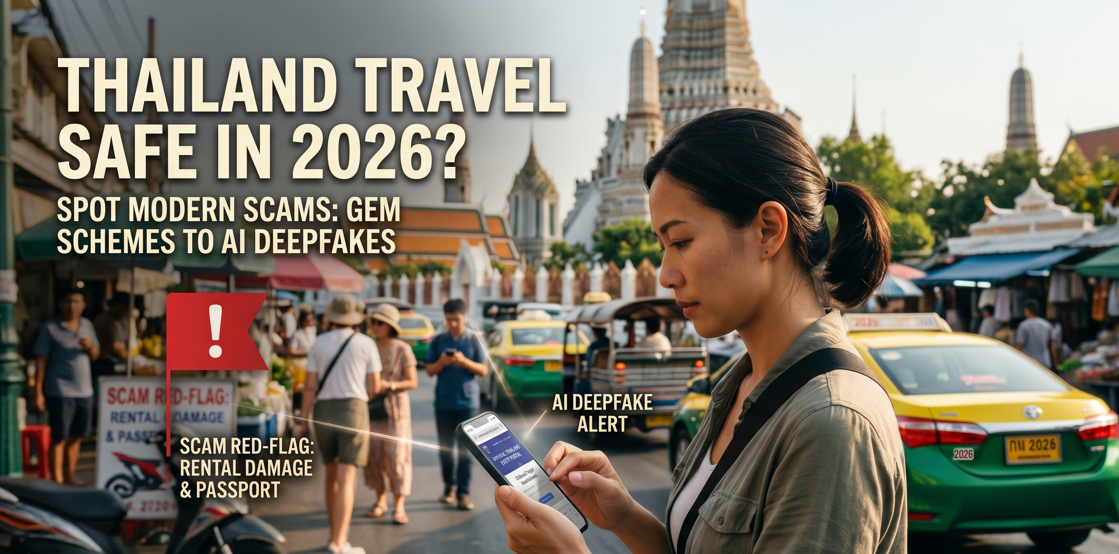
A tactical, fact-checked guide to the most common scams in Thailand: taxi tricks, jet ski disputes, gem scams, QR fraud, and exactly how to stay safe, verified against official Thai and government sources.
Thailand is generally a safe destination for tourists, but its most popular tourist areas have a handful of scams that appear again and again, and they’re what actually cause most travelers grief, not crime or danger. Visitors arrive carrying cash, unfamiliar with the layout of a new city, and trusting the first friendly stranger who offers to help. That combination is what scammers are actually targeting, not the country itself.
If you search “Thailand Scams” or “how to stay safe in Thailand,” you’ll find hundreds of listicles built the same way: fifteen scams, one paragraph each, no real structure, no real sourcing. This guide is built differently. Every claim below has been checked against Thai government sources, the Tourist Police, the Tourism Authority of Thailand, airport operators, and official travel advisories from the US, UK, and other governments. Where something could not be verified, it was cut. Where something changes often (fines, fees, opening hours), you’ll see a note telling you to double-check before you fly.
Thailand is not dangerous. Violent crime against tourists is rare, and the US State Department currently rates the country at its lowest advisory level, “exercise normal precautions,” for the vast majority of the kingdom. What Thailand does have is several long-running tourist scams that repeatedly target visitors in major tourist areas: a closed temple, a broken taxi meter, a “government” gem sale, a damaged jet ski. Learn the shape of these tricks once, and you become a hard target for all of them.
Recommended Read: Thailand eSIM Guide – Best Phone Network Options
| Scam | Where It Happens | Warning Sign | Simplest Prevention |
|---|---|---|---|
| “Closed today” temple scam | Grand Palace, Wat Pho, major temples | Stranger volunteers unsolicited info about closures | Ignore anyone outside official gates; check hours yourself |
| Tuk-tuk gem/tailor tour | Bangkok tourist zones, Khao San Road | Absurdly cheap “tour” (10 to 40 THB) | Never accept unsolicited tuk-tuk tours |
| Taxi meter refusal | Airports, tourist zones, late night | Driver insists on a flat fare | Insist on the meter; walk to the next cab |
| Jet ski damage scam | Patong, Phuket beaches; Pattaya | Operator pressures you before you’ve even rented | Video the whole craft before you touch it |
| Motorbike/scooter deposit scam | Islands, beach towns | Shop demands your passport as deposit | Pay cash deposit only, never hand over your passport |
| ATM skimming / DCC | Standalone street ATMs, tourist strips | ATM asks to charge you in USD/GBP/EUR | Always choose “Thai Baht,” use bank-branch ATMs |
| Fake QR code payment | Markets, taxi ranks, small shops | Sticker looks slightly misaligned on the reader | Check the recipient name shown after scanning |
| Inflated restaurant bill | Nightlife strips, tourist-heavy sois | No menu shown, or a second “surprise” menu appears | Ask for a written menu with prices before ordering |
| Bar/hostess overcharging | Go-go bars, beer bars, nightlife districts | Bill arrives without itemized prices | Confirm drink prices before you order, watch your tab |
| Fake booking/hotel website | Search engines, social media ads | URL isn’t the hotel’s official domain | Book through the hotel’s own site or a major OTA |
| Romance/online scams | Dating apps, social media | New contact asks for money quickly | Video call before meeting; never send money |
| Rental “damage” disputes | Motorbike and car rental shops | Damage pointed out only after return | Photograph and video the vehicle before you ride off |
| Overstay confusion | Airports, immigration offices | Traveler misreads visa expiry vs “admit until” date | Check the stamped date, not the visa sticker date |
| Fake police / uniformed officials | Nightlife areas, tourist zones | Officer asks for cash on the spot, no receipt | Ask to go to the nearest police station; call 1155 |
| Counterfeit or “distraction” cash exchange | Unlicensed money changers | Rate is dramatically better than banks | Use licensed exchanges (Superrich, AEON, bank branches) |
(This table covers the highest-frequency patterns. Every scam is broken down individually below.)
Learn more about Bangkok Scams here.
Many tourist scams in this guide, from the “closed palace” trick to the jet ski shakedown, rely on a few recurring psychological tactics. Understanding them is useful alongside memorizing individual scams, because new variations appear constantly while the underlying tactics tend to repeat.
Friendliness as a weapon. Thailand’s reputation for warmth (the “Land of Smiles”) is genuine, and that’s exactly what makes the con work. A scammer who approaches you aggressively gets ignored. A scammer who smiles, asks where you’re from, and casually mentions that the temple you’re heading to is closed today gets believed, because it doesn’t feel like a sales pitch. It feels like local knowledge being shared out of kindness.
Manufactured urgency. “The gem sale ends today.” “This tuk-tuk offer is only for the next hour.” “You need to pay now or the jet ski shop will call the police.” Urgency short-circuits the part of your brain that would otherwise ask an obvious question, like why is a stranger doing me a favor for free?
Authority borrowing. Fake police, fake “government tourism officials,” and tuk-tuk drivers who claim a shop has “government approval” are all doing the same thing: borrowing legitimacy they don’t have. Most tourists don’t know what a real Thai police uniform, badge, or vehicle looks like, which makes this trick easier to pull off than it should be.
Sunk cost and isolation. Once you’re three stops into a “free” tuk-tuk tour, or already holding a jet ski key, or already three drinks into a bar tab, walking away starts to feel harder than it should. Scammers count on the fact that most people would rather pay an unfair amount than have an awkward, confrontational scene, especially in a foreign country where they don’t speak the language.
Much of the advice in this guide comes back to breaking one of these tactics: slow down, verify independently, and be willing to walk away before money changes hands.
Before you agree to anything, hand over money, or get in a vehicle, run through this in your head. It takes less time to think than to read.
If two or more answers concern you, walk away. Politely, calmly, without confrontation, but with your feet moving.
When Somebody Approaches You – These can be some of the most useful habits in this whole guide, because several of Thailand’s best-known scams begin with an unsolicited approach, not a search you initiated.
Some situations are not worth negotiating. Thailand’s Tourist Police and multiple government advisories are consistent on this point: your safety and your money are both better protected by disengaging early than by trying to out-argue someone who has run this exact scam hundreds of times.
Walk away immediately if:
Walking away costs you nothing but a few minutes. Staying costs considerably more, and it’s rarely close.
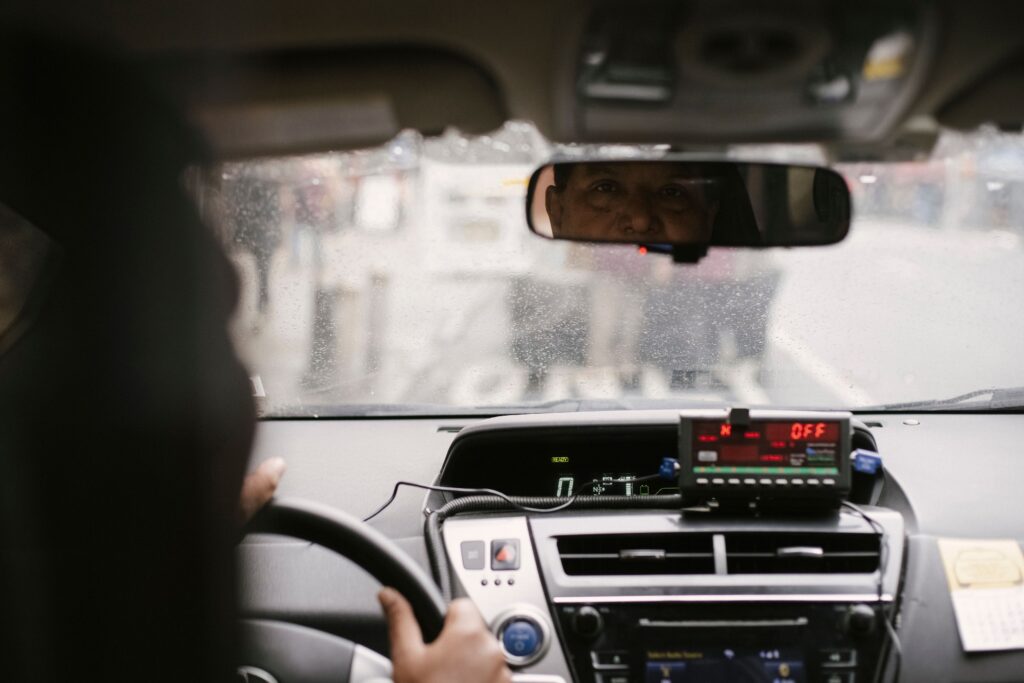
What happens: A metered taxi driver, especially near tourist zones, airports, or late at night, refuses to switch on the meter and instead quotes a flat “special price” that is often two to four times the metered fare.
Warning signs: The driver waves off the meter, says it’s “broken,” or names a round number (300, 500, 800 baht) before you’ve even stated your exact destination.
How to avoid it: Thai law requires licensed Bangkok taxis to use a functioning meter, and passengers have the right to insist on it. If a driver refuses, step out and find another cab. Agree on the destination and the meter before the car moves, not after.
What to do if it happens: If you’ve already agreed to a flat rate and feel it was unfair, pay it (arguing mid-journey rarely helps) and note the taxi’s license plate number, which is displayed on the dashboard and door.
Who to contact: Report meter refusals or overcharging to Thailand’s Department of Land Transport, or call the Tourist Police at 1155. Keep the plate number and time of the incident so it can be attached to your report.
Must Read: How to Get Around Bangkok Easily!
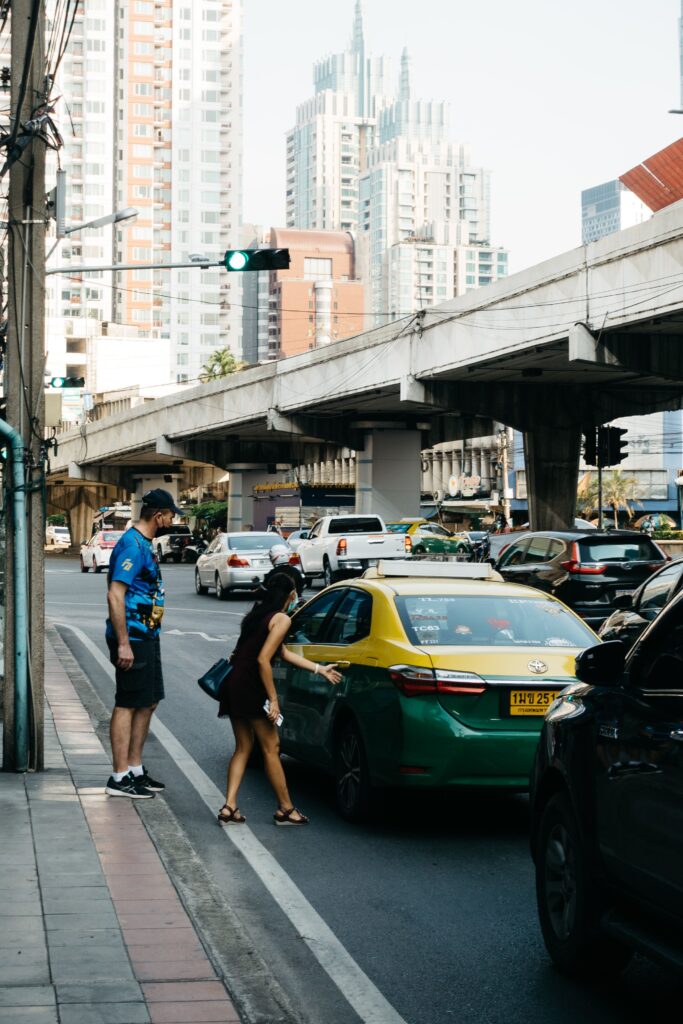
What happens: Unofficial “taxi” touts approach arriving passengers inside the terminal, before they reach the real taxi queue, and offer a fixed-price ride that is usually inflated and unregulated.
Warning signs: Anyone approaching you with a taxi offer inside the arrivals hall, before you’ve reached the official taxi stand, should be treated with caution; this is a common pattern for unregulated, inflated-price rides.
How to avoid it: Avoid accepting unsolicited taxi offers from people approaching you in the terminal. At Suvarnabhumi Airport, the official public taxi queue is on Level 1 between Gates 4 and 7. You take a numbered ticket from the machine and walk to your assigned bay; your ticket also records the driver’s name and plate number, which is useful if you ever need to file a complaint. The fare is the metered rate plus a fixed 50 THB airport surcharge, plus any expressway tolls (confirm this surcharge is still current before you travel, as airport fees are periodically revised). App-based ride-hailing services are also available at the airport with fixed in-app pricing; check the current pickup instructions on the airport’s official site or within the app itself, since designated pickup points do change. Similar official taxi queues exist at Don Mueang and other regional airports; look for marked counters rather than anyone approaching you.
What to do if it happens: If you’ve been overcharged by an unofficial tout, note whatever identifying details you can (vehicle description, approximate location, receipt if given) and report it once you’re settled.
Who to contact: The Tourist Police maintain a 24-hour desk specifically for airport-related fraud at Suvarnabhumi through the Bureau of Prevention and Assistance in Tourist Fraud, and the general Tourist Police line, 1155, works nationwide.
Recommended Read: Bangkok Suvarnabhumi (BKK) Airport Survival Guide
What happens: A tuk-tuk driver offers an extremely cheap sightseeing “tour,” sometimes for the equivalent of a bottle of water, that always includes mandatory stops at gem shops, tailor shops, or souvenir stores where the driver earns a commission regardless of whether you buy anything.
Warning signs: Any offer that seems too cheap to make business sense for the driver almost always does, because the real money comes from the shops, not from you.
How to avoid it: Agree on a specific destination and price before getting in, and refuse any detours once you’re moving. If you want short hops around a specific area, negotiate for that trip only, not an “all-day tour.” For anything longer than a five- or ten-minute ride, the BTS Skytrain, MRT, or a metered taxi is usually cheaper and faster anyway.
What to do if it happens: If you’re already mid-tour and being steered toward shops, you can simply decline to buy anything at each stop. It’s awkward, but it costs you time, not money.
Who to contact: For persistent pressure or intimidation, call 1155.
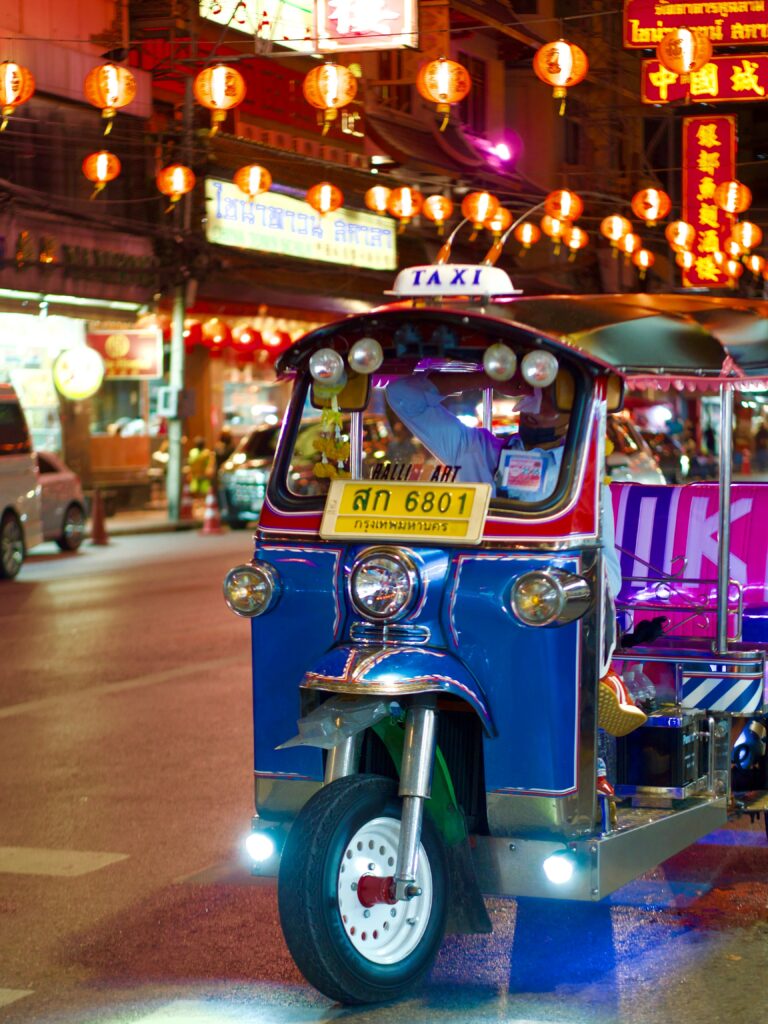
What happens: A friendly, well-dressed stranger near a major temple or palace tells you the site is closed for a holiday, a royal ceremony, or “cleaning day,” and then offers to arrange a cheap tuk-tuk to an alternative destination, which conveniently loops back into the gem or tailor scam above. The scam isn’t the closure claim itself; the Grand Palace and other major sites genuinely do close on occasion. The scam is the “and conveniently, I can take you somewhere else instead” that always follows it.
Warning signs: The claim comes from an unsolicited stranger outside the venue, not from a staff member or the venue’s own signage, and it’s immediately paired with an alternative destination or a tuk-tuk offer.
How to avoid it: The Grand Palace normally operates daily, but temporary closures and altered visiting hours can occur for royal ceremonies and other official events. Ticket sales generally run into the mid-afternoon (sources vary between roughly 3:30 PM and 4:30 PM for the exact cutoff and closing time, so check the palace’s official schedule directly before you go rather than relying on a secondary source, including this one). If a stranger outside the gate tells you the palace or a temple is closed, don’t take their word for it: check the official schedule yourself or simply walk to the entrance and see. If it genuinely is closed, that’s disappointing, not dangerous; it’s only a scam once a “helpful” alternative destination is attached to the claim.
What to do if it happens: If you’ve already been redirected toward an alternative destination or a tuk-tuk tour, you can simply turn around and walk back. There’s no obligation to continue.
Who to contact: Not usually necessary unless you’ve lost money; if you have, report it to 1155.

Try these for a leisurely, guided, convenient and immersive exploration:
What happens: This is one of Thailand’s oldest documented tourist scams. A friendly local, sometimes working with a tuk-tuk driver, tells you about a limited-time “government tax-free gem sale.” You’re taken to a shop where high-pressure sales staff push overpriced gems, often with promises that you can resell them at a large profit back home. In reality, the stones are frequently worth a small fraction of what you paid, and once shipped to your home address, you have no realistic way to get an independent appraisal or a refund before the sale is final.
Warning signs: Any mention of a government-run or government-endorsed gem sale. Be extremely skeptical of anyone claiming that a stranger-referred shop is offering a special government-backed or government-approved gem investment opportunity. Also watch for pressure to buy gold at a separate shop “to exchange” for the gems, a step that exists mainly to make any later refund dispute harder.
How to avoid it: Decline any unsolicited gem, jewelry, or “investment opportunity” pitch, full stop. If you genuinely want to buy gems or jewelry in Thailand, do it through an established, independently reviewed jeweler you chose yourself, not one recommended by a stranger.
What to do if it happens: If you’ve already paid by credit card, contact your card issuer immediately about a chargeback; many cards allow disputes for goods not as described. If you paid cash, your options are more limited, but you should still report it.
Who to contact: The Tourist Police (1155) and the Bureau of Prevention and Assistance in Tourist Fraud under Thailand’s Ministry of Tourism and Sports handle these cases specifically.
What happens: Similar setup to the gem scam: a cheap tuk-tuk tour or a friendly recommendation leads you to a tailor shop offering “custom suits” at what seems like a bargain price. High-pressure upselling follows, often for fabric upgrades or “express” fees, and the finished product is frequently made from low-quality synthetic material that doesn’t match what was promised, sometimes not ready before you leave the country at all.
Warning signs: Unsolicited tailor recommendations from tuk-tuk drivers or hotel touts, and pressure to pay the full amount upfront. Be cautious about claims that a fully custom, high-quality suit can be measured, made, and delivered within an unusually short timeframe; genuine bespoke tailoring generally needs at least one fitting and a few days’ turnaround.
How to avoid it: If you want a custom suit made in Bangkok, research a reputable tailor independently, ask to see the specific fabric before committing, and never pay the full price before a first fitting.
What to do if it happens: Request a refund directly; if refused, a credit card dispute is your strongest recourse.
Who to contact: 1155 for guidance, or the Bureau of Prevention and Assistance in Tourist Fraud for formal complaints.
What happens: A restaurant, usually in a heavily touristed strip, either fails to show prices at all, shows one menu while ordering and produces a different, more expensive one at billing time, or simply pads the final total with items you didn’t order.
Warning signs: No printed menu with prices, a server who is vague when asked “how much is this,” or a bill that arrives without an itemized breakdown.
How to avoid it: Ask to see a menu with prices before you order anything, and don’t be shy about asking the cost of daily specials that aren’t printed. Keep your receipt and check it against what you ordered before paying.
What to do if it happens: Politely but firmly ask for an itemized recalculation. Most disputes resolve at this stage. If a venue becomes aggressive or blocks you from leaving, that crosses from overcharging into something the Tourist Police should be involved in.
Who to contact: 1155, especially if you feel physically unsafe or unable to leave.
What happens: Bars and entertainment venues, particularly in nightlife districts, sometimes overcharge for drinks and cover charges, and in more serious cases, threaten confrontation or violence if a customer disputes an inflated bill. This pattern is specifically flagged by the US State Department as an ongoing issue in Thailand’s tourist areas.
Warning signs: No visible price list for drinks, a bar that seats you before confirming any prices, or staff who become evasive when asked for a running total.
How to avoid it: Confirm drink prices before ordering, keep a mental (or phone-note) running tally of what you’ve ordered, and never let your card or cash sit with staff for an extended, unmonitored period.
What to do if it happens: If a bill seems inflated and you feel safe doing so, ask for an itemized receipt. If the situation escalates or feels threatening, prioritize leaving safely over winning the argument, and pay if necessary to de-escalate.
Who to contact: Call 1155 if you’re threatened or believe you’ve been seriously overcharged. Report the venue name and location.
What happens: Unlicensed money changers occasionally offer exchange rates that look dramatically better than bank or licensed-counter rates, a red flag for shortchanging, hidden commission, or in rare cases, counterfeit notes handed back as “change.”
Warning signs: A rate significantly better than what licensed exchanges or banks are offering, an exchange counter with no visible license or rate board, or pressure to complete the transaction quickly without counting your money in front of the counter staff.
How to avoid it: Use licensed exchange counters (major chains such as Superrich, or bank branches and their affiliated exchange counters, or AEON) and always count your cash before walking away from the counter. Rates at licensed exchanges are transparent and posted publicly, so compare a few before committing if you’re exchanging a large amount.
What to do if it happens: If you believe you’ve received counterfeit notes or been shortchanged, return to the counter immediately if possible; disputes are far harder to resolve once you’ve left.
Who to contact: 1155 for disputes with licensed businesses; for suspected counterfeit currency specifically, report to the nearest police station.
If you’d like to deep dive into Bangkok specific scams, RoamRiot covers them here!
What happens: Card skimmers are occasionally attached to standalone ATMs in less secure locations, capturing card data and PINs. This is not rampant, but it does happen, and Thai and international banks have both flagged it as a real, if uncommon, risk in tourist areas.
Warning signs: An ATM with a loose or oddly attached card slot, a keypad that looks bulkier or different from the surrounding machine, or an ATM in a poorly lit, unsupervised location.
How to avoid it: Use ATMs inside bank branches, shopping malls, or busy hotel lobbies rather than standalone street machines. Cover the keypad with your other hand while entering your PIN. Turn on transaction alerts through your banking app before you travel, so you’re notified instantly of any activity.
What to do if it happens: If your card is captured by the machine or you suspect skimming, call your bank’s international fraud line immediately, ideally a number you saved before your trip, since finding it after the fact is much harder.
Who to contact: Your card issuer first, for an immediate freeze. You can also report suspected fraud to Thai authorities via 1155.
Must Read: Thailand ATM Fee Hacks
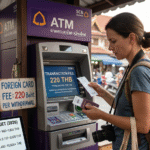
What happens: At ATMs and card terminals, you’re sometimes given a choice to be charged in your home currency (USD, GBP, EUR) instead of Thai baht. This sounds convenient, but the exchange rate applied is set by the local bank or terminal, not your card network, and the rate offered through this option can be meaningfully less favorable than the rate your own card issuer would apply.
Warning signs: Any prompt asking “would you like to be charged in [your home currency] instead?”
How to avoid it: Always select Thai Baht (THB), or “continue without conversion,” never your home currency. This single habit alone can save meaningful money over a multi-week trip.
What to do if it happens: If you accidentally accept DCC, there’s usually no way to reverse the transaction after the fact, but it’s a one-time cost, not a recurring one, so the fix is simply choosing correctly next time.
Who to contact: Not applicable; this is a pricing structure, not fraud, though it is worth flagging to your bank if a merchant applied it without clearly asking.
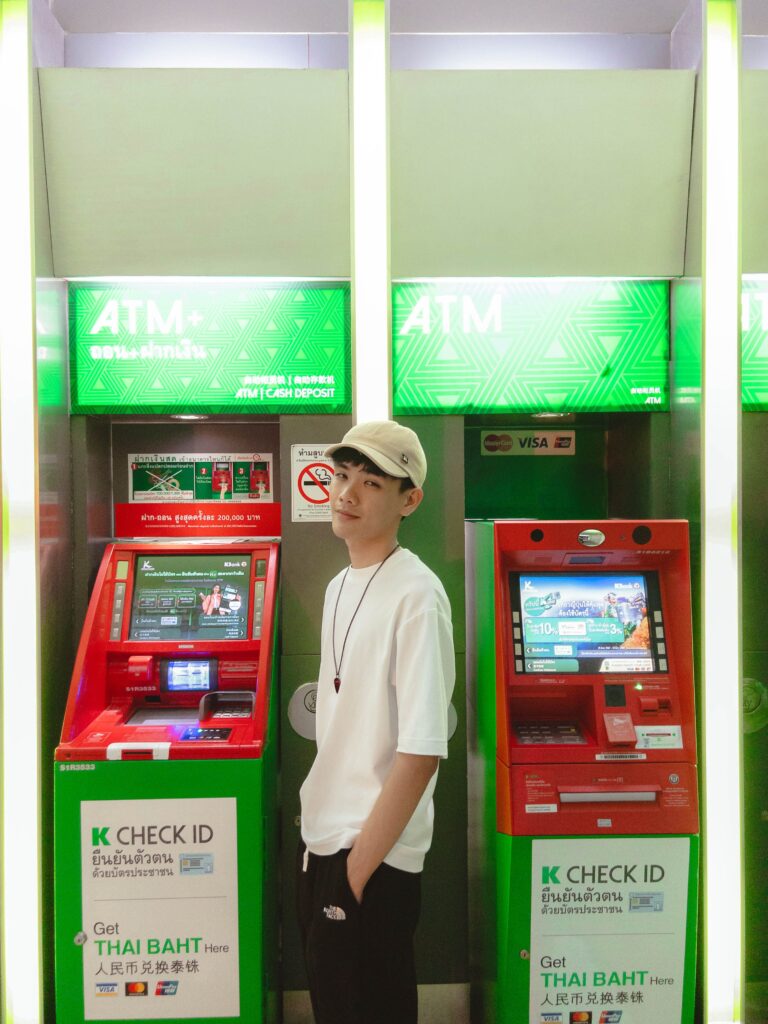
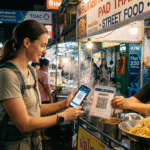
Thailand runs heavily on QR-based payments through the PromptPay system, and this is a genuinely convenient way to pay for most visitors. It’s a smaller and less-documented risk for tourists specifically than the scams above, but a fake QR sticker placed over a legitimate one has been reported in Thailand, mostly affecting local businesses rather than tourists directly, and the check below costs nothing.
What happens: A sticker with a fraudulent QR code is placed over a legitimate one at a shop counter, taxi rank, or market stall, redirecting a payment to a scammer’s account instead of the merchant’s.
Warning signs: A QR sticker that looks slightly peeled, misaligned, or layered over another sticker.
How to avoid it: Before scanning, glance for signs the sticker has been altered or placed over another one. After scanning and before confirming payment, most banking apps display the recipient’s name; check that it plausibly matches the business you’re paying.
What to do if it happens: Contact your bank immediately to attempt a reversal (success isn’t guaranteed, since these are typically fast bank transfers rather than card payments).
Who to contact: Thailand’s Bank of Thailand financial consumer protection line, 1213, and the Anti-Online Scam Operation Center, 1441, both handle payment fraud reports. You can also file online at thaipoliceonline.com.
Must Read: Setting up PAY&TOUR without a Thai ID
What happens: Fraudulent websites or social media ads mimic real hotels or tour operators, taking payment for bookings that don’t exist. A more sophisticated version involves scammers who’ve obtained real booking details (through a data breach or hacked hotel system) contacting guests via WhatsApp or email, posing as the hotel, and asking them to “re-confirm payment” through a fraudulent link.
Warning signs: A URL that isn’t the hotel’s actual domain, prices dramatically below other listings for the same room, or any unsolicited message asking you to click a link and re-enter card details, even if it references accurate details about your real booking.
How to avoid it: Book directly through a hotel’s official website or a major, established booking platform. Never enter payment details through a link sent via message, even if the message appears to know your booking reference or dates; call the hotel directly using a number you find independently, not one provided in the suspicious message.
What to do if it happens: If you’ve entered card details on a fraudulent page, contact your bank immediately to freeze the card and watch for unauthorized charges.
Who to contact: Your bank first, then 1155 if the fraudulent listing claimed to represent a real Thai business.
What happens: Jet ski damage disputes are a long-running tourist complaint in parts of Phuket and other beach destinations, including Pattaya. You rent a jet ski, use it for the agreed time, and return it, at which point the operator points to a scratch, dent, or mechanical issue and demands a large cash payment, sometimes in the range of 10,000 to 50,000 baht, claiming you caused the damage. Some operators become intimidating or aggressive if you refuse, and in some documented cases the damage was pre-existing or inflicted after the equipment was returned.
Warning signs: Operators who rush you past inspecting the craft, who won’t let you photograph it before renting, who seem unusually focused on discussing damages before you’ve even started, or who lack visible registration and insurance decals.
How to avoid it: Before you touch the jet ski, do a complete video walkthrough of every surface with the operator present, and get their verbal agreement on camera that no damage exists. Rent only from operators with a permanent, visible setup on the main beach, not individuals who approach you directly. Confirm the total price, including any fuel or extra charges, before you start.
What to do if it happens: If damage is claimed that isn’t visible in your pre-rental video, you have real evidence to contest the claim. Do not hand over cash on the beach under pressure. If it’s safe to do so, insist on resolving the dispute at the nearest police station rather than in a confrontation on the sand.
Who to contact: The Tourist Police (1155) are specifically positioned to mediate these disputes and are generally considered more effective than local police for this scam. If you paid by card, a credit card chargeback is also an option.

Is it safe to rent a scooter in Thailand?
What happens: The same mechanics as the jet ski scam, applied to motorbike and scooter rentals: you’re accused of damage on return, sometimes damage that was already there, and asked to pay an inflated repair cost. The bigger risk with motorbikes specifically is that many small rental shops ask for your actual passport as a security deposit, and once they’re holding it, your negotiating position weakens considerably, especially as your departure date approaches.
Warning signs: Any rental shop that insists on holding your passport rather than accepting a cash deposit.
How to avoid it: Never hand over your real passport for a rental of any kind. Offer a photocopy, a cash deposit, or a refundable hold on a credit card instead; if a shop refuses all of these and insists on the original passport, walk away and find another rental shop. Photograph and video the bike thoroughly before riding off, exactly as you would with a jet ski.
What to do if it happens: If your passport has already been taken and is being held against a disputed damage claim, contact the Tourist Police immediately rather than negotiating alone.
Who to contact: 1155. If your passport cannot be recovered, you’ll also need to contact your embassy about an emergency travel document.
What happens: Similar deposit and damage-dispute patterns occasionally appear with rental cars and other equipment (kayaks, diving gear, sports equipment), though far less frequently than with motorbikes and jet skis.
Warning signs and prevention mirror the above: document condition thoroughly before use, never surrender your actual passport, confirm total costs upfront.
Who to contact: 1155 for disputes; your credit card issuer for chargebacks where payment was made by card.
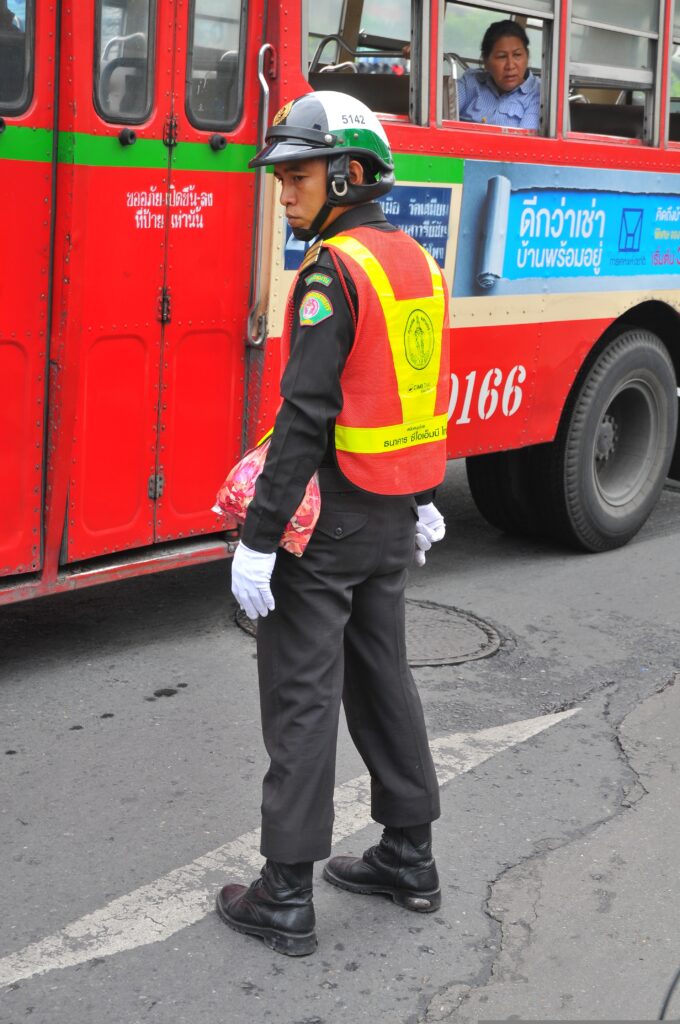
Genuine Thai police do occasionally stop and question tourists, most commonly around drug-related concerns in nightlife areas or routine ID checks. But this is also one of the areas scammers exploit, because most visitors don’t know what to expect from a real interaction and are primed to comply with anyone in a uniform.
What a legitimate stop generally looks like: an officer identifies themselves, the interaction happens in a reasonably public setting, and any formal fine or process comes with paperwork, not a request for immediate untraceable cash.
Warning signs of a scam version: a demand for an on-the-spot cash “fine” with no ticket, receipt, or formal process; pressure to pay immediately in a private or isolated location; or unusual insistence that you not contact your embassy or the Tourist Police.
How to respond:
Who to contact: Call 1155 if anything about the interaction feels off. The Tourist Police exist specifically to mediate between foreign visitors and Thai authorities and can help verify whether a stop or fine is legitimate.
What happens: Scammers build a relationship online, often through dating apps or social media, sometimes over weeks or months, before asking for money, citing a medical emergency, a stuck shipment, a family crisis, or travel costs to finally meet in person. A related and increasingly documented pattern involves fraudulent job offers that lure people to Thailand or neighboring countries, only to have their passports confiscated on arrival and be coerced into working for online scam operations themselves.
Warning signs: A new online contact who asks for money at any point, especially early in the relationship; a profile that seems recently created or uses photos that don’t match across platforms; pressure to move communication off the original app quickly; and, for job offers, positions that seem too well-paid for the stated qualifications, especially ones that are vague about the actual employer or asks for upfront fees.
How to avoid it: Never send money to someone you haven’t met in person, regardless of the story. Set up a video call before agreeing to meet anyone from an app. Do a reverse image search on profile photos if something feels off. For meetups, choose public places, tell someone your plans and the app you used, and avoid isolating locations like private apartments or hotel rooms for a first meeting. For job offers, verify the employer independently before traveling, and never hand over your passport to an employer.
What to do if it happens: Stop all communication with the scammer immediately and do not send any further money, even if pressured with guilt or urgency.
Who to contact: Report the incident to local police (191) and, if you’re a foreign national, your embassy. Financial scams of this type can also be reported to the FBI’s Internet Crime Complaint Center (IC3) if you’re a US citizen, or the equivalent fraud reporting body in your home country.
What happens: Not a scam exactly, but a genuinely common and costly mistake: travelers confuse their visa’s printed expiry date with the “admit until” date stamped in their passport at entry, which is the date that actually governs their legal stay, and end up unintentionally overstaying.
Warning signs: Any uncertainty about your exact permitted departure date. Always check the specific date stamped in your passport upon arrival, not the visa itself.
How to avoid it: Note your “admit until” date the moment you land, and set a phone reminder several days before it. If your travel plans need to change, visit a Thai immigration office to extend your stay before the deadline, not after.
What to do if it happens: The standard overstay fine is 500 THB per day, capped at 20,000 THB, generally paid at the airport when you depart or at an immigration office if you’re extending your stay. Beyond the fine itself, the consequences depend on specifics that matter a great deal and that this guide can’t respond to reliably: how long the overstay lasted, whether you report it voluntarily before leaving or are caught by immigration or police, and whether it’s a first offense. Longer overstays and being caught rather than self-reporting both carry meaningfully harsher outcomes, up to and including entry bans and detention pending deportation. Because the rules governing bans and enforcement are detailed and can change, don’t rely on a summary, including this one, to predict your specific outcome; go directly to the Immigration Bureau or your embassy as soon as you’re aware of an overstay.
Who to contact: The Royal Thai Police Immigration Bureau, or your embassy for guidance on the process.
If money is already gone, your options depend heavily on how you paid.
If your passport was taken as a rental deposit and is being held against a disputed damage claim, or if it’s lost or stolen entirely, the steps differ slightly.
If it’s being held by a rental shop:
If it’s lost or stolen:
Who to contact: Your embassy for the actual document, and 1155 for anything involving a dispute, theft, or scam connected to how the passport went missing.
It’s worth stepping back from scams specifically to look at the bigger safety picture, because conflating “scam risk” with “danger” leads to unnecessary fear.
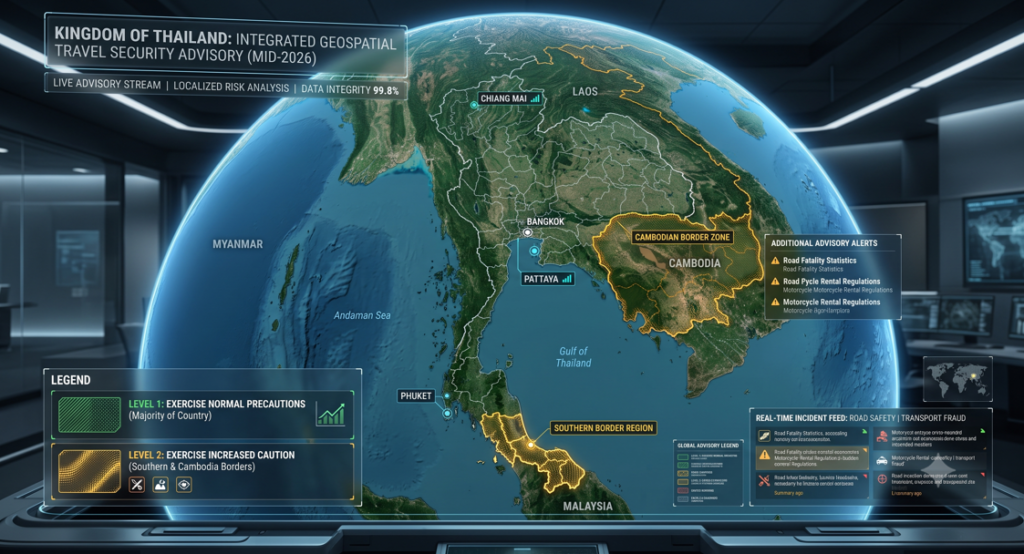
As of mid-2026, the US State Department rates Thailand at Level 1, “exercise normal precautions,” its lowest and safest advisory tier, for the vast majority of the country, including Bangkok, Chiang Mai, Phuket, and Pattaya. The advisory does flag Level 2, “exercise increased caution,” specifically for the area near the Thai-Cambodian border, due to the risk of armed conflict, and for Thailand’s three southernmost provinces, Yala, Pattani, and Narathiwat, due to a long-running localized insurgency. The UK’s Foreign, Commonwealth & Development Office similarly advises against all but essential travel to those same southern border provinces specifically, not to Thailand as a whole. None of this affects Bangkok, the northern provinces, the central islands, or most of the country’s major tourist infrastructure.
Within that generally safe picture, the State Department’s own guidance is clear about where the real risks concentrate: crimes of opportunity (pickpocketing, bag-snatching, especially by people on motorbikes), transport-related fraud (the taxi, tuk-tuk, and rental scams covered above), and road safety, which is a genuinely serious issue. Thailand has one of the world’s higher traffic fatality rates, and motorbike and scooter accidents are consistently cited as one of the leading causes of serious injury and death among foreign visitors, far outweighing scam-related losses in severity. If you rent a motorbike, wear a helmet even when locals around you aren’t, and know that Thailand requires an International Driving Permit to legally operate one.
Violent crime specifically targeting tourists is rare, though not nonexistent; robberies, assaults, and occasional serious incidents do occur, as they would in any country of this size and tourist volume. The sensible response isn’t fear, it’s the same situational awareness you’d apply in any unfamiliar city: stay in well-lit, populated areas at night, keep track of your drink, and let someone know your general plans if you’re traveling alone.
Save this section, screenshot it, or print it. It’s the compressed version of everything above.
Before you go:
Every day:
Before any rental (bike, jet ski, scooter):
If something goes wrong:
Is Thailand safe to visit in 2026? Yes. The US State Department rates most of the country, including Bangkok, Phuket, Chiang Mai, and Pattaya, at its lowest advisory level. Localized risk exists near the Thai-Cambodian border and in Thailand’s three southernmost provinces, but this doesn’t reflect the country as a whole.
What are the most common scams in Thailand? The taxi meter refusal, the “closed today” temple scam, tuk-tuk gem and tailor tours, and the Phuket jet ski damage scam are among the longest-running and most frequently reported patterns, alongside newer digital versions like fake QR codes and phishing messages tied to real hotel bookings.
How do I avoid scams in Thailand as a first-time visitor? Be skeptical of anyone who approaches you unsolicited, insist on metered taxis or agreed prices before moving, never hand over your real passport for a rental deposit, and always check prices before ordering food or drinks. Most Thailand travel scams rely on you skipping one of these basic checks.
What number do I call if I get scammed in Thailand? Call the Tourist Police at 1155, a free, 24-hour, English-language hotline set up specifically to help foreign visitors with scams, fraud, and disputes. For general emergencies, dial 191; for medical emergencies, dial 1669.
Is it safe to rent a scooter or jet ski in Thailand? It can be, but the damage-deposit scam is well documented, particularly with jet skis in Phuket. Protect yourself by videoing the vehicle thoroughly before rental, never surrendering your passport as a deposit, and choosing established operators with a visible, permanent setup.
What should I do if a taxi driver refuses to use the meter? Politely decline and find another taxi. Bangkok taxi drivers are legally required to use a functioning meter, and another cab is usually not far away in tourist areas.
None of this is meant to make Thailand sound like a minefield. It isn’t. Tens of millions of people visit every year, most of them without incident, and the country’s genuine highlights, the food, the temples, the islands, the warmth of most everyday interactions, are entirely real and entirely worth the trip. What separates a smooth trip from an expensive lesson usually isn’t luck. It’s whether you recognized the pattern in front of you fast enough to walk away. Learn the shapes in this guide once, and you’ll spend a lot less energy being suspicious and a lot more energy actually enjoying the place.
A note on prices, fines, and phone numbers: Thailand’s fees, fines, and official contact details do change, and this guide reflects the most current information available at the time of publication. Before you travel, it’s worth a quick check of the Tourist Police site (touristpolice.go.th) and your own embassy’s Thailand travel page for anything that may have been updated since.