Physical Address
304 North Cardinal St.
Dorchester Center, MA 02124
Physical Address
304 North Cardinal St.
Dorchester Center, MA 02124

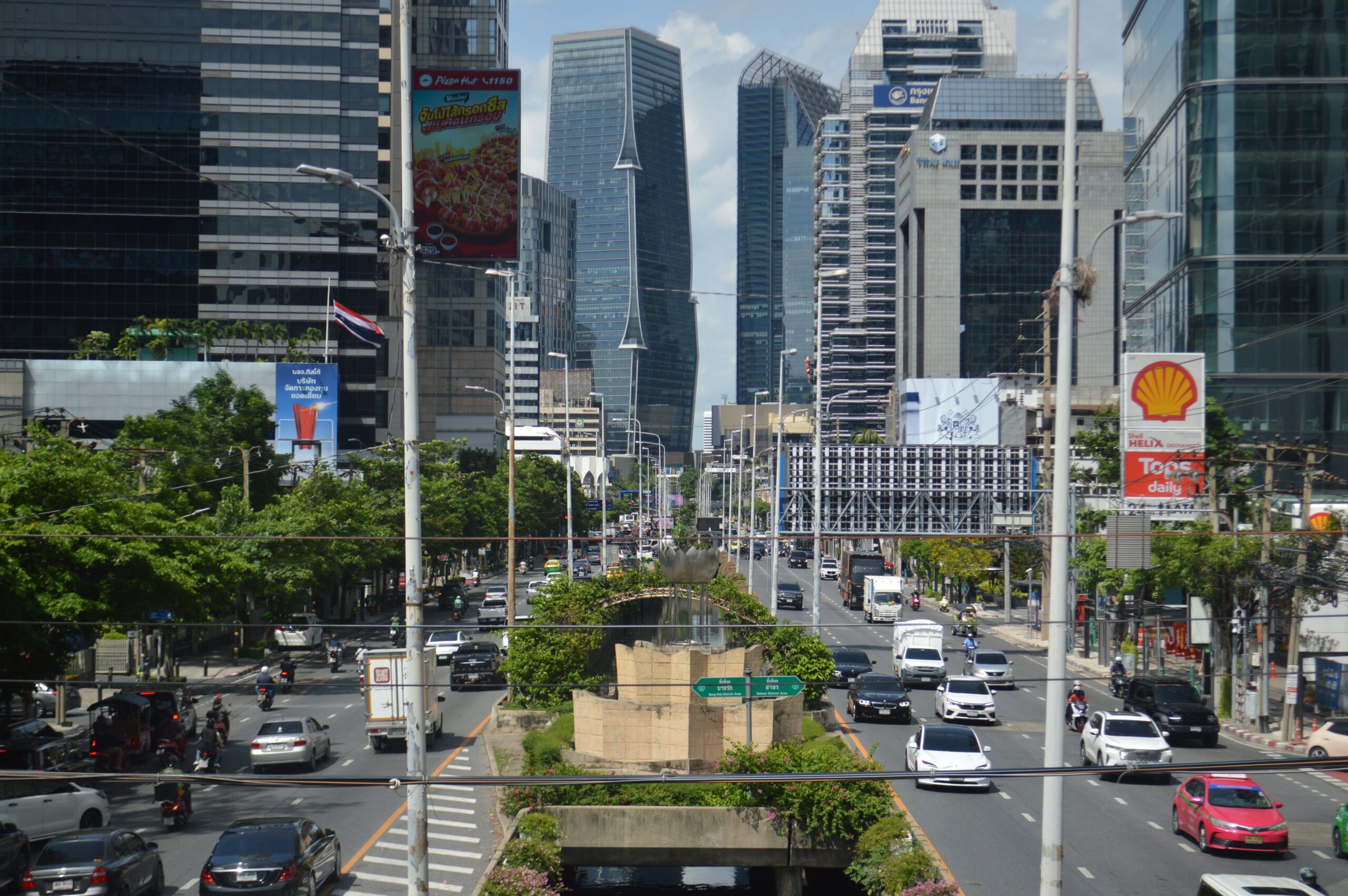
Bangkok Travel Cost: Real 2026 Bangkok prices for transport, food, hotels, and attractions. See exact daily budgets from $25 to $500 and what each one buys.
Most Bangkok budget articles give you a single number. “Bangkok costs $50 a day.” “Backpackers spend $30 a day.” “Bangkok is the cheapest capital in Southeast Asia.” These numbers aren’t wrong, exactly. They’re just useless, because they describe an average that almost nobody actually experiences.
Here’s the problem with averages: they collapse a backpacker sleeping in a 400-baht dorm bed and a business traveler in a serviced apartment into the same data point. The number gets treated as fact even though it came from a single trip or a survey with no published methodology. A number with no context attached tells you nothing about what your trip will cost, because your trip depends on decisions the average traveler never made.
This guide on Bangkok travel cost works differently. Instead of one number, you get a framework: spending profiles for every type of traveler, line-item costs for every major category, and the actual mechanics of where money leaks out of a Bangkok budget without anyone noticing. Read this once and you’ll know what your version of a Bangkok trip will cost, not what someone else’s trip cost three years ago.
A note on accuracy before anything else: Thailand’s mass transit fares changed structure in late 2025, MRT Blue Line fares are scheduled to change again in July 2026, and visa-exemption rules have been in flux through the first half of 2026. Where a number is contested, changing, or genuinely unclear, this guide says so explicitly and tells you where to verify it yourself, rather than printing a confident number that might be wrong by the time you land.
Methodology: Pricing in this guide was verified in June 2026 using official operator websites and announcements (BTS, MRT/MRTA, Airport Rail Link, Suvarnabhumi Airport, Wat Pho, the Royal Gazette for transit fare changes), official tourism and government sources (Tourism Authority of Thailand, Thailand’s Ministry of Foreign Affairs), and major hotel booking and SIM provider platforms, cross-checked against multiple independent, recently published sources where official figures weren’t directly accessible and my own personal travel experiences. Prices, fares, and regulations in Thailand change, sometimes with little notice. Always verify costs that matter to your trip directly with the relevant provider close to your travel dates.
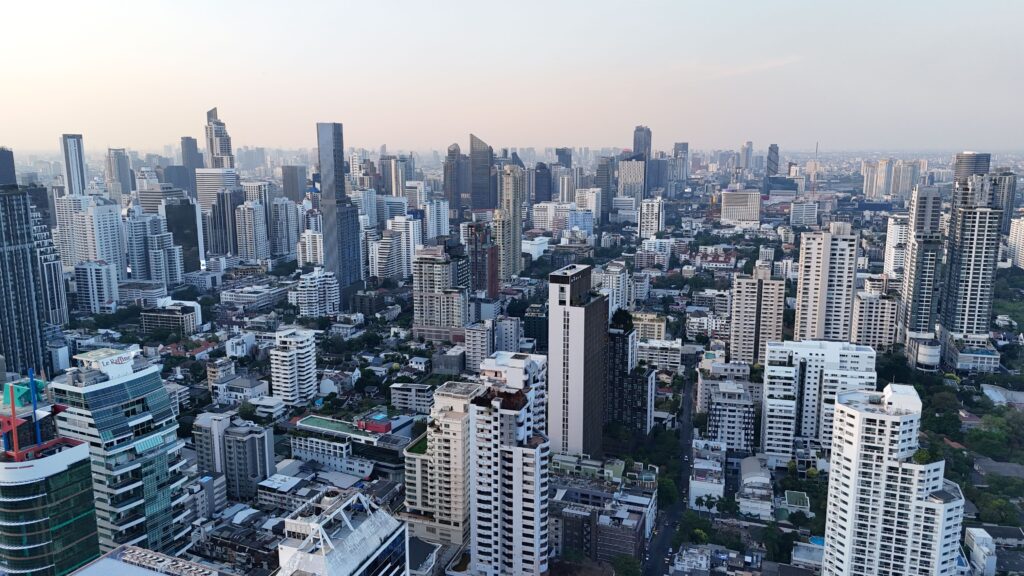
A “Bangkok costs $X per day” number usually comes from a backpacker blog written from a single trip, a cost-of-living aggregator scraping self-reported data with no quality control, or a tourism board release with an incentive to look affordable. None of these tell you what you will spend, because none of them know how you travel.
The variable that actually predicts your Bangkok spending isn’t your nationality or trip length. It’s your spending profile: the specific combination of accommodation standard, food choices, transport habits, and activity selection that defines how you move through a city. Two travelers with identical $3,000 budgets for a 10-day trip can have completely different experiences depending on whether they front-load spending on accommodation and economize on food, or the reverse.
This guide builds around seven spending profiles, from Ultra Budget to Luxury, each with realistic daily, weekly, and monthly numbers built from verified 2026 pricing. Find the profile closest to how you actually travel, not how you wish you traveled, and the rest of this guide will tell you almost exactly what to expect.
Pro Tip: Before we dive into budgeting, if you’re considering booking flights to Thailand I have two power tools that save tons of money every time I book flights – Kiwi and Aviasales. These two are my top recommendations for saving money on flight bookings and finding amazing deals!
Before you start building a day-by-day budget, it helps to know whether your expectations match reality. Three questions determine almost everything:
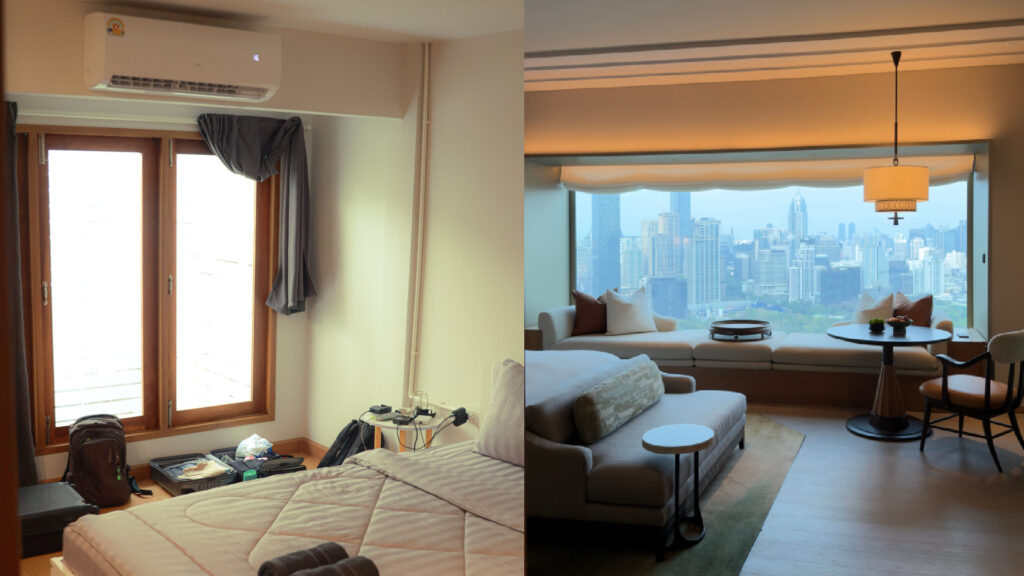
1. What is your accommodation ceiling? If you are not willing to spend more than 600-800 THB ($17-23) a night on a room, you are in hostel-dorm or basic-guesthouse territory. If your ceiling is 1,500-3,000 THB ($43-86), you have access to genuinely comfortable 3-4 star hotels. Above 5,000 THB ($143), you are choosing between excellent mid-range and entry luxury.
2. How much do you value time versus money on transport? A taxi from the airport costs roughly 4-8x what the Airport Rail Link costs, but saves you the hassle of dragging luggage through a train transfer. This tradeoff repeats throughout a Bangkok trip: BTS/MRT versus Grab, walking versus tuk-tuk, public boat versus private longtail. Travelers who default to convenience spend meaningfully more than travelers who default to public transit, even at identical comfort levels everywhere else.
3. Are you traveling during high season? November through February is Bangkok’s cool, dry season and also its most expensive. Hotel rates are often significantly higher during this window, though the exact increase varies by hotel, location, and booking window. If your dates are flexible, this single decision affects your budget more than almost anything else in this guide.
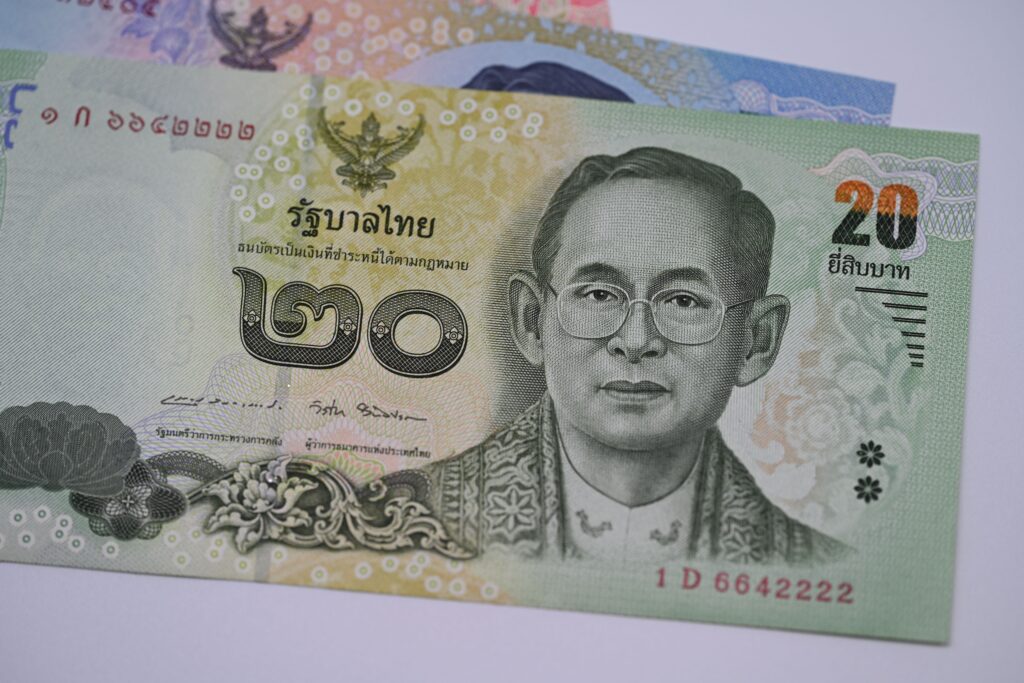
Thailand’s currency is the Thai Baht (THB, symbol ฿). Notes come in 20, 50, 100, 500, and 1,000 baht denominations; coins in 1, 2, 5, and 10 baht plus smaller satang coins that you’ll rarely use. Exchange rates move, so check a live rate before you travel rather than relying on a number printed in any single article, including this one. As a rough planning anchor in mid-2026, the baht has traded in a band against the US dollar that makes 1 USD worth somewhere in the low-to-mid 30s in baht; verify the current rate at the time of booking and again closer to departure, since the rate can shift by several percent over the course of a year.
Bangkok runs on a dual system. Malls, chain restaurants, hotels, BTS/MRT ticket machines, and 7-Eleven all accept cards or mobile payment (tap-to-pay, PromptPay QR for residents). Street food vendors, night markets, most tuk-tuks, small family-run restaurants, temple ticket counters, and many taxis are cash-only. Plan to carry cash as your primary payment method and treat card acceptance as a bonus, not the default, especially outside of Sukhumvit, Silom, and the main mall districts.
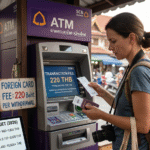
Thai banks charge a flat foreign-card withdrawal fee on top of whatever your home bank charges. As of 2026, most major Thai banks (Bangkok Bank, Kasikorn, SCB, Krungthai, Krungsri) charge around 220-250 THB per withdrawal for Visa cards and up to 350 THB for Mastercard, a gap that’s worth knowing if you’re choosing which card to bring. AEON Bank ATMs, found inside Big C and Lotus’s supermarkets, charge a flat 150 THB regardless of card network, making them the cheapest widely available option. This fee is the same whether you withdraw 1,000 baht or the maximum per-transaction limit (commonly around 20,000-25,000 THB depending on the bank), which means withdrawing larger amounts less frequently meaningfully reduces your total fee burden. Always decline “Dynamic Currency Conversion” (DCC) when the ATM screen asks if you want to be charged in your home currency instead of THB; DCC exchange rates are reliably worse than what your card network would apply, commonly cited at 3-7% worse.
Read here to find Thai ATM Fee Hacks and how to get around the ATM fees.
Avoid airport currency exchange counters for anything beyond a small amount to get you into the city; rates there are consistently worse than counters in tourist districts like Siam, Sukhumvit, or Silom. SuperRich and Vasu Exchange are widely cited as offering competitive rates at multiple Bangkok locations, but compare the displayed rate against the day’s interbank rate before committing, since rates vary by branch and by day. A no-foreign-transaction-fee debit or travel card (Wise, Revolut, and similar products are commonly used by travelers) paired with ATM withdrawals in THB is, for most travelers, more cost-effective than carrying large amounts of pre-exchanged cash from home.
These seven profiles are built from the verified pricing in this guide, not from a single traveler’s anecdotal trip. Each assumes one person traveling in Bangkok proper (not islands or other provinces), with reasonable but not extreme habits within that tier. Couples and families should reference the dedicated breakdowns further down rather than simply doubling these numbers, since accommodation and some transport costs are shared rather than multiplied.
Daily: ฿900-1,300 ($26-37) | Weekly: ฿6,300-9,100 ($180-260) | Monthly: ฿27,000-39,000 ($770-1,115)
What’s included: Hostel dorm bed (฿400-600), three street food or food court meals (฿150-240), BTS/MRT for essential trips only (฿60-100), free or near-free activities (temples, parks, walking).
Tradeoffs: No buffer for spontaneous purchases, no air-conditioned transport beyond the BTS/MRT, no paid attractions beyond the cheapest temples, shared bathrooms, and zero margin for a bad day. This profile works for experienced backpackers comfortable with discomfort whose budget is genuinely tight, not “thrifty but comfortable.”
Daily: ฿1,300-1,900 ($37-54) | Weekly: ฿9,100-13,300 ($260-380) | Monthly: ฿39,000-57,000 ($1,115-1,630)
What’s included: Hostel dorm or shared private room (฿500-800), mix of street food and occasional cafe (฿250-350), regular BTS/MRT use plus the occasional short Grab ride, one paid attraction every few days, the occasional beer or cocktail at a backpacker bar.
Tradeoffs: Still budget accommodation, but with slightly more comfort (better hostels, AC dorms, sometimes a private room). This is the realistic floor for travelers who want some social life and don’t want every single day to be a financial calculation.
Daily: ฿1,900-2,800 ($54-80) | Weekly: ฿13,300-19,600 ($380-560) | Monthly: ฿57,000-84,000 ($1,630-2,400)
What’s included: Private budget hotel room (฿800-1,200), restaurant meals mixed with street food (฿300-500), regular Grab use alongside BTS/MRT, 2-3 paid attractions per week, some shopping budget.
Tradeoffs: A real private room with AC and your own bathroom, more food flexibility, less reliance on walking everywhere. This is where most first-time, budget-conscious tourists who aren’t backpackers actually land.
Daily: ฿2,800-4,500 ($80-129) | Weekly: ฿19,600-31,500 ($560-900) | Monthly: ฿84,000-135,000 ($2,400-3,860)
What’s included: A really nice 3-star hotel (฿1,200-2,500), mix of local restaurants and some Western/international dining (฿500-900), Grab as the default transport mode with BTS/MRT for convenience, most major attractions including the Grand Palace, regular but not extravagant shopping and nightlife spending.
Tradeoffs: This is the most common “comfortable tourist” profile: nice but not flashy hotel, eating what you want without constant calculation, taking taxis when it rains. It’s also where the gap between “what bloggers say Bangkok costs” and “what you’ll actually spend” tends to widen, because most older content anchors to budget or backpacker numbers.
Daily: ฿4,500-7,000 ($129-200) | Weekly: ฿31,500-49,000 ($900-1,400) | Monthly: ฿135,000-210,000 ($3,860-6,000)
What’s included: 4-star hotel (฿2,500-4,500), restaurant dining as the default with street food as a choice rather than necessity, Grab/taxi as default transport, all major attractions plus paid experiences (rooftop bars, cooking classes, day trips), a real shopping and entertainment budget.
Tradeoffs: Few compromises. This tier rarely requires choosing between experiences; it requires choosing which experiences to prioritize in a day.
Daily: ฿7,000-12,000 ($200-343) | Weekly: ฿49,000-84,000 ($1,400-2,400) | Monthly: ฿210,000-360,000 ($6,000-10,285)
What’s included: 5-star hotel (฿5,000-9,000), fine dining mixed with high-end casual, private transfers and Grab Premium, premium experiences (private guides, exclusive venue access, spa treatments), high-end shopping.
Tradeoffs: This tier is about quality and exclusivity rather than just comfort. Few financial tradeoffs exist; decisions are about preference, not budget.
Daily: ฿12,000+ ($343+), commonly ฿15,000-30,000+ ($430-860+) | Weekly: ฿84,000-210,000+ | Monthly: ฿360,000-900,000+
What’s included: 5-star and ultra-luxury hotels (river-view suites at flagship properties commonly run ฿10,000-25,000+ per night), fine dining at internationally recognized restaurants, private drivers, bespoke experiences.
Tradeoffs: Essentially none within Bangkok itself. At this tier, Bangkok is not meaningfully cheaper than comparable luxury experiences in many global cities; the savings Bangkok is famous for apply mainly to the budget and mid-range tiers, not the top end.
Accommodation is the single biggest lever in any Bangkok budget, and it’s also the category with the widest gap between “listed rate” and “what you’ll pay,” because of taxes, fees, and seasonal swings.
Pro Tip: KKDay happens to be a great option for booking local tours, activities, travel essentials and even accommodation with pre-planned staycation like experiences if you want to avoid finding good hotels and buy a direct package instead.
Standard dorm beds run ฿400-700 ($11-20) per night in tourist-heavy areas like Khao San Road, Silom, and Sukhumvit. Premium hostels with pod-style beds, privacy curtains, and individual reading lights and USB ports run ฿600-800 ($17-23). Capsule hotels, a step up in privacy from dorm beds, typically land in the ฿800-1,500 ($23-43) range per night.
Private rooms in budget guesthouses run ฿800-1,200 ($23-34) nightly, usually 15-20 square meters with a private bathroom and basic furnishings. Budget hotels proper, offering more consistent cleanliness and 24-hour front desk service, land around ฿1,000-1,200 ($28-34).
Three-star hotels charging ฿1,200-2,200 ($34-63) typically deliver 20-30 square meter rooms with modern bathrooms, flat-screen TVs, work desks, and on-site amenities like a pool or fitness center, plus breakfast in many cases.
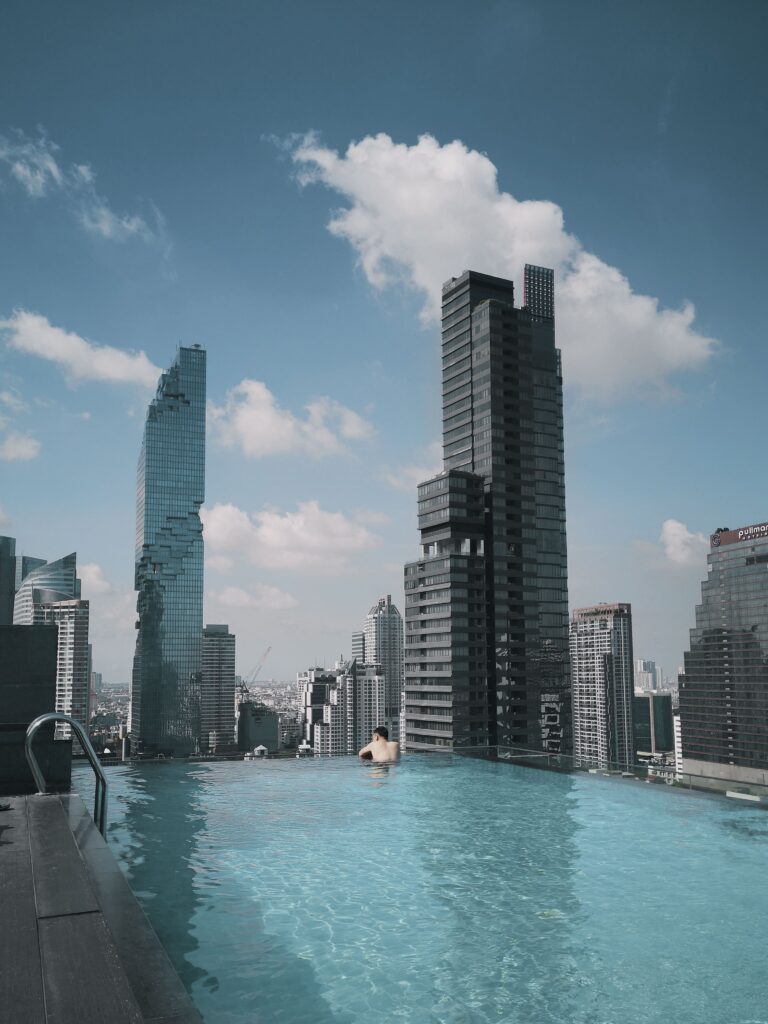
Expect ฿2,500-4,500 ($71-129) for genuinely comfortable 4-star properties, often with a rooftop pool, multiple dining options, and locations directly on or near a BTS/MRT line.
฿5,000-9,000+ ($143-257+) is the realistic range for international 5-star brands, with flagship river-view properties and suites pushing well past ฿10,000 ($286) per night, particularly during high season (November-February).
For stays of a week or longer, serviced apartments often beat nightly hotel rates on a per-night basis while adding a kitchenette and laundry. Budget serviced apartments start around ฿15,000-25,000/month ($430-715), with mid-range options in the ฿25,000-45,000/month ($715-1,285) band and premium serviced apartments well above that.
Staying directly on a BTS or MRT line meaningfully reduces both cost and time lost to traffic for most itineraries. Sukhumvit (Nana to Phrom Phong) is the most popular all-purpose base with strong transit access. The Old City (near the Grand Palace, Khao San Road) has cultural proximity but weak BTS/MRT coverage, meaning more reliance on taxis or longer walks. Riverside properties trade transit convenience for views and often run a premium.
Hotel rates are often significantly higher during the November-February high season, though the exact increase varies by hotel, location, and booking window. Booking 2-3 months ahead of a high-season trip is widely reported to save 20-30% versus last-minute booking. Always check whether a quoted rate includes Thailand’s 7% VAT and the common 10% service charge; many online listings display pre-tax, pre-service rates that understate the real cost by close to 18%.
Food is where Bangkok’s reputation for affordability is most justified, and also where travelers most often either overspend without noticing or underspend in ways that hurt the trip.
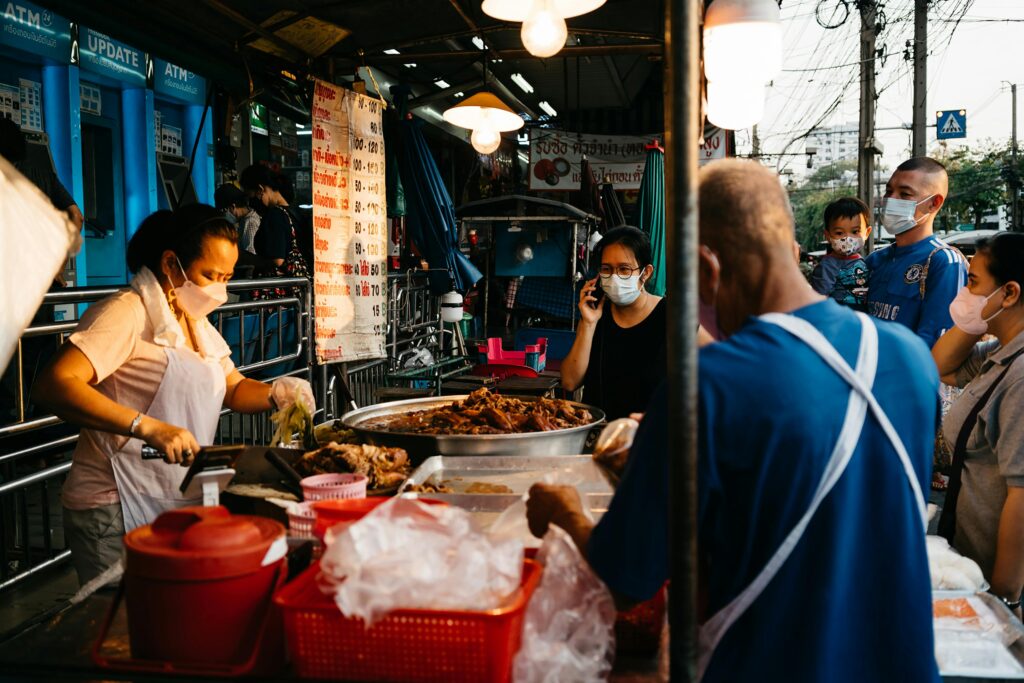
Most street food dishes run ฿40-80 ($1.15-2.30). A street-cart pad thai typically costs ฿50-80, som tam (papaya salad) ฿40-60, and khao pad (fried rice) ฿50-70. Tourist-heavy strips (Khao San Road, parts of Sukhumvit Soi 38, Yaowarat in Chinatown) sit at the higher end of these ranges; local neighborhood stalls sit at the lower end. A full street food meal with a drink commonly lands around ฿100-200 ($2.85-5.70).
Check out my detailed Bangkok Street Food Guide here!
This is a category most generic Bangkok guides skip entirely, but it adds up over a trip, and pricing varies more by location than most people expect. From my own experience on trips in 2024 and 2025: I paid anywhere from ฿30-60 for cut fresh fruit (mango, watermelon, and similar) depending on where I bought it. Small alleyways and local neighborhoods have fruit sellers running self-push stalls, with peeled fruit kept in a glass jar, and I found these to be the cheapest, usually around ฿30-40. The most I paid was for a big glass of mixed fruit just outside the Grand Palace in Bangkok, which came to ฿70, clearly a location premium rather than a difference in quality.
7-Eleven is the most reliable source for cheap basics anywhere in the city. Bottled water starts around ฿3-6 for a 500ml bottle and goes up to ฿10-20 for a one-liter bottle depending on the brand. If you’re staying at the same hotel or hostel for more than three days, getting a one-liter pack from a nearby 7-Eleven is the cheapest way to stay stocked on water, and it saves you a few baht over repeatedly buying smaller bottles. Basic snacks like lava cake, cheese sandwiches, chips, and crisps from 7-Eleven all come in under ฿50-60. One I’d specifically call out: the Thailand viral shake, mango and chocolate mixed with ice, sold at 7-Eleven, cost me ฿18-20, and it’s genuinely good value for what it is.
Mall food courts (MBK, Terminal 21, Central World, and similar) typically charge ฿60-100 ($1.70-2.85) per dish, paid via a prepaid coupon card system. The tradeoff for the slightly higher price over street stalls is air conditioning, seating, and a wider variety of cuisines in one place.
A sit-down meal at a casual local restaurant generally runs ฿150-300 ($4.30-8.55) per person. These offer more variety and comfort than street stalls without entering tourist-restaurant pricing.
Cafes in Bangkok’s substantial coffee-shop culture charge roughly ฿80-150 ($2.30-4.30) for coffee drinks, broadly comparable to or slightly below Western coffee shop pricing. Casual mall restaurants typically run ฿200-400 ($5.70-11.40) per person.
Expect ฿300-700 ($8.55-20) per person at mid-range international restaurants, with higher-end Western dining climbing past ฿800 ($23).
Fine dining in Bangkok, including internationally recognized restaurants, runs from ฿1,500-3,000+ ($43-86+) per person for tasting menus or premium a la carte dining, with top-tier experiences exceeding that.
The most common overspend pattern is eating every meal in air-conditioned, English-menu restaurants in tourist zones out of a (usually unfounded) hygiene worry, when reputable street stalls with high turnover are both cheaper and often fresher. The second most common overspend is alcohol: imported beers and cocktails at tourist bars routinely cost 3-5x what the same drink costs at a local spot a few streets away.
Eating where Thai office workers eat (look for queues of locals, not tourists, and a fast table turnover) reliably delivers better food at lower prices than tourist-adjacent restaurants. Lunch sets at local restaurants are frequently discounted versus the same dishes ordered a la carte at dinner.
Pro Tip: I have seen some of the cheapest rates on Airport Transfer at GetTransfer. Visit for the best deals for all sorts of car category options starting from economy and comfort all the way up to Business and VIP!
Now, Bangkok’s transport network is genuinely good by Southeast Asian standards, but it’s also the category where 2026 brought the most pricing changes, so verify current fares before you travel.
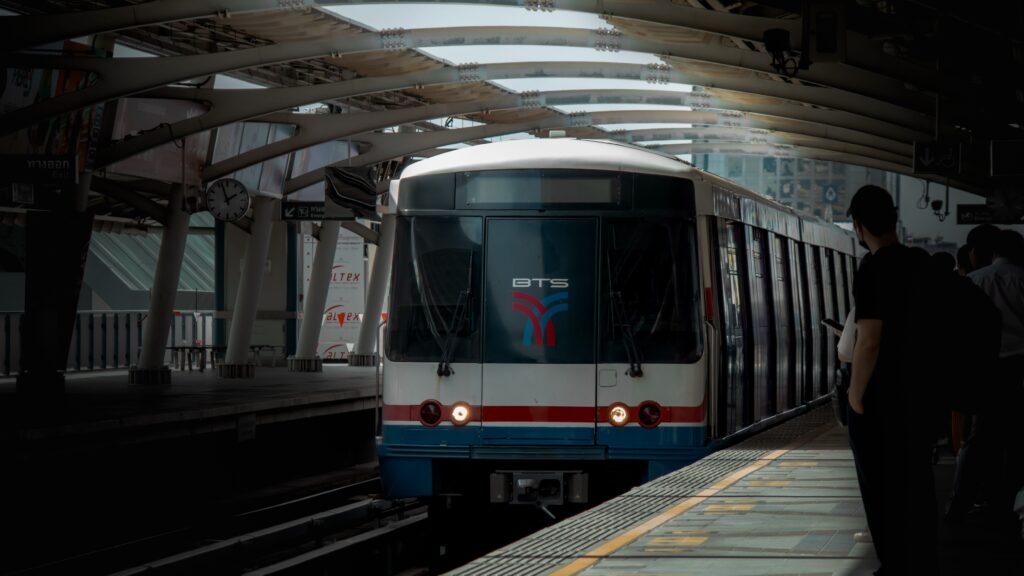
Single-journey BTS fares now run ฿17-65 per trip, depending on distance. This is a meaningful change: a flat-fare system that had been in place for years was replaced by a distance-based structure starting November 2025, raising the maximum single fare. A One-Day Pass for unlimited BTS travel runs ฿150, confirmed against the operator’s own published rate. The Rabbit Card (BTS’s stored-value card) requires passport presentation to purchase and works on the BTS, Gold Line, MRT Yellow Line, MRT Pink Line, and the Chao Phraya Express Boat, but it does not work on the MRT Blue or Purple Line, where a separate ticketing system applies.
A note on the “20-baht flat fare” you may see referenced online: Thailand has spent over a year debating a flat ฿20 fare across all electric rail lines, with multiple delayed launch dates throughout 2025. As of mid-2026, the government is actively reworking this into a different ฿17-45 structure tied to a registered-card system, with full rollout targeted for 2027, and the registration scheme that exists today requires a Thai national ID. This means foreign tourists are not eligible for the ฿20 flat fare regardless of what you may read, and the standard distance-based fares listed above are what visitors will actually pay. A separate, narrower promotion (a ฿40 all-day cap on the Purple Line and SRT Red Line for EMV cardholders) is covered below and does apply to tourists using a contactless bank card.
MRT Blue Line fares currently run ฿17-45 per trip depending on distance, with a confirmed fare adjustment to ฿17-44 taking effect July 3, 2026 (a CPI-linked reduction of one baht at the top end, valid through July 2028). MRT Purple Line fares run ฿14-42. Combined Blue-Purple transfers can reach ฿71. As of a December 2025 policy, a ฿40 all-day fare cap applies to the Purple Line and the SRT Red Line when using an EMV contactless bank card (Visa, Mastercard, or most Thai bank cards), valid through November 2026; confirm whether this promotion is still active at the time of your trip, since it carries an explicit end date. For tourists, a contactless bank card is generally the simplest way to pay on the MRT: the Mangmoom stored-value card that locals use is restricted to holders of a Thai national ID.
The ARL connects Suvarnabhumi Airport to Phaya Thai (BTS interchange) in about 26-30 minutes. Fares run ฿15-45 depending on distance; the full-route fare to Phaya Thai is ฿45, and to Makkasan (MRT interchange) is ฿35. This is generally the cheapest way to reach the city center from Suvarnabhumi, though it requires handling your own luggage through station transfers.
Ride-hailing apps provide upfront pricing and cashless payment, which makes budgeting easier than with metered taxis. A short car ride, within central Bangkok commonly runs ฿80-150, while longer cross-town trips or airport runs cost considerably more (see Airport Costs below). Surge pricing during rain or rush hour can meaningfully raise these numbers; the apps display the final price before you confirm, so check before committing if the quote looks high.
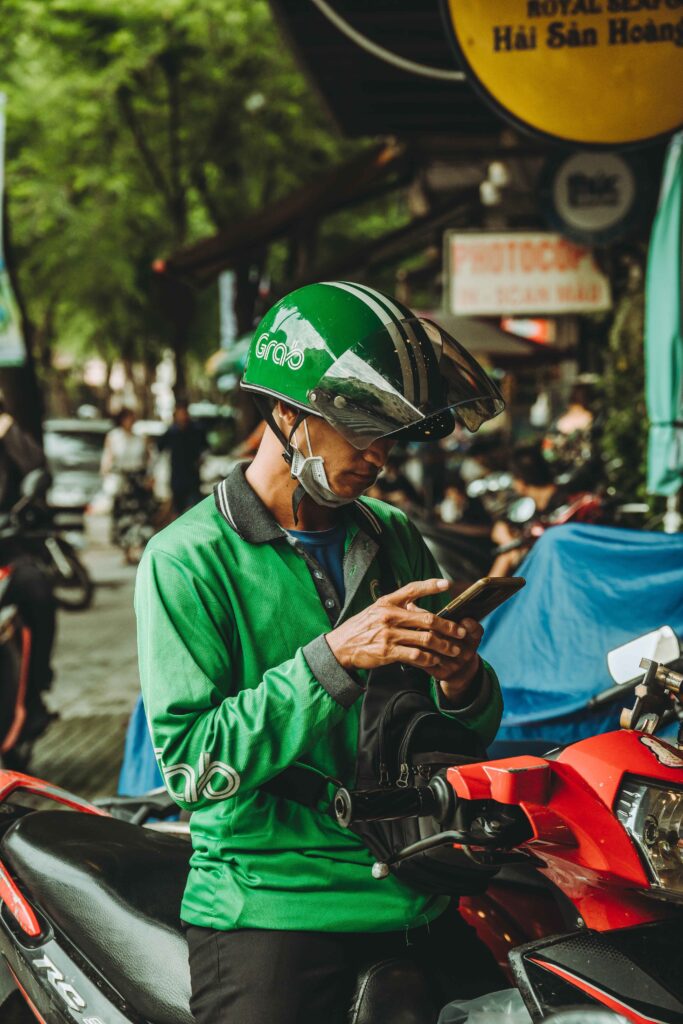
Grab Bike (motorbike taxi booked through the same app) is consistently the cheapest motorized option for short hops, and worth calling out specifically because most generic guides only mention the car service. I paid ฿30-60 for a 4km or shorter trip in a Grab car, while the same kind of short distance on Grab Bike was noticeably cheaper. I did a lot of 1-3km runs day to day on Grab Bike and consistently paid around ฿10-20 per ride, which made it my default choice for quick, single-person hops where a car felt like overkill. The tradeoff is obvious: no AC, more exposure to traffic and weather, and it only works for one passenger comfortably, but for short solo trips it’s hard to beat on price.
Metered taxis start at ฿35 for the first kilometer, then add roughly ฿6.50/km for the next stretch of distance plus a small per-minute charge while stationary in traffic. A short city trip might run ฿50-100 on the meter; cross-town trips climb from there. Always confirm the driver is using the meter (“meter, please”) rather than negotiating a flat fare, which tends to favor the driver. Some taxis add a small charge (commonly cited around ฿20 per bag) for large luggage, which is a minor but real line item worth knowing about in advance. Bangkok taxi drivers sometimes refuse rides to certain destinations, which is technically against regulations; if this happens, the next taxi in line is the simplest solution.
If you have trouble finding taxis at a busy time, worry not. Kiwitaxi is a great web taxi booking option. Moreover, GetTransfer may also be used as an alternative to taxi for rides possible to schedule in advance.
The Chao Phraya Express Boat is both functional transport and a scenic, cheap way to see riverside Bangkok. Fares are commonly in the ฿10-30 range per trip depending on boat type and distance, making this one of the cheapest ways to reach river-adjacent attractions like Wat Arun. Cross-river shuttle ferries (such as the one connecting Wat Arun’s pier to Tha Tien) often cost just ฿3-5 per crossing.
Central Bangkok’s elevated BTS walkway network connects many Sukhumvit and Siam-area stations via covered, air-conditioned-adjacent skybridges, meaning genuinely long distances can be covered on foot without ever touching street level or direct sun. This is free and, during non-rainy periods, often faster than waiting for short-hop transport.
See the dedicated Airport Costs section below for a full breakdown of taxi, Grab, and ARL pricing from Suvarnabhumi. If you are one for convenience – GetTransfer can help you get the cheapest deals.
Suvarnabhumi Airport (BKK) pricing differs from city pricing in a few specific, predictable ways.
Official AIS, True, and dtac counters in the arrivals hall sell tourist SIM packages on the spot, with passport registration taking 10-30 minutes. Pricing in 2026 for an 8-day unlimited-data tourist SIM commonly runs ฿299-499 ($8.55-14.25), with 15-day plans around ฿549-899, and 30-day unlimited plans reaching ฿1,199 ($34) or more. “Unlimited” plans generally include a fair-use cap (often around 2.5GB/day at full speed before throttling), which is fine for normal use but worth knowing if you plan to stream heavily. The cost of eSIM options (Airalo, Yesim, and the carriers’ own eSIM products) typically either match or are lower than physical SIM packages, with which you can skip the counter line, at the cost of needing an eSIM-compatible phone and pre-trip setup.
Pro Tip: Travelling off-season allows you to gain on deals available on eSIM options like Airalo bringing your total cost down while also allowing you to get connected as soon as you land rather than after buying your physical SIM card after standing in queue.
Airport restaurant and cafe pricing runs noticeably higher than equivalent food in the city, commonly 30-50% above a comparable mall food court. A quick meal at the airport easily runs ฿150-300 versus ฿60-100 for the same style of dish at a city food court.
This is covered in detail in Transportation Costs above, but as a summary: ARL to the city is ฿15-45, metered taxi plus the mandatory ฿50 airport surcharge plus tolls (฿25-75) commonly totals ฿350-550 to central areas like Sukhumvit under normal traffic, climbing toward ฿650 during peak hours or heavy rain. Grab/Bolt typically lands in a similar or slightly lower range, with the convenience of a fixed quoted price before you commit, though tolls are usually charged separately from the app’s quoted fare. If your hotel is near Khao San Road or the Old City, the S1 airport bus is a flat ฿60 and a budget-friendly alternative to a taxi, departing roughly every 30-60 minutes from Level 1, Gate 7, between 6:00 AM and 8:00 PM.
Airport currency exchange counters consistently offer worse rates than city counters; use them only for enough cash to get into town, then exchange the bulk of your money at a city counter like SuperRich. Airport ATMs charge the same flat per-withdrawal fee as city ATMs (around ฿220-250 for Visa, up to ฿350 for Mastercard, or ฿150 at an AEON machine), so there’s no airport-specific ATM penalty beyond the usual DCC trap, which is just as important to decline here as anywhere else.
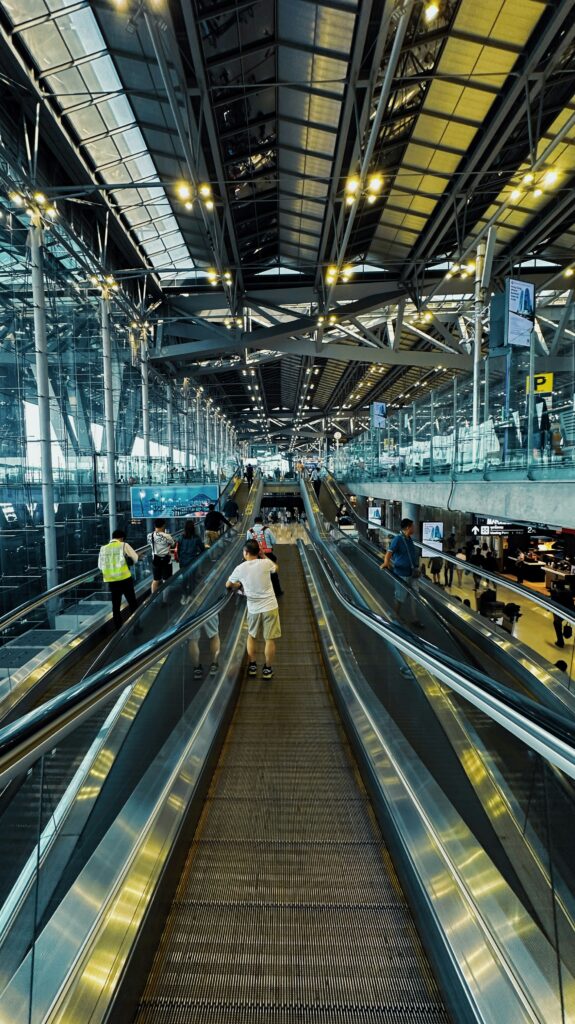
Temple and attraction pricing in Bangkok has shifted meaningfully in the past year for at least one major site, which makes this section worth reading carefully rather than skimming.
Before I talk about specifics of the attraction costs, I can tell you the best deals that you can find anyday are on Klook for booking activities and attractions throughout Thailand.
฿500 ($14.30) for foreign visitors, a single ticket that also includes access to several affiliated sites (Vimanmek Mansion and others, depending on current inclusions). Free for Thai nationals with ID and for children under 120cm in height. Tickets are sold from 8:30 AM to 3:30 PM at the gate; there is no official online booking, only third-party resellers and tours, which typically charge more than the gate price for the convenience of skip-the-line access.
You can directly book the Grand Palace & Wat Phra Kaew Guided Walking Tour here.
฿300 ($8.55), confirmed directly via the temple’s official site (watpho.com) and its official ticketing partner. This is an important correction for travelers using older guides: many articles and even some current-dated third-party sites still list 100 or 200 baht. The increase to 300 baht appears to date to around January 2024, tied to ongoing restoration work on the temple’s stupas and murals, so any source still quoting 100-200 baht is several years out of date, not reflecting a recent change. Free for children under 120cm; no concession pricing for adults. The ticket includes a complimentary small bottle of water, collected at a kiosk inside the complex.
If you’re interested in a guided walking tour of both Wat Pho and Wat Arun, you can book one here.
This is the single most inconsistent price in this entire guide, and it deserves more caution than a confident number. Sources dated within the past few months disagree meaningfully: some cite ฿200, others cite ฿100, and at least one source describes a historical doubling from ฿50 to ฿100 at an earlier point. The most detailed and recently-dated descriptions lean toward ฿200 as current, but given the genuine disagreement even among sources claiming to be current as of 2026, do not rely on a fixed number here, confirm the rate at the ticket counter on arrival, and budget ฿200 as a safe upper-end estimate so you’re not caught short. Free for Thai nationals. As of 2026, climbing is restricted to the first terrace level, which still offers strong views of the Chao Phraya River and Grand Palace skyline. The cross-river ferry connecting Wat Arun to the Wat Pho/Grand Palace side (Tha Tien Pier) costs around ฿3-15 depending on the specific operator and route.
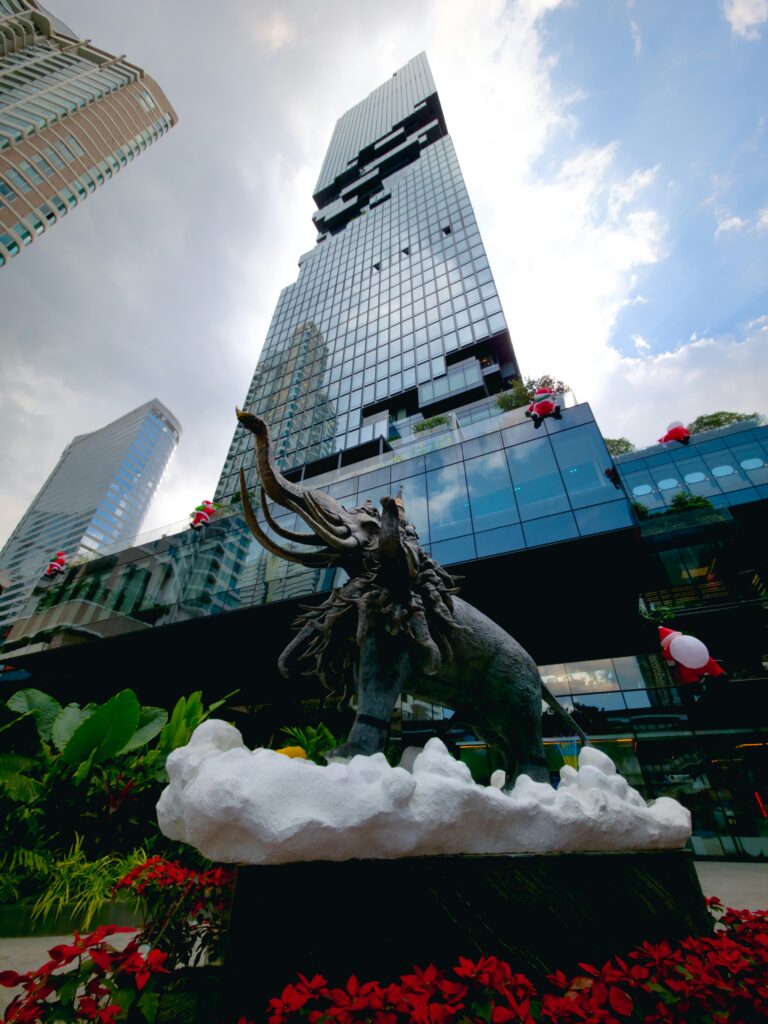
Pricing here is genuinely tiered and worth checking directly before you go. As of 2026, standard general admission (SkyWalk plus SkyVerse digital art exhibition) starts around ฿880 for the daytime slot, with a sunset time slot adding roughly ฿200 on top. Add-on experiences like SkyRides or I-Tilt cost an additional ฿110-210 depending on time slot, and a SkyVerse-only ticket without the observation deck runs around ฿350. Children and seniors (60+, with ID) commonly receive a reduced rate, often cited around ฿250-500. Given how frequently packages here are restructured, verify current pricing and inclusions directly on the official Mahanakhon SkyWalk site before booking. Get your tickets here now!
Safari World’s pricing structure includes separate options for the drive-through Safari Park and the walk-through Marine Park, often sold as a combo ticket. Given the frequency of promotional pricing changes and package restructuring at this attraction, verify current ticket prices directly with Safari World before your visit rather than relying on a fixed number here.
Here’s the link to two parks in one combined ticket: Safari Park and Marine Park.
Museum and attraction pricing across Bangkok varies widely by site and changes periodically. For any attraction not listed above with a confirmed current price, check the official website or a reputable booking platform shortly before your visit, and treat any price you find in an older blog post as a starting estimate rather than a guarantee.
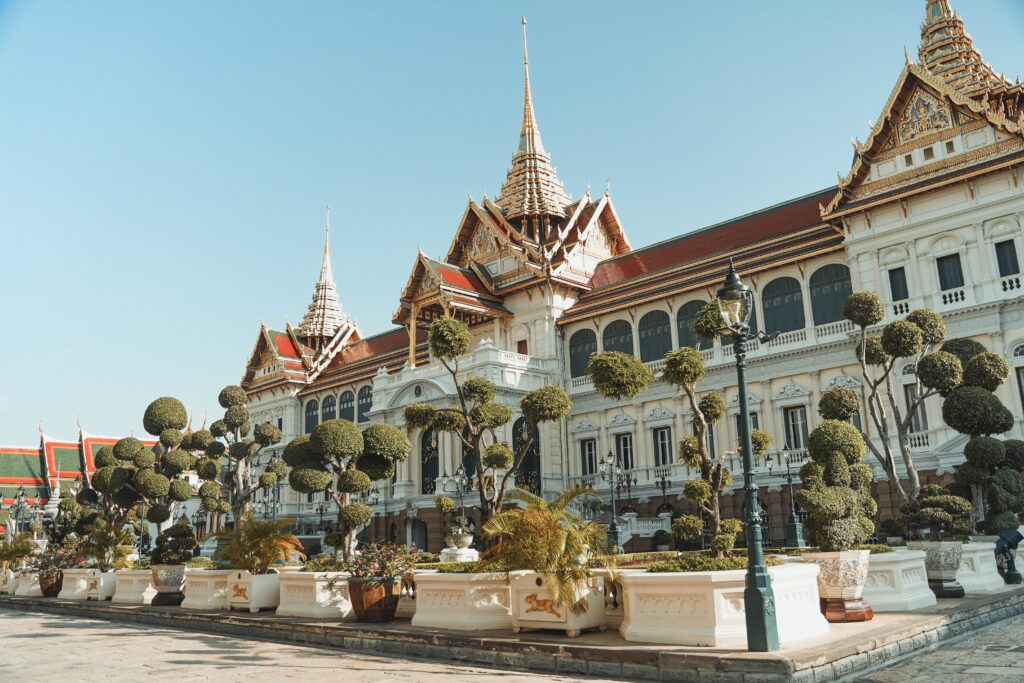
Street markets and night markets (Rot Fai markets, smaller neighborhood night markets) offer the lowest prices for clothing, souvenirs, and accessories, with bargaining a normal and expected part of the transaction. Starting offers from vendors are commonly inflated for tourists; a counter-offer at 40-60% of the initial asking price is a reasonable opening move for non-food items, though food stalls generally have fixed, fair pricing already.
One of the largest markets in the world, with thousands of stalls across clothing, home goods, art, and food. No entrance fee. Budget for a half-day minimum to see a meaningful fraction of it, and expect lower prices than mall retail for similar goods, with bargaining expected on non-fixed-price items.
A budget-to-mid-range mall known for electronics, knockoff goods, and general shopping, with bargaining culture similar to a market despite the indoor mall setting.
Fixed-price retail at mall pricing comparable to or above Western mall pricing for international brands, with Thai-specific brands and food courts offering better value than the imported-brand sections.
A mid-range mall popular for its themed floors and food court, with pricing similar to other mid-tier Bangkok malls.
Markets and street shopping: minimal budget required beyond what you intend to buy, often ฿100-500 for small souvenirs and clothing items. Malls: comparable to or slightly below Western retail pricing for imported brands, with better relative value on Thai-made goods and local fashion brands.
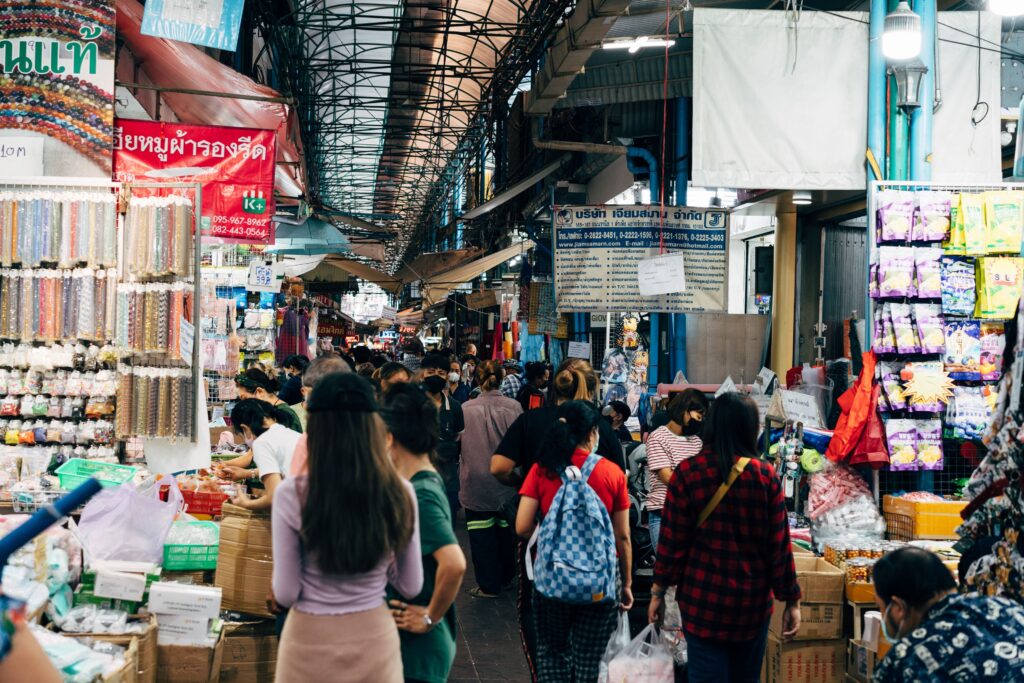
Bangkok remains one of the more popular digital nomad bases in Southeast Asia, and the monthly math looks different from a tourist trip because of serviced apartment rates, recurring SIM/internet costs, and coworking memberships.
For a detailed deep dive into Digital Nomad Living in Bangkok, see my guide here.
Serviced apartment or extended-stay studio (฿15,000-22,000), 30-day SIM unlimited data (฿1,199), mostly street food and food courts (฿6,000-8,000/month), BTS/MRT plus occasional Grab (฿2,000-3,000), free or low-cost coworking via cafes rather than a paid membership, basic gym or none.
One-bedroom serviced apartment in Sukhumvit or similar (฿25,000-40,000), 30-day SIM (฿1,199), mix of cooking and restaurant meals (฿10,000-15,000), regular Grab use plus BTS/MRT (฿4,000-6,000), a real coworking membership (฿3,000-6,000), gym membership (฿1,500-3,000).
Higher-end one or two-bedroom apartment (฿45,000-70,000+), dining out as the default rather than the exception, regular Grab/taxi use, premium coworking with private desk or office, full gym and wellness budget.
A note specific to long-stay planning: as of this writing (June 2026), Thailand’s Cabinet approved a plan on May 19, 2026 to end the 60-day visa exemption that had applied to roughly 93 countries since 2024, replacing it with a tiered system, most commonly a 30-day exemption for around 54 countries/territories, with a small number reduced to 15 days. The change takes effect 15 days after publication in the Royal Gazette, and as of this writing that publication had not yet been confirmed, meaning the 60-day exemption technically remains in effect for now, but could change with very little notice. The 30-day extension available at any Thai immigration office, currently priced at ฿1,900, is expected to continue under the new system, though this should be confirmed at the time. Anyone planning a stay longer than a short tourist trip should verify current visa rules directly with the Thai Ministry of Foreign Affairs, the nearest Thai embassy, or an immigration lawyer before finalizing travel dates, since this is the single fastest-moving rule set covered in this guide and could plausibly change between when this is published and when you read it.
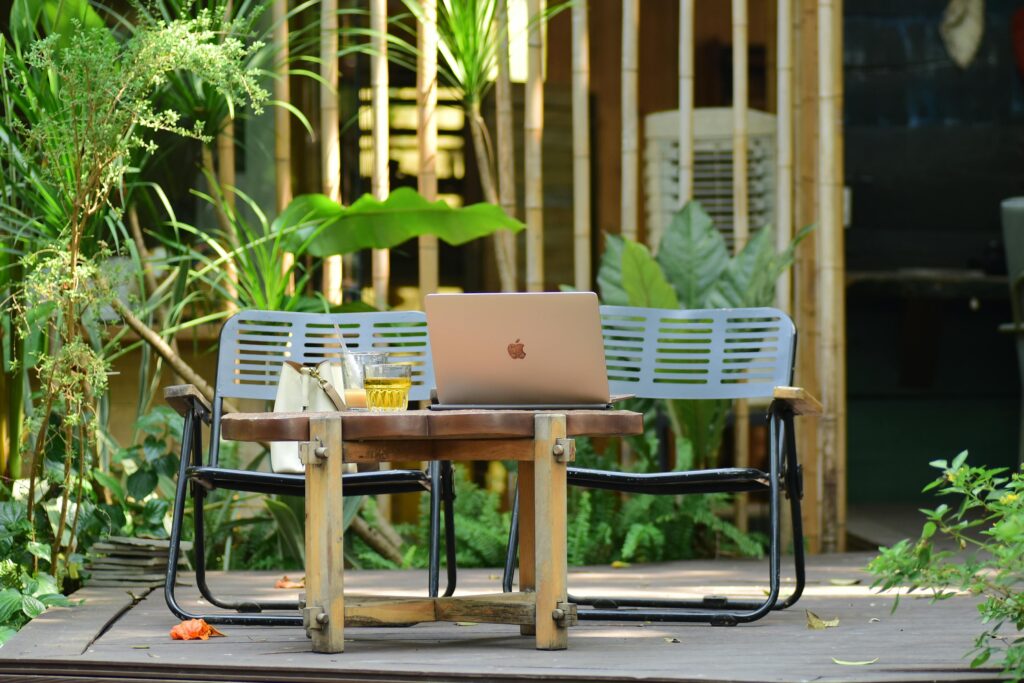
Family budgets don’t scale linearly with headcount because accommodation and many transport costs are shared, not multiplied per person. These figures assume a mid-range travel style; adjust up or down using the per-category numbers above for a different tier.
Daily: ฿5,500-8,500 ($157-243) | Weekly: ฿38,500-59,500 ($1,100-1,700)
Family room or two connecting rooms at a mid-range hotel (฿2,500-4,000), meals factoring in a child’s smaller portions and frequent food court use for flexibility (฿1,500-2,500), Grab for most trips given luggage and child logistics (฿800-1,500), one or two paid attractions most days with the Grand Palace and similar sites typically free for children under 120cm.
Daily: ฿6,500-10,000 ($186-286) | Weekly: ฿45,500-70,000 ($1,300-2,000)
Similar structure to the family of 3, with proportionally higher food and minor attraction-ticket costs, but accommodation cost per person actually decreases since most family rooms accommodate 4 at a similar rate to a 2-3 person room.
Daily: ฿8,000-12,500 ($229-357) | Weekly: ฿56,000-87,500 ($1,600-2,500)
At this size, two hotel rooms are often more cost-effective and comfortable than a single oversized family room; budget accordingly. Group Grab rides may require two vehicles depending on car size, which is worth factoring into transport estimates.
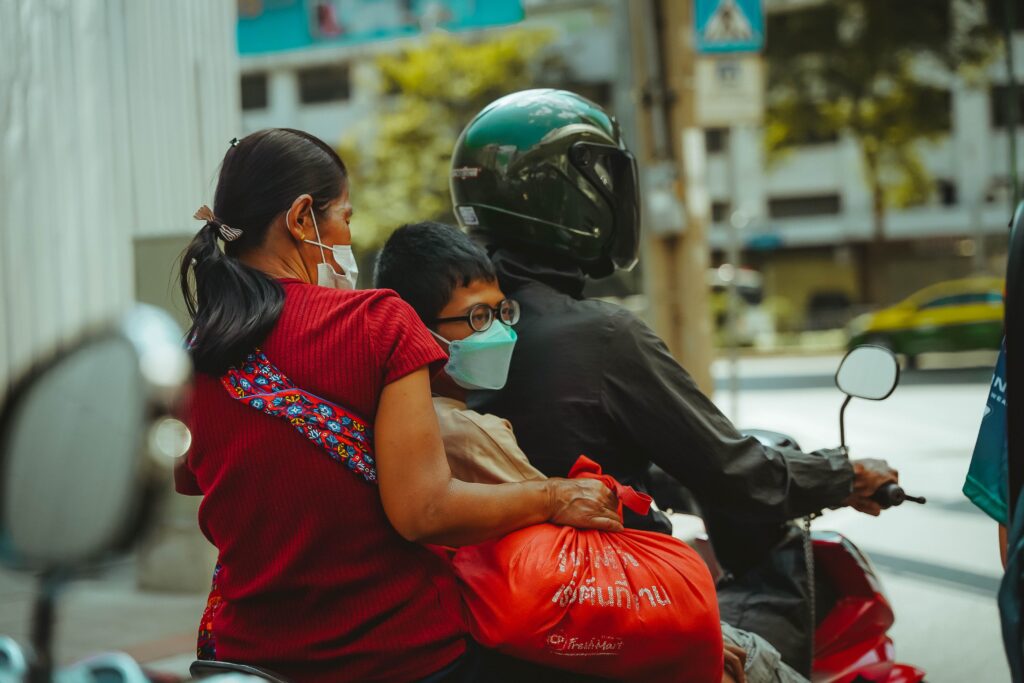
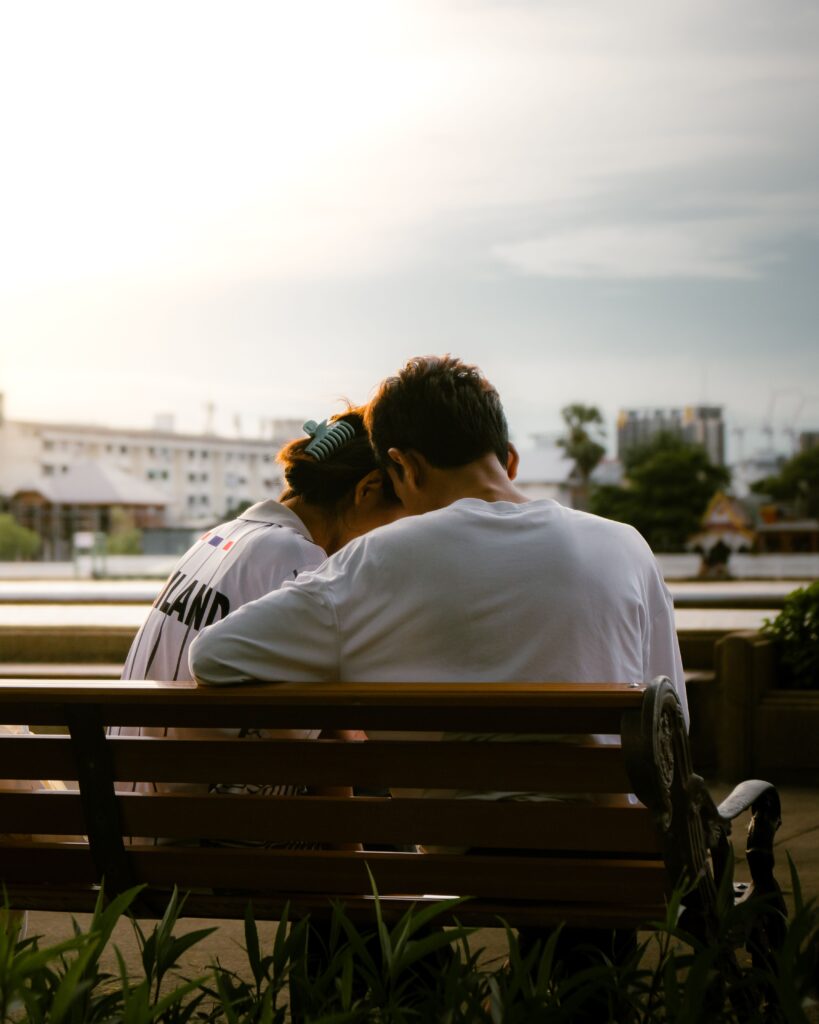
Daily: ฿2,800-4,200 ($80-120) | Weekly: ฿19,600-29,400 ($560-840)
Shared private room in a budget hotel or guesthouse (฿1,000-1,500 total), street food and food courts for most meals, BTS/MRT as default transport with occasional shared Grab rides, a few paid attractions split across the week.
Daily: ฿5,500-9,000 ($157-257) | Weekly: ฿38,500-63,000 ($1,100-1,800)
3-4 star hotel room (฿2,500-4,500 total), restaurant dining as the default, regular Grab use, most major attractions, a rooftop bar or two, moderate shopping budget.
Daily: ฿15,000-30,000+ ($430-860+) | Weekly: ฿105,000-210,000+
5-star hotel suite, fine dining, private transfers, premium experiences (spa days, exclusive dinners, private tours).
Solo travel in Bangkok carries a real cost penalty relative to couples and groups on accommodation specifically, since a single traveler pays the full room rate alone. Everything else (food, transport, attractions) scales the same per person regardless of group size.
Daily: ฿1,300-1,900 ($37-54)
Hostel dorm bed, street food and food courts, BTS/MRT plus occasional Grab, social hostel common areas substituting for some paid entertainment.
Daily: ฿1,900-2,800 ($54-80)
Private budget room (paying the full rate alone is the main cost difference versus a couple splitting the same room), similar food and transport pattern to the Budget Traveler profile above.
Daily: ฿3,200-5,000 ($91-143)
3-4 star hotel room paid solo, restaurant dining, regular Grab use, most major attractions, some solo-friendly evening activities (rooftop bars solo, food tours, cooking classes, which are often priced per-person regardless of group size and so don’t carry a solo penalty).
฿8,000-13,000+ ($229-371+)
5-star solo stay, fine dining, private transfers, premium experiences.
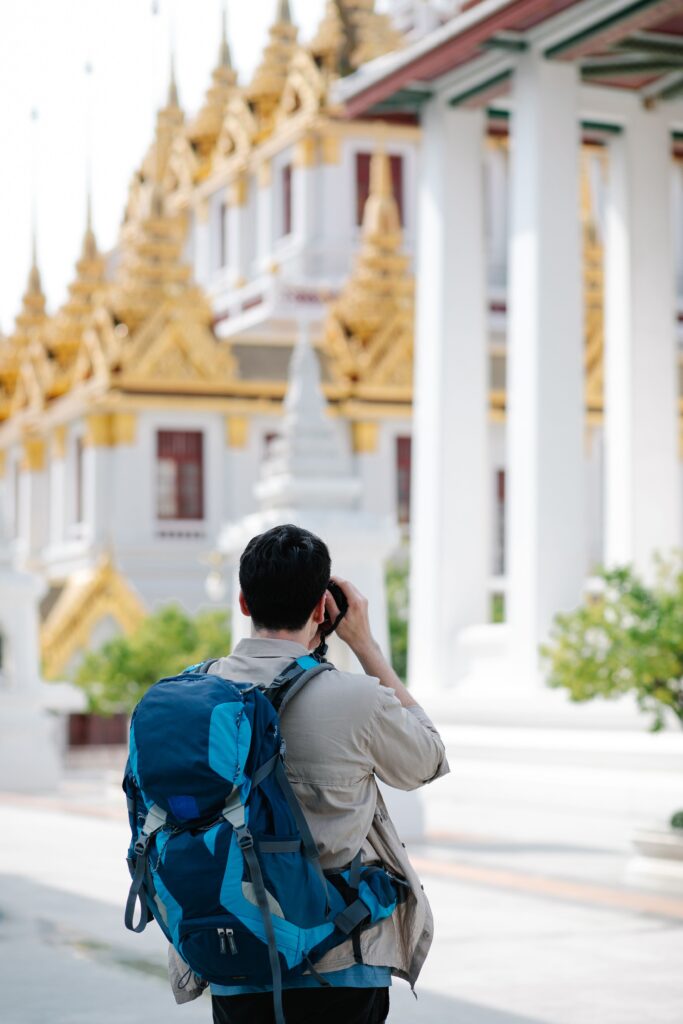
These are the costs that don’t show up in a simple “accommodation + food + transport” estimate but reliably add up over a trip.
Cool, dry weather drives the highest demand and the highest prices. Hotel rates are often significantly higher during this window, though the exact increase varies by hotel, location, and booking window; flights into Bangkok also peak in this period. This is the best weather window but the worst value window.
Transitional weather (heating up before the hot season, or transitioning out of the rainy season) with moderate pricing, generally landing between high and low season hotel rates.
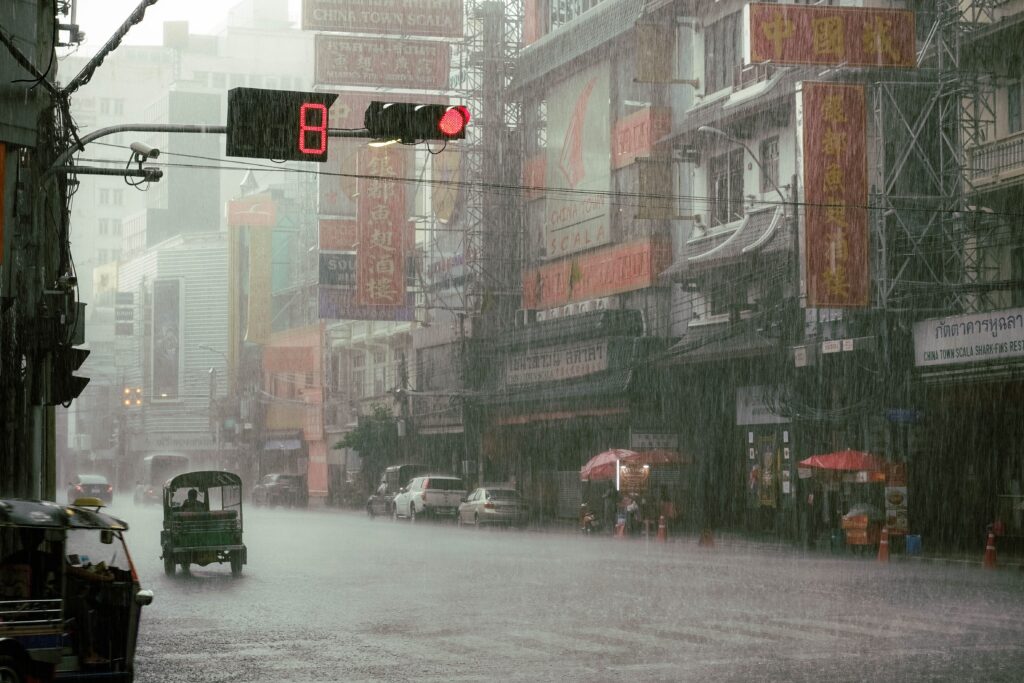
Hot and rainy, with the lowest hotel and flight pricing. Rain in Bangkok tends to arrive as intense but relatively short downpours rather than all-day rain, so it’s more disruptive to single afternoon plans than to an entire trip. This is the best-value window for travelers with flexible dates and tolerance for heat and occasional rain.
Accommodation below the comfortable tier delivers disproportionate savings relative to comfort lost, especially for travelers who are out exploring most of the day and only sleeping in the room. Transport mode-shifting (BTS/MRT and walking instead of defaulting to Grab) saves meaningfully over a multi-day trip without much time cost on well-connected routes. Street food and food courts deliver genuinely excellent food at a fraction of restaurant pricing; this is rarely a quality sacrifice, just a different experience.
Travel insurance is not a place to cut costs; the downside risk of a medical incident without coverage in Thailand’s private hospital system far outweighs the premium cost. SIM/connectivity is also not worth skimping on, since navigation, ride-hailing, and translation tools depend on reliable data; the cost difference between tiers is small relative to the inconvenience of being offline. A reasonable safety buffer (cash plus card capacity beyond your exact daily budget) protects against the genuinely common scenario of an unexpected price, a missed connection, or a need to upgrade transport quickly.
Booking accommodation on a BTS/MRT line, even at a slightly higher rate than an off-line alternative, routinely pays for itself in time saved and Grab fares avoided. A 30-day SIM with reliable data, even if you’re only staying two weeks, sometimes costs barely more than the 15-day option and removes any need to think about it again. Paying slightly more for an ARL or pre-booked transfer over a queue-and-negotiate taxi on arrival day reduces first-day stress disproportionately to its cost.

Hostel dorm bed (฿500), three street food meals (฿200), BTS/MRT for two essential trips (฿100), one free temple or park visit, no paid attractions, no alcohol beyond perhaps one local beer. This is tight but achievable for an experienced budget traveler, with essentially no margin for error.
Private budget room or nicer hostel (฿700), mix of street food and one restaurant meal (฿400), regular BTS/MRT plus one short Grab ride (฿200), one paid temple (Wat Pho or Wat Arun, ฿200-300), a coffee or two, modest evening drink. A realistic, comfortable budget-traveler day.
3-star hotel room (฿1,800), restaurant dining for most meals (฿900), Grab as default transport (฿400), one major paid attraction like the Grand Palace (฿500), some shopping margin, a rooftop bar drink. A genuinely comfortable mid-range day.
4-star hotel (฿3,500), restaurant and some higher-end dining (฿1,500), Grab/taxi without budget anxiety (฿600), multiple paid experiences (Mahanakhon SkyWalk plus a temple, ฿1,200), real shopping and entertainment budget, a proper dinner out.
5-star hotel suite (฿10,000+), fine dining (฿3,000+), private transfers (฿1,000+), premium experiences (private guide, spa, exclusive venue access), high-end shopping margin.
For a long-weekend trip on a Mid-Range profile (the most common style for a short visit): roughly ฿8,400-13,500 total ($240-385) for one person, covering 2 nights’ accommodation, all meals, transport including one airport transfer each way, and 2-3 major attractions (commonly the Grand Palace plus one of Wat Pho/Wat Arun, plus perhaps Mahanakhon SkyWalk). This window is tight for fitting in everything Bangkok offers; prioritize 2-3 must-see items rather than trying to cover the full attraction list.
A full week on a Mid-Range profile: roughly ฿19,600-31,500 total ($560-900) per person, covering 6 nights’ accommodation, all meals, regular transport, the Grand Palace, both major river temples, Mahanakhon SkyWalk or a similar premium viewpoint, one or two markets (Chatuchak on a weekend, a night market on a weeknight), and one half-day or full-day excursion (a cooking class, a river cruise, or a day trip). This length comfortably covers Bangkok’s core highlights without rushing.
Two weeks on a Mid-Range profile: roughly ฿39,000-63,000 total ($1,115-1,800) per person if staying in Bangkok the entire time, though most two-week itineraries split time between Bangkok and at least one other region (Chiang Mai, an island, Ayutthaya). If splitting time, allocate roughly 5-7 days of this budget to Bangkok specifically and adjust the remainder for the other destination’s costs, which are not covered in this Bangkok-specific guide.
A full month based in Bangkok shifts the math toward the Digital Nomad breakdowns above rather than a tourist daily-rate multiplication, since monthly accommodation (serviced apartments) beats nightly hotel rates by a wide margin at this duration. A Mid-Range Digital Nomad month runs roughly ฿55,000-85,000 ($1,570-2,430), while a tourist-style month (nightly hotel booking, no monthly SIM/coworking optimization) would run dramatically higher, commonly ฿84,000-135,000+ ($2,400-3,860+) at the same comfort level, simply due to nightly versus monthly accommodation pricing. If you’re staying a month or longer, switching to monthly accommodation and a 30-day SIM is one of the highest-leverage cost decisions in this entire guide.

Cost comparisons across cities shift constantly with exchange rates and local inflation, so treat the following as directional rather than precise. As a general pattern reported across recent cost-of-living and travel-budget sources: Bangkok tends to sit in the middle of the regional pack, more expensive than Chiang Mai (which offers similar or slightly lower accommodation and food costs with a noticeably slower pace), generally comparable to or slightly above Ho Chi Minh City and Kuala Lumpur for budget-to-mid-range travel, below Bali at the upper-mid and luxury tiers in some categories due to Bali’s premium villa and beach-resort market, and substantially below Singapore across virtually every category, where accommodation and dining commonly run 2-3x Bangkok prices at comparable quality tiers.
Bangkok’s public transit pricing runs higher than equivalent systems in Kuala Lumpur or Ho Chi Minh City, which works against some of Bangkok’s food and accommodation advantages when comparing total trip cost across the region. For exact current comparative figures, check a recent cost-of-living comparison tool rather than relying on a static ranking, since relative positioning between these cities shifts with exchange rates more than most travelers expect.

1. How much money do I need for a week in Bangkok? For a Mid-Range profile, budget roughly ฿19,600-31,500 ($560-900) per person for a full week, covering accommodation, food, transport, and major attractions. Budget travelers can manage a week for closer to ฿13,300-19,600 ($380-560).
2. Is Bangkok expensive for tourists? Bangkok is genuinely affordable at the budget-to-mid-range tiers compared to Western cities and even compared to nearby Singapore, but the affordability advantage narrows considerably at the luxury tier, where Bangkok’s top hotels and restaurants aren’t dramatically cheaper than comparable global options.
3. How much does a week in Bangkok cost for two people? Most categories (accommodation, some transport) are shared rather than doubled, so a Mid-Range couple’s week runs roughly ฿38,500-63,000 ($1,100-1,800) total, not simply double a solo traveler’s budget.
4. What is the daily budget for Bangkok backpacking? Realistic backpacker daily spending runs ฿1,300-1,900 ($37-54), covering a hostel bed, street food, basic transport, and occasional paid attractions.
5. How much cash should I bring to Bangkok? There’s no fixed answer, but a reasonable approach is to bring enough for your first 24-48 hours (covering the airport transfer, first meals, and initial incidentals) and rely on ATM withdrawals in THB for the remainder, withdrawing larger amounts less frequently to minimize flat ATM fees.
6. Are BTS and MRT fares the same? No. They’re separate systems operated by different companies with different fare structures and different stored-value cards (Rabbit Card for BTS, a separate card system for MRT); a BTS ticket does not work on the MRT and vice versa.
7. How much is a taxi from Suvarnabhumi Airport to the city? Commonly ฿350-650 to central areas like Sukhumvit, including the metered fare, the mandatory ฿50 airport surcharge, and ฿25-75 in tolls. Grab/Bolt often falls in a similar range, with the advantage of upfront pricing.
8. Is the Airport Rail Link cheaper than a taxi? Significantly. The ARL runs ฿15-45 depending on distance, versus ฿350-650 for a taxi to the same general area, though the taxi saves the hassle of handling luggage through train transfers.
9. How much is the Grand Palace entrance fee? ฿500 ($14.30) for foreign visitors, which includes access to several affiliated sites. Free for Thai nationals and children under 120cm.
10. How much is Wat Pho entrance? ฿300 ($8.55) as of 2026, confirmed via the temple’s official site. Note that some older guides still list 100 or 200 baht; treat those as outdated.
11. How much is Wat Arun entrance? This is genuinely unsettled. Recent sources disagree between ฿100 and ฿200, with ฿200 appearing slightly more often in detailed, recently dated descriptions. Budget ฿200 as a safe estimate, but confirm the actual rate at the ticket counter when you arrive, since this is the least consistent price in this entire guide.
12. How much does a Thailand tourist SIM card cost? Roughly ฿299-499 for an 8-day unlimited-data plan, scaling up to around ฿1,199 for a 30-day unlimited plan, across the main carriers (AIS, True, dtac).
13. What is the best way to exchange money in Bangkok? Exchange a small amount at the airport for immediate needs, then use a reputable city exchange counter (SuperRich and Vasu Exchange are commonly cited as competitive) for the bulk of your cash, comparing the displayed rate against the day’s interbank rate.
14. Do ATMs in Thailand charge a fee? Yes, a flat fee per withdrawal regardless of amount, commonly ฿150-250 depending on the bank, in addition to whatever your home bank charges. Always decline Dynamic Currency Conversion when prompted.
15. Is Bangkok cash-only or card-friendly? Both, depending on context. Malls, hotels, chain restaurants, and transit accept cards widely; street food, markets, small restaurants, and many taxis are cash-only. Carry cash as your primary method.
16. How much should I budget for food per day in Bangkok? Budget travelers can eat well on ฿150-350/day mixing street food and food courts; mid-range travelers eating mostly at restaurants should budget ฿500-900/day.
17. How much does a Thai massage cost in Bangkok? A standard one-hour Thai massage at a reputable establishment like the Wat Pho massage school costs around ฿400-520; premium add-ons (oil, balm treatments) can roughly double that.
18. Is Bangkok safe for solo female travelers on a budget? This guide focuses specifically on cost and budgeting rather than safety assessment, which depends on many factors beyond what a cost guide can responsibly cover; consult dedicated safety resources and current travel advisories for that question.
19. How much does a SIM card cost at Suvarnabhumi Airport versus buying one in the city? Airport counter pricing for the same tourist SIM packages is generally similar to city pricing, since these are standardized carrier products; the main tradeoff is convenience versus a potential queue at the airport.
20. What is the current Thailand visa-exemption period? As of this writing (June 2026), the answer is genuinely in transition. The 60-day exemption that applied to roughly 93 countries since 2024 was approved for replacement by Thailand’s Cabinet on May 19, 2026, with a new tiered system (mostly 30 days for around 54 countries, 15 days for a few others) set to take effect 15 days after publication in the Royal Gazette. That publication had not been confirmed as of this writing, so the 60-day exemption may still be in effect, or may have just changed, depending on exactly when you read this. Verify directly with the Thai Ministry of Foreign Affairs or your nearest Thai embassy before booking rather than relying on this or any other single article, since the rule could change within days.
21. How much does it cost to extend a Thailand visa exemption? The standard 30-day extension at any Thai immigration office is currently priced at ฿1,900. This is expected to continue once the new exemption tiers take effect, but confirm the fee and eligibility directly with Thai immigration close to your travel dates, since this is changing alongside the broader visa-exemption reform.
22. Is it cheaper to travel to Bangkok in the rainy season? Generally yes. Low season (roughly May-October, with peak rain typically July-September) brings the lowest hotel and flight pricing, in exchange for heat and the likelihood of intense but usually short afternoon downpours.
23. How much does Mahanakhon SkyWalk cost? Standard daytime admission starts around ฿880, with a sunset time slot adding roughly ฿200 and optional add-ons (SkyRides, I-Tilt) costing more on top. Verify current packages and any seasonal pricing directly on the official site before booking, since this is one of the more frequently restructured pricing models covered in this guide.
24. How much should families budget per day in Bangkok? A family of 4 on a Mid-Range profile should budget roughly ฿6,500-10,000 ($186-286) per day, factoring in shared accommodation costs and free entry for children under 120cm at most major temples.
25. Is Bangkok more expensive than Chiang Mai? Generally yes, though the gap has narrowed in recent years. Bangkok’s public transit and mid-to-upper accommodation tiers run higher than Chiang Mai’s, while street food and basic accommodation costs are more comparable between the two cities.
26. How much does a month in Bangkok cost as a digital nomad? A Mid-Range Digital Nomad month runs roughly ฿55,000-85,000 ($1,570-2,430), assuming a switch to monthly serviced apartment pricing and a 30-day SIM rather than tourist-style nightly bookings.
27. What’s the biggest mistake people make budgeting for Bangkok? Using a single average daily cost figure from one source instead of matching a spending profile to their actual travel habits, which leads to either uncomfortable under-budgeting or unnecessary over-saving.
Bangkok works well for nearly every travel style this guide covers, but it rewards travelers who plan with their actual habits in mind rather than borrowing someone else’s number. Budget and backpacker travelers will find Bangkok genuinely cheap by global standards, with street food, hostels, and public transit keeping daily costs remarkably low. Mid-range and comfortable travelers get an unusually good ratio of quality to price, particularly in accommodation and dining, which is where Bangkok’s reputation as a value destination is most deserved. Luxury travelers should expect a smaller relative discount than they might assume; Bangkok’s top-tier hotels and restaurants compete on quality with global cities, not on being dramatically cheaper.
The biggest budgeting lesson in this guide isn’t a single number, it’s a method: match a spending profile to your real habits, build your budget from verified per-category costs rather than a single average, and verify anything that changes quickly (transit fares, attraction pricing, visa rules) close to your travel dates rather than trusting a fixed figure from any article, including this one.
Final recommendations: book accommodation on a transit line, treat connectivity and travel insurance as non-negotiable line items, build in a 10-15% buffer over whatever this guide’s profiles suggest, and verify the handful of genuinely fast-moving figures (Wat Pho’s pricing, MRT’s July 2026 fare change, and current visa-exemption rules) directly before you travel.